Showing posts with label ArsTechnica. Show all posts

Friday, January 26

Cruise failed to disclose disturbing details of self-driving car crash

A Cruise robotaxi test vehicle in San Francisco.

Enlarge / A Cruise robotaxi test vehicle in San Francisco. (credit: Cruise)

A law firm hired by the General Motors’ self-driving subsidiary Cruise to investigate the company’s response to a gruesome San Francisco crash last year found that the company failed to fully disclose disturbing details to regulators, the tech company said today in a blog post. The incident in October led California regulators to suspend Cruise’s license to operate driverless vehicles in San Francisco.

The new report by law firm Quinn Emanuel says that Cruise failed to tell California’s Department of Motor Vehicles that after striking a pedestrian knocked into its path by a human-driven vehicle, the autonomous car pulled out of traffic—dragging her some 20 feet. Cruise said it had accepted the firm’s version of events, as well as its recommendations.

Read 5 remaining paragraphs | Comments

The life and times of Cozy Bear, the Russian hackers who just hit Microsoft and HPE

The life and times of Cozy Bear, the Russian hackers who just hit Microsoft and HPE

Enlarge (credit: Getty Images)

Hewlett Packard Enterprise (HPE) said Wednesday that Kremlin-backed actors hacked into the email accounts of its security personnel and other employees last May—and maintained surreptitious access until December. The disclosure was the second revelation of a major corporate network breach by the hacking group in five days.

The hacking group that hit HPE is the same one that Microsoft said Friday broke into its corporate network in November and monitored email accounts of senior executives and security team members until being driven out earlier this month. Microsoft tracks the group as Midnight Blizzard. (Under the company’s recently retired threat actor naming convention, which was based on chemical elements, the group was known as Nobelium.) But it is perhaps better known by the name Cozy Bear—though researchers have also dubbed it APT29, the Dukes, Cloaked Ursa, and Dark Halo.

“On December 12, 2023, Hewlett Packard Enterprise was notified that a suspected nation-state actor, believed to be the threat actor Midnight Blizzard, the state-sponsored actor also known as Cozy Bear, had gained unauthorized access to HPE’s cloud-based email environment,” company lawyers wrote in a filing with the Securities and Exchange Commission. “The Company, with assistance from external cybersecurity experts, immediately activated our response process to investigate, contain, and remediate the incident, eradicating the activity. Based on our investigation, we now believe that the threat actor accessed and exfiltrated data beginning in May 2023 from a small percentage of HPE mailboxes belonging to individuals in our cybersecurity, go-to-market, business segments, and other functions.”

Read 15 remaining paragraphs | Comments

Rocket Report: Iran reaches orbit; Chinese firm achieves impressive landing test

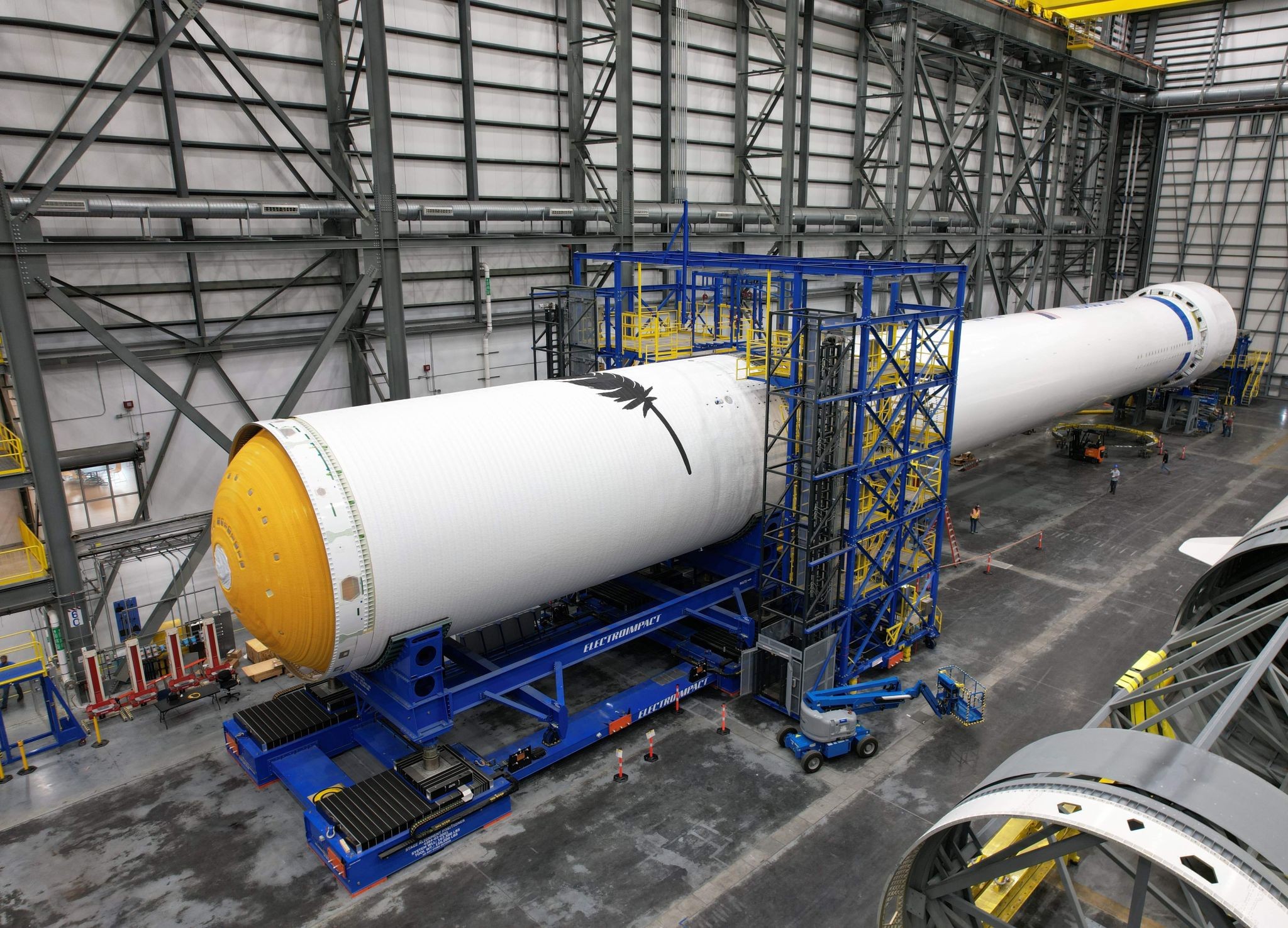
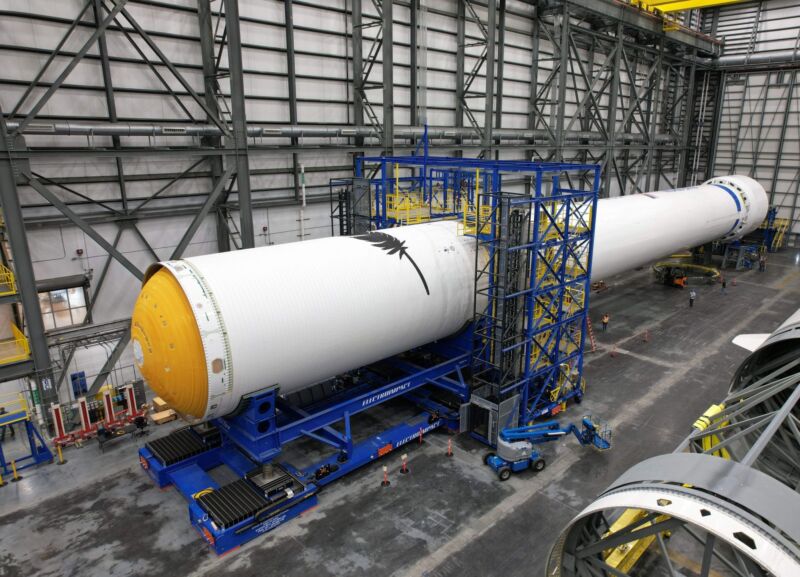
First and second stages of Blue Origin's "New Glenn" test vehicle.

Enlarge / First and second stages of Blue Origin's "New Glenn" test vehicle. (credit: Blue Origin)

Welcome to Edition 6.28 of the Rocket Report! There's a lot going on in the world of launch as always, but this week I want to take this space for a personal message. I have just announced the forthcoming publication of my second book, REENTRY, on the Falcon 9 rocket, Dragon spacecraft, and development of reusable launch. Full details here. I worked very hard to get the inside story.

As always, we welcome reader submissions, and if you don't want to miss an issue, please subscribe using the box below (the form will not appear on AMP-enabled versions of the site). Each report will include information on small-, medium-, and heavy-lift rockets as well as a quick look ahead at the next three launches on the calendar.

Europe seeks to support small launch companies. The European Space Agency and European Commission have selected five launch companies to participate in a new program to provide flight opportunities for new technologies, a sign of a greater role the European Union intends to play in launch, Space News reports. The effort seeks to stimulate demand for European launch services by allowing companies to compete for missions in the European Union’s In-Orbit Demonstration and Validation technology program. Proposals for the program's first phase are due to ESA at the end of February.

Read 22 remaining paragraphs | Comments

Thursday, January 25

Here’s the production version of Porsche’s first electric Macan SUV

A pair of Macan EVs with dramatic light effects overlayed.

Enlarge / On the left, the 2024 Porsche Macan 4, on the right, the 2024 Porsche Macan Turbo. Both are electric. (credit: Porsche)

This morning, Porsche unveiled its next Macan SUV. It has dropped internal combustion engines in the process—the new Macan is entirely battery electric, built on a dedicated EV platform. We've been following the car's development for some time, but today's news fills in a lot of the gaps, and it's the first time we've seen the Macan not covered in camouflage. Porsche is launching with two specifications. There's a Macan 4 that starts at $78,800, and a Macan Turbo starting at $105,300.
Last year Ars took a dive into the engineering that has gone into the new Macan and its underlying architecture, a new platform called PPE or Premium Platform Electric. Developed together with Audi, it uses an 800 V powertrain that's an incremental improvement upon the one you'd find in a Porsche Taycan.

We also already know it's fun to drive, especially the Macan Turbo. Rear-wheel steering makes it very nimble, and the two-valve dampers do a good job of making you think the car weighs less than it does. The Macan 4 isn't a slouch and can send up to 402 hp (300 kW) and 479 lb-ft (650 Nm) to its wheels, so launching up a highway on-ramp to 60 mph should take 4.9 seconds.

Read 7 remaining paragraphs | Comments

Did an AI write that hour-long “George Carlin” special? I’m not convinced.

"Well, we all have a face/That we hide away forever"

Enlarge / "Well, we all have a face/That we hide away forever" (credit: Aurich Lawson | Getty Images)

If you've paid any attention to the intersection of AI and culture this month, you’ve probably stumbled across a video billed as a “comedy AI” doing a 60-minute impression of a stand-up routine by the late, great George Carlin. Even if you didn’t watch “George Carlin: I’m Glad I’m Dead,” you probably stumbled on some of the many, many headlines suggesting that AI had brought the legendary comedian “back from the dead” in some sense.

Or maybe you saw some of the disgusted and/or panicked responses to the special among Carlin fans, comedy purists, and AI fearmongers. Those included Carlin’s daughter, Kelly, who told The Daily Beast that she’s talking to lawyers about the possibility of legal action against the special’s creators, the comedy podcast Dudesy.

But I think that anger is at least partially misplaced. After spending the last few weeks diving down a distractingly deep rabbit hole, I’m convinced that Dudesy’s “AI-generated” George Carlin special was actually written by a human, using voice- and image-generation tools to essentially perform in “AI face” as part of an ongoing comedy bit.

Read 50 remaining paragraphs | Comments

Aluminum mining waste could be a source of green steel

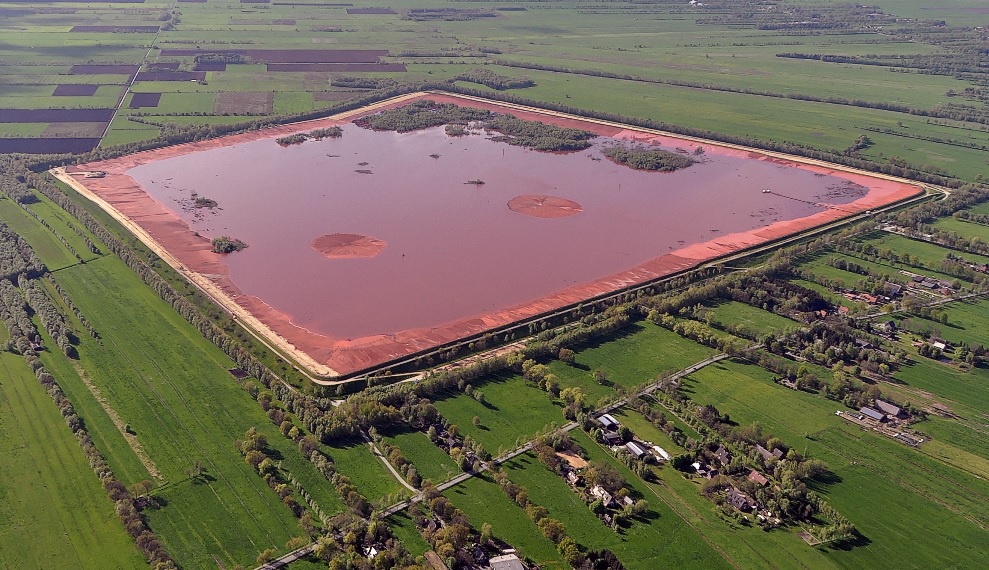
Image of a largely green landscape with a large, square area of red much in the center.

Enlarge / A red mud retaining pond in Germany. (credit: Wikimedia Commons)

The metals that form the foundation of modern society also cause a number of problems. Separating the metals we want from other minerals is often energy-intensive and can leave behind large volumes of toxic waste. Getting them in a pure form can often require a second and considerable energy input, boosting the associated carbon emissions.

A team of researchers from Germany has now figured out how to handle some of these problems for a specific class of mining waste created during aluminum production. Their method relies on hydrogen and electricity, which can both be sourced from renewable power and extracts iron and potentially other metals from the waste. What's left behind may still be toxic but isn't as environmentally damaging.

Out of the mud

The first step in aluminum production is the isolation of aluminum oxide from the other materials in the ore. This leaves behind a material known as red mud; it's estimated that nearly 200 million tonnes are produced annually. While the red color comes from the iron oxides present, there are a lot of other materials in it, some of which can be toxic. And the process of isolating the aluminum oxide leaves the material with a very basic pH.

Read 11 remaining paragraphs | Comments

Wednesday, January 24

Wild Apples: The 12 weirdest and rarest Macs ever made

An artistic collage of weird and rare mac models on a blue background.

Enlarge (credit: Benj Edwards / Jonathan Zufi / Apple)

Forty years ago today, Apple released the first Macintosh. Since that fateful day in 1984, Apple has released hundreds of Mac models that run the gamut from amazing to strange. In honor of this birthday, we thought it would be fun to comb through history and pull out the rarest and most unusual production Mac models ever made—including one from another company.

Each machine listed below was manufactured and sold to the public—no prototypes here. These computers highlight not only Apple's innovative spirit but also its willingness to take risks and experiment with design and functionality. It's worth noting that what is "weird" in this case is a matter of opinion, so you might have your own personal picks that we missed. If that's the case, let us know in the comments. And we'd love to hear what the Macintosh means to you on this 40th anniversary.

Special thanks to Jonathan Zufi for providing several photos for this article. In 2014, Zufi created an excellent coffee table book called Iconic: A Photographic Tribute to Apple Innovation and formerly ran the Shrine of Apple website.

Read 38 remaining paragraphs | Comments

Tuesday, January 23

Netflix will stream WWE Raw in $5 billion deal

Wrestlers in Brooklyn, NY

Enlarge / Santos Escobar and Joaquin Wilde at WWE Smackdown held at Barclay's Center on December 1, 2023, in Brooklyn, New York. (credit: Sportico via Getty)

Netflix has agreed to a $5 billion deal to screen World Wrestling Entertainment’s flagship Raw program over the next decade, in the group’s biggest foray so far into streaming live events.

The streaming service is betting that screening three live programs a week will allow it to capture the large and loyal fan base for a show that helped launch the careers of Dwayne “The Rock” Johnson, John Cena, and “Stone Cold” Steve Austin.

The deal, which starts in January 2025, will significantly expand Netflix’s use of the technology that is required to broadcast live sporting events.

Read 12 remaining paragraphs | Comments

Daily Telescope: Looking up to brilliant skies Down Under

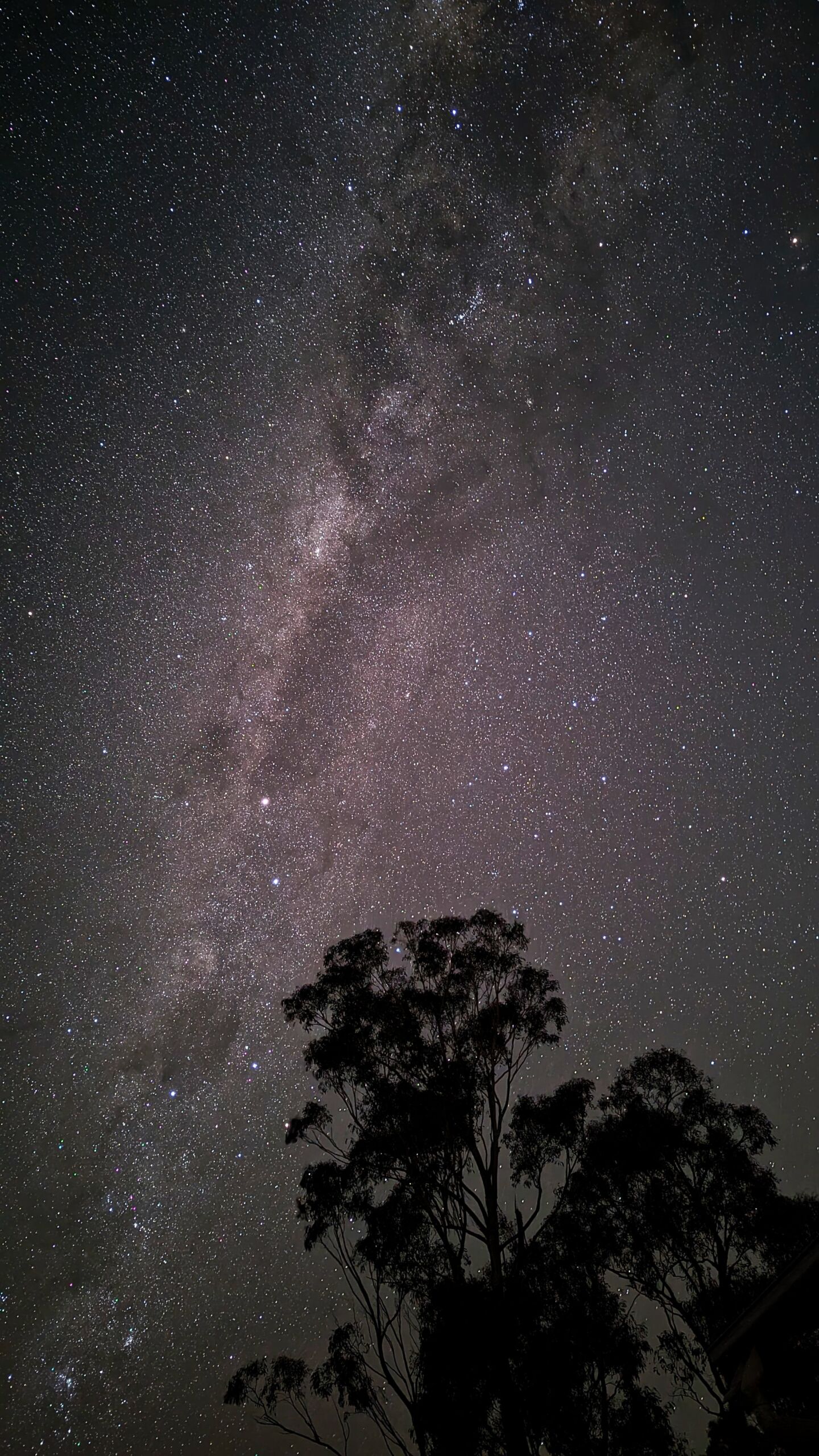
The night sky from Australia.

Enlarge / The night sky from Australia. (credit: Erin Mikan)

Welcome to the Daily Telescope. There is a little too much darkness in this world and not enough light, a little too much pseudoscience and not enough science. We'll let other publications offer you a daily horoscope. At Ars Technica, we're going to take a different route, finding inspiration from very real images of a universe that is filled with stars and wonder.

Good morning. It's January 23, and today's image showcases the night sky as seen from the Southern Hemisphere. It's a simple image of the Milky Way from a mobile phone, but it manages to capture so much grandeur.

Erin Mikan said she was inspired to send in this photo after our recent image from Playa Grande, Mexico, showcasing the Milky Way Galaxy above a bioluminescent bay.

Read 5 remaining paragraphs | Comments

Monday, January 22

Will demand for the Volkswagen ID Buzz outstrip supply?

A pair of Euro-spec ID Buzzes by a river in Copenhagen

Enlarge / You don't have to get a two-tone paint job on your ID Buzz, but it helps. (credit: Jonathan Gitlin)

Volkswagen's forthcoming electric minivan couldn't be better named. Simply put, in the years that we've been writing about cars, nothing on four wheels has created quite as much buzz as the VW ID Buzz with its adorably retro styling. But if all that attention translates into actual buyers, the electric microbus may end up being oversubscribed, at least to begin with.

Charlie Hall, chairman of the Volkswagen National Dealer Advisory Council, says the US may only see 20,000 ID Buzzes imported this year, according to an interview today in Automotive News. "It sounds like we may have the opportunity for additional European capacity if we need it, but we're still trying to sort out where the demand is going to be globally," Hall said.

Years in the making

VW's plan to resurrect the iconic T1 Microbus goes back to 2001 during the industry's flirtation with retro car design. While vehicles like the new VW Beetle, Ford's porthole-a-licious Thunderbird, and the ever-customizable Chrysler PT Cruiser made it to production, the Microbus concept never did.

Read 7 remaining paragraphs | Comments

NASA loses, and then recovers, contact with its historic Mars helicopter

NASA's Mars <em>Ingenuity</em> helicopter has been flying across the red planet for nearly three years.

Enlarge / NASA's Mars Ingenuity helicopter has been flying across the red planet for nearly three years. (credit: NASA)

The US space agency prompted widespread dismay in the spaceflight community on Friday evening when it announced that communication had been lost with the Mars Ingenuity helicopter during its most recent flight on Thursday, January 18.

"During its planned descent, communications between the helicopter and rover terminated early, prior to touchdown," according to a statement from NASA's Jet Propulsion Laboratory. "The Ingenuity team is analyzing available data and considering next steps to reestablish communications with the helicopter."

This seemed like a bad sign for the plucky little helicopter, which has vastly outperformed its planned lifetime of a handful of test flights since it landed on Mars in February 2021 and began flying two months later. Rather, the communications loss occurred on the 72nd flight of the 4-pound flying machine—the first on another planet.

Read 6 remaining paragraphs | Comments

What happens when an astronaut in orbit says he’s not coming back?

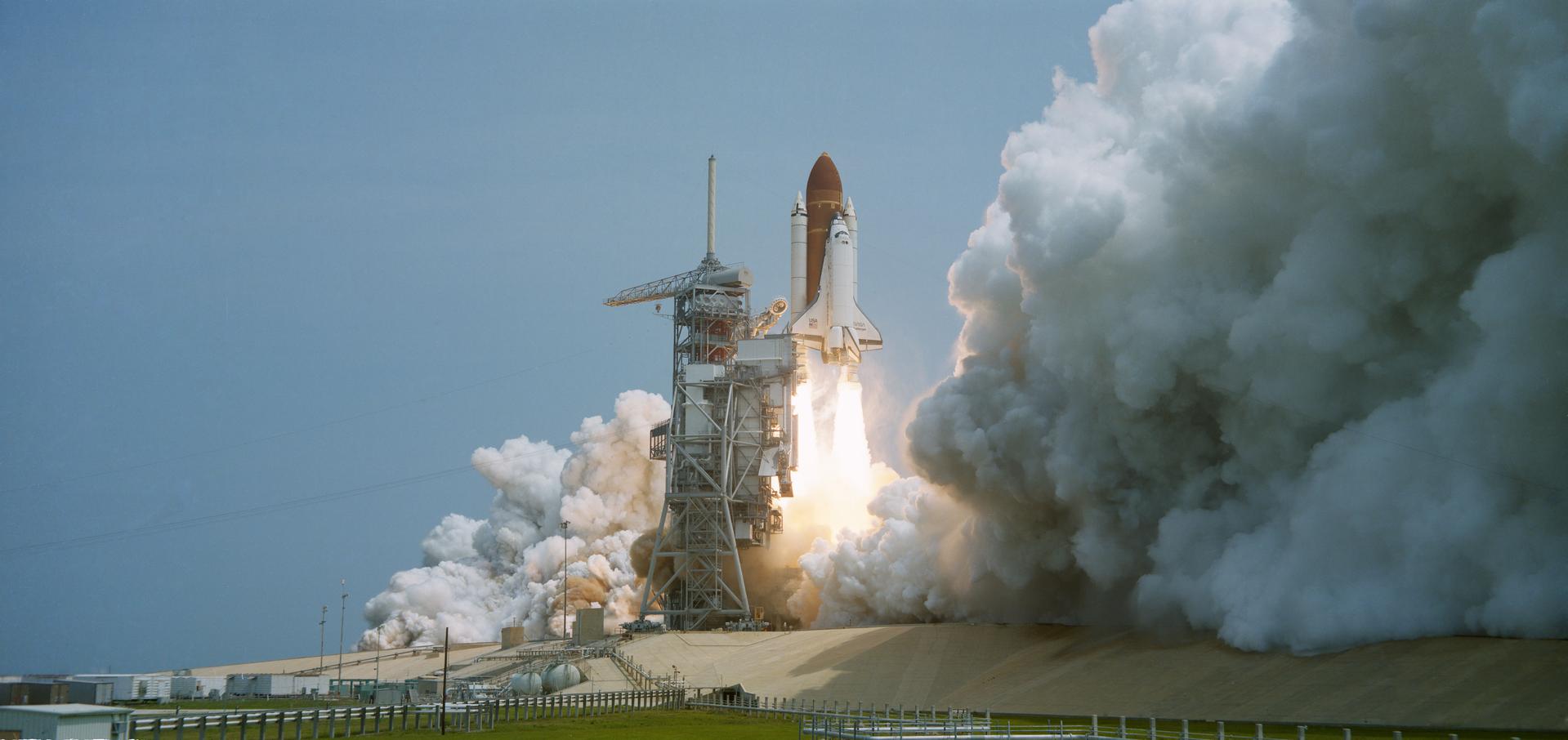
The STS-51-B mission begins with the liftoff of the Challenger from Pad 39A in April 1985.

Enlarge / The STS-51-B mission begins with the liftoff of the Challenger from Pad 39A in April 1985. (credit: NASA)

Taylor Wang was deeply despondent.

A day earlier, he had quite literally felt on top of the world by becoming the first Chinese-born person to fly into space. But now, orbiting Earth on board the Space Shuttle, all of his hopes and dreams, everything he had worked on for the better part of a decade as an American scientist at NASA's Jet Propulsion Laboratory, had come crashing down around him.

Wang was the principal investigator of an experiment called the Drop Dynamics Module, which aimed to uncover the fundamental physical behavior of liquid drops in microgravity. He had largely built the experiment, and he then effectively won a lottery ticket when NASA selected him to fly on the 17th flight of the Space Shuttle program, the STS-51-B mission. Wang, along with six other crew members, launched aboard Space Shuttle Challenger in April 1985.

Read 53 remaining paragraphs | Comments

Saturday, January 20

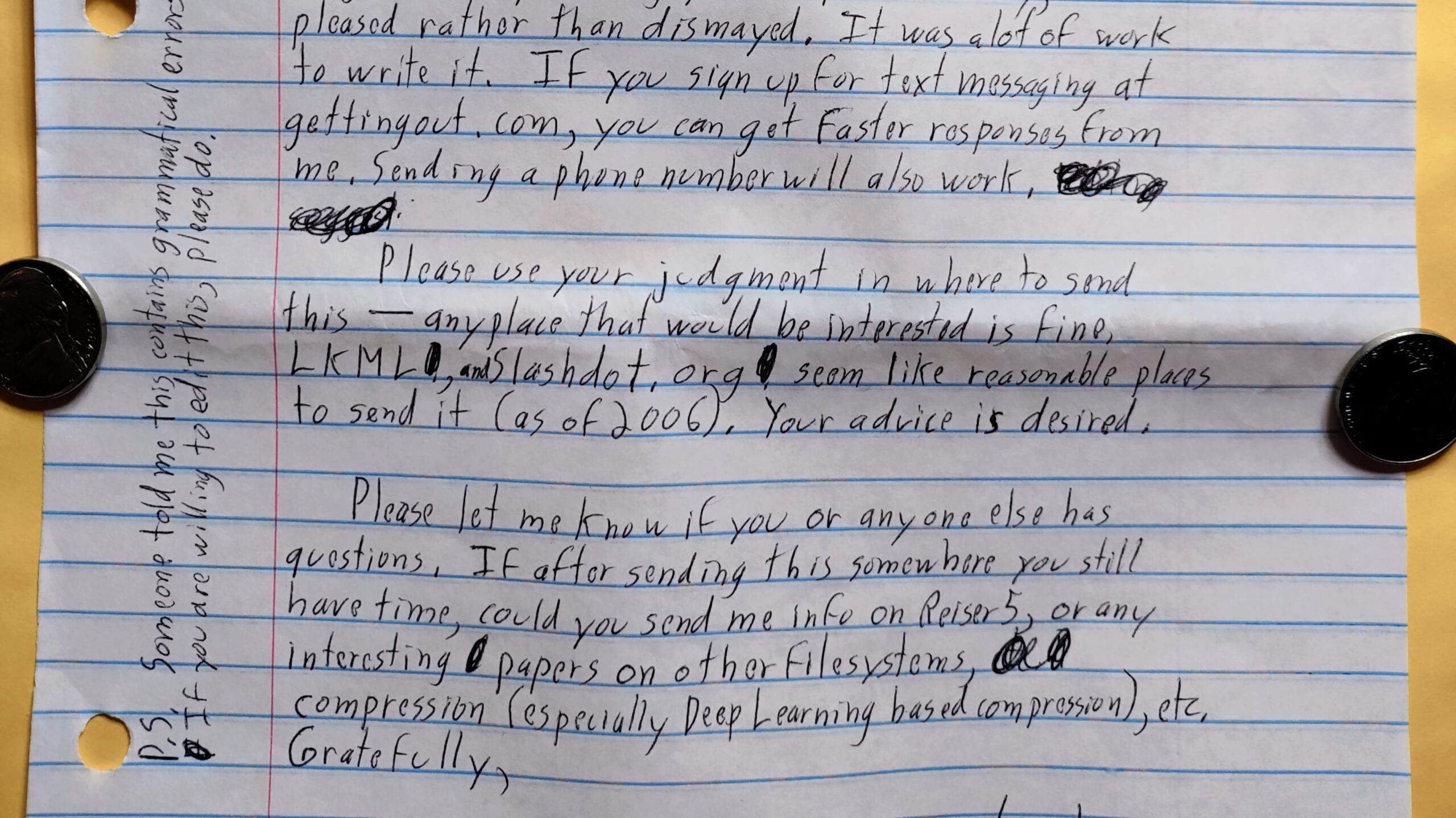
Convicted murderer, filesystem creator writes of regrets to Linux list

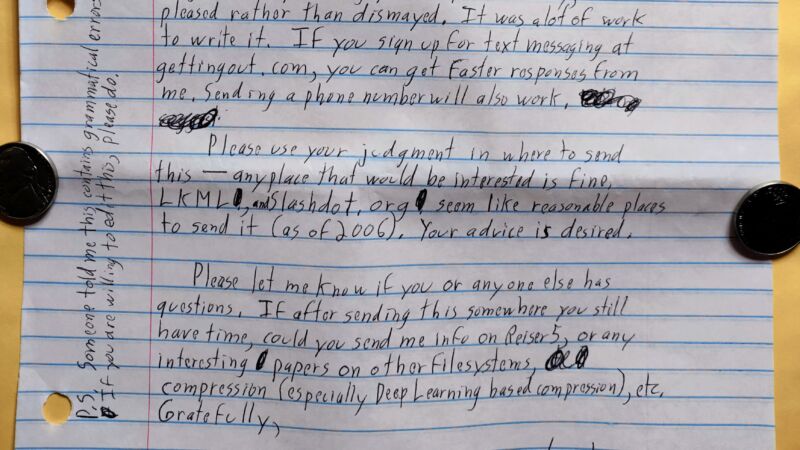
Hans Reiser letter to Fredrick Brennan

Enlarge / A portion of the cover letter attached to Hans Reiser's response to Fredrick Brennan's prompt about his filesystem's obsolescence. (credit: Fredrick Brennan)

With the ReiserFS recently considered obsolete and slated for removal from the Linux kernel entirely, Fredrick R. Brennan, font designer and (now regretful) founder of 8chan, wrote to the filesystem's creator, Hans Reiser, asking if he wanted to reply to the discussion on the Linux Kernel Mailing List (LKML).

Reiser, 59, serving a potential life sentence in a California prison for the 2006 murder of his estranged wife, Nina Reiser, wrote back with more than 6,500 words, which Brennan then forwarded to the LKML. It's not often you see somebody apologize for killing their wife, explain their coding decisions around balanced trees versus extensible hashing, and suggest that elementary schools offer the same kinds of emotional intelligence curriculum that they've worked through in prison, in a software mailing list. It's quite a document.

What follows is a relative summary of Reiser's letter, dated November 26, 2023, which we first saw on the Phoronix blog, and which, by all appearances, is authentic (or would otherwise be an epic bit of minutely detailed fraud for no particular reason). It covers, broadly, why Reiser believes his system failed to gain mindshare among Linux users, beyond the most obvious reason. This leads Reiser to detail the technical possibilities, his interpersonal and leadership failings and development, some lingering regrets about dealings with SUSE and Oracle and the Linux community at large, and other topics, including modern Russian geopolitics.

Read 19 remaining paragraphs | Comments

Friday, January 19

DeepMind AI rivals the world’s smartest high schoolers at geometry

Demis Hassabis, CEO of DeepMind Technologies and developer of AlphaGO, attends the AI Safety Summit at Bletchley Park on November 2, 2023 in Bletchley, England.

Enlarge / Demis Hassabis, CEO of DeepMind Technologies and developer of AlphaGO, attends the AI Safety Summit at Bletchley Park on November 2, 2023 in Bletchley, England. (credit: Toby Melville - WPA Pool/Getty Images)

A system developed by Google’s DeepMind has set a new record for AI performance on geometry problems. DeepMind’s AlphaGeometry managed to solve 25 of the 30 geometry problems drawn from the International Mathematical Olympiad between 2000 and 2022.

That puts the software ahead of the vast majority of young mathematicians and just shy of IMO gold medalists. DeepMind estimates that the average gold medalist would have solved 26 out of 30 problems. Many view the IMO as the world’s most prestigious math competition for high school students.

“Because language models excel at identifying general patterns and relationships in data, they can quickly predict potentially useful constructs, but often lack the ability to reason rigorously or explain their decisions,” DeepMind writes. To overcome this difficulty, DeepMind paired a language model with a more traditional symbolic deduction engine that performs algebraic and geometric reasoning.

Read 24 remaining paragraphs | Comments

Indiana Jones and the Great Circle is a new first-person Nazi-whipping journey

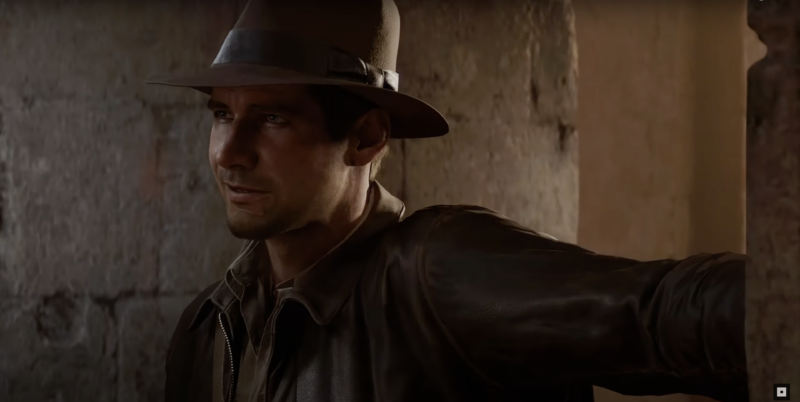
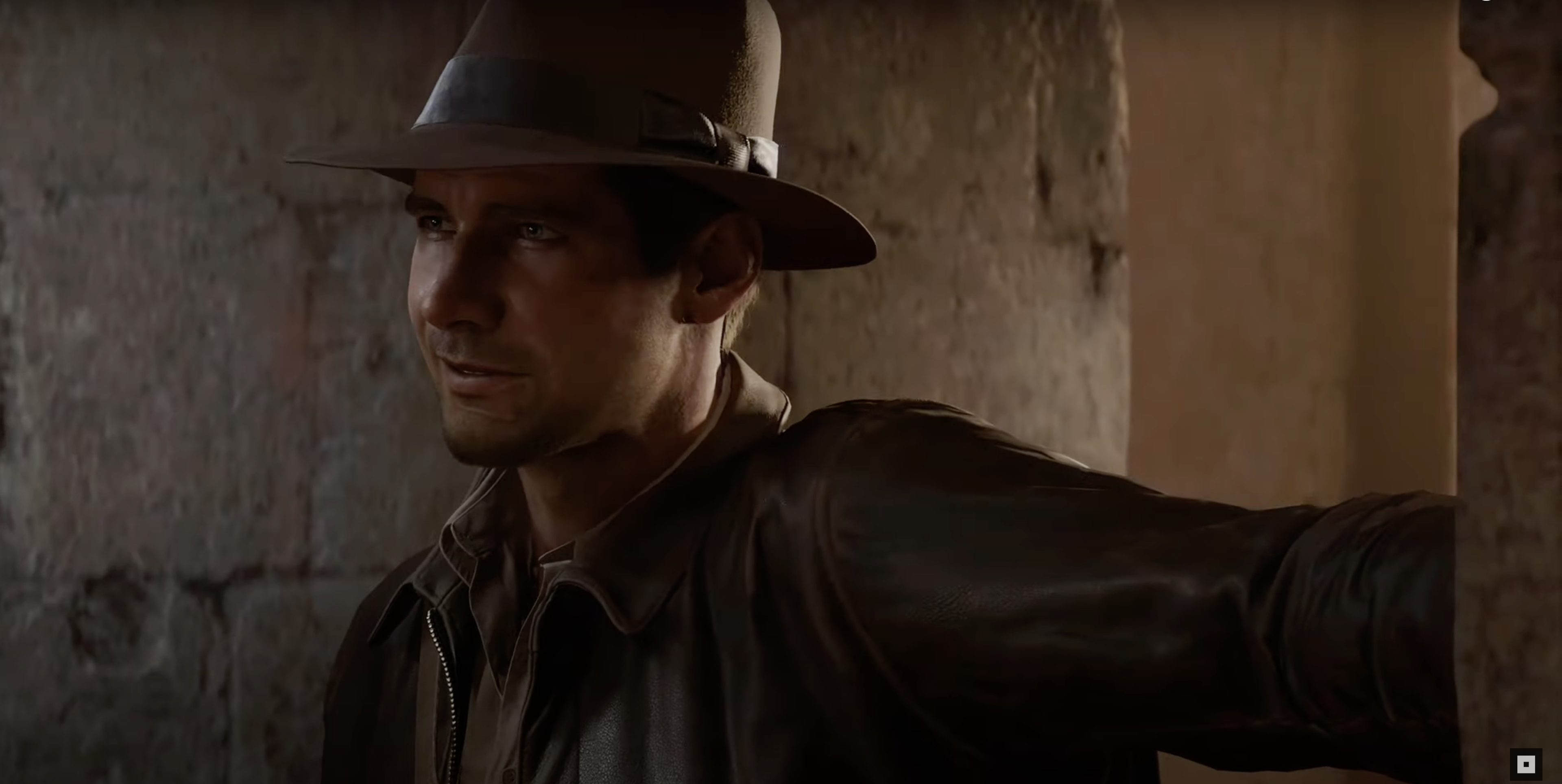
Indiana Jones in front of an alcove in a ruin.

Enlarge / CGI Harrison Ford just can't believe he's getting roped into another globe-trotting adventure. (credit: Bethesda/Machine Games)

Almost two years ago to this day, Bethesda told everyone its Machine Games subsidiary was working on a new Indiana Jones game, one with "an original story." Now we can see what Indiana Jones and the Great Circle is going to look like, with a gameplay trailer showing up during Microsoft's Developer Direct event, and when it's arriving: "2024." You can now wishlist it on Steam and the Xbox store; it's exclusive to those platforms.

Gameplay reveal trailer for Indiana Jones and the Great Circle.

While the game has Harrison Ford's likeness, it's not Ford voicing your character. Troy Baker, the original voice of Joel in The Last of Us, picks up the role of the archaeologist.

From the trailer, Great Circle looks a lot like the modern Wolfenstein games that Machine Games made—and that's a good thing. The New Order and The New Colossus excelled at making you feel more like a human action hero than a shooting tank. They've got a knack for first-person platforming, stunts, and cinematic moments that are nowhere near as painful as in many shooters. They excel at balancing immersing you as a player and letting your character have a personality.

Read 4 remaining paragraphs | Comments

Thursday, January 18

Researcher uncovers one of the biggest password breaches in recent history

Calendar with words Time to change password. Password management.

Enlarge (credit: Getty Images)

Nearly 71 million unique credentials stolen for logging into websites such as Facebook, Roblox, eBay, and Yahoo have been circulating on the Internet for at least four months, a researcher said Wednesday.

Troy Hunt, operator of the Have I Been Pwned? breach notification service, said the massive amount of data was posted to a well-known underground market that brokers sales of compromised credentials. Hunt said he often pays little attention to dumps like these because they simply compile and repackage previously published passwords taken in earlier campaigns.

Not your typical password dump

Some glaring things prevented Hunt from dismissing this one, specifically the contents indicating that nearly 25 million of the passwords had never been leaked before:

Read 9 remaining paragraphs | Comments

Apple lets devs use alternate in-app payment options, still takes commissions

App Store icon on an iPhone screen

Enlarge (credit: Getty Images | NurPhoto)

A chapter in the ongoing Epic v. Apple court case closed yesterday when the US Supreme Court declined to hear further arguments from either company. This decision leaves the case where it was after the 9th Circuit Court of Appeals ruled on it in April 2023.

The main issue at hand—to summarize days of arguments and multiple lengthy, technical court rulings in a couple of sentences—was whether Apple could continue to collect the 15–30 percent cut that it takes of all App Store purchases on its platforms and in-app purchases and subscriptions bought inside of those apps. The rulings, largely seen as victories for Apple, didn't open iOS or iPadOS up to third-party app stores or app sideloading as Epic had originally sought. However, the rulings establised that Apple's so-called "anti-steering" rules—language prohibiting developers from mentioning cheaper or alternative purchasing options that might be available outside of an app—were anticompetitive.

Apple has updated its App Store rules to allow developers to provide external links to other payment options, technically circumventing its normal fee structure. But they come with many extra conditions that developers have to meet. And instead of paying Apple a 15 or 30 percent cut, Apple will collect a 12–27 percent commission instead. After factoring in the fees from whatever non-Apple payment processor these developers decide to use, the revenue they give up will remain essentially unchanged.

Read 11 remaining paragraphs | Comments

Wednesday, January 17

What to expect from the Apple Vision Pro in February

The glass front of mixed reality goggles

Enlarge / Apple Vision Pro. (credit: Apple)

After years of delays, preorders for the Apple Vision Pro are just a few days away. It’s been a long, winding road to get to this point, and the nature of the headset has shifted through numerous rumors, both true and false.

Because of all that, this is a good time to clarify exactly what you can (and can’t) expect from Apple’s most ambitious new product in many years.

Apple showed more or less what it had finally landed on at WWDC in June, and I got some hands-on time with it then, but I still had a lot of questions. Fortunately, a few relevant details have been clarified since.
Read 35 remaining paragraphs | Comments

Twin Galaxies lawyer says settlement avoids “an inordinate amount of costs”

A long-haired man plays a late '70s / early '80s video game cabinet.

Enlarge / Billy Mitchell competes at a (presumably authentic) Donkey Kong cabinet. (credit: Flickr / daveynin)

After a nearly five-year legal battle between the scorekeepers at Twin Galaxies and Billy Mitchell over the veracity of Mitchell's contested Donkey Kong high score submissions, the recent settlement of the case before trial might feel a little anticlimactic. But Twin Galaxies attorney David Tashroudian tells Ars Technica that he wasn't surprised both sides opted for the cost savings and quick finality that come with avoiding arguments in front of a jury.

"A ton of cases end up settling prior to trial, just to avoid the expense and for all the parties to get finality and certainty on their own terms," Tashroudian told Ars. "There were going to be an inordinate amount of costs involved, and both parties were facing a lot of uncertainty at trial, and they wanted to get the matter settled on their own terms without putting it to a jury."

For Twin Galaxies, Tashroudian said he wasn't sure if cost "was our primary motivating factor, but I think the finality really is something that we wanted to achieve."

Read 14 remaining paragraphs | Comments

Tuesday, January 16

Daily Telescope: The Cygnus Wall lights up the night sky

The Cygnus Wall.

Enlarge / The Cygnus Wall. (credit: Mel Martin)

Welcome to the Daily Telescope. There is a little too much darkness in this world and not enough light, a little too much pseudoscience and not enough science. We'll let other publications offer you a daily horoscope. At Ars Technica, we're going to take a different route, finding inspiration from very real images of a universe that is filled with stars and wonder.

Good morning. It's January 16, and today we're traveling 2,600 light-years outward into space to the Cygnus Wall.

Although this sounds like some kind of intergalactic barrier, the Cygnus Wall's nomenclature has a more mundane origin—it looks like a wall and is located in the Cygnus constellation. It is the brightest region of the so-called North American Nebula, which in some photographs looks like the outline of North America.

Read 4 remaining paragraphs | Comments