Tuesday, May 31

Two European countries won’t get Diablo Immortal because of loot box laws

What's in the box?

Enlarge / What's in the box? (credit: Getty / Aurich Lawson)

Blizzard's upcoming open beta launch of Diablo Immortal later this week will be skipping the Netherlands and Belgium, thanks to regulations in those countries that consider games with randomized loot boxes to be illegal gambling.

"Diablo Immortal will not be available in Belgium or the Netherlands, and will not appear on Battle.net or the Belgian and Netherlands App or Google Play Stores," an Activision Blizzard spokesperson told Eurogamer over the weekend. "This is related to the current operating environment for games in those countries. Accordingly, pre-registrations for the game are not accessible in those markets."

Activision Blizzard had reportedly let Belgian and Dutch players preregister for the game's public beta test and listed the game briefly on mobile app stores in both countries. But the company quietly changed course in recent months, as Dutch gaming news site Tweakers noticed over the weekend.

Read 5 remaining paragraphs | Comments

Qualcomm wants to buy a stake in Arm alongside its rivals

Extreme close-up promotional image of computer component.

Enlarge (credit: Arm)

The US chipmaker Qualcomm wants to buy a stake in Arm alongside its rivals and create a consortium that would maintain the UK chip designer’s neutrality in the highly competitive semiconductor market.

Japanese conglomerate SoftBank plans to list Arm on the New York Stock Exchange after Nvidia’s $66 billion purchase collapsed earlier this year. However, the IPO has sparked concern over the future ownership of the company, given its crucial role in the global technology sector.

“We’re an interested party in investing,” Cristiano Amon, Qualcomm’s chief executive, told the Financial Times. “It’s a very important asset and it’s an asset which is going to be essential to the development of our industry.”

Read 16 remaining paragraphs | Comments

The Internet needs to stop getting excited by vaporware EVs

The DeLorean Alpha 5 is inspired by the mediocre mid-engined coupe from Northern Ireland.

Enlarge / The DeLorean Alpha 5 is inspired by the mediocre mid-engined coupe from Northern Ireland. (credit: DeLorean)

Back in the earlier days of the Internet, when web fora still mattered and there was no such thing as Twitter, Sniff Petrol's Richard Porter published a now-infamous "Press Release Help For New Supercar Makers." No stranger to cutting satire, Porter's checklist was a reaction to a seemingly never-ending string of new British supercars announced to middling fanfare and then often never heard of again.

Sixteen years later, I can't help but feel that we need a new version, this time not the UK's cottage industry of vaporware supercars, but the ever-expanding field of electric vehicle startups. Specifically, I'm writing this in reaction to the "new" DeLorean, renders of which went public yesterday, causing some particularly excitable corners of the Internet to begin smoldering dangerously.

Now, this isn't John DeLorean's company—that went bankrupt in 1982 after producing about 8,500 examples of a single model that wasn't really ever as good as it should have been, called the DMC-12. However, the DMC-12 acquired cult status after starring in Back to the Future, and the DeLorean name now belongs to a company in Texas that supplies spares for the stainless steel-bodied classics.

Read 16 remaining paragraphs | Comments

Monday, May 30

Remembering Apple’s Newton, 30 years on

Remembering Apple’s Newton, 30 years on

Enlarge

Thirty years ago, on May 29, 1992, Apple announced its most groundbreaking and revolutionary product yet, the Newton MessagePad. It was released to great fanfare a year later, but as a product, it could only be described as a flop. Widely mocked in popular culture at the time, the Newton became a poster child for expensive but useless high-tech gadgets. Even though the device improved dramatically over time, it failed to gain market share, and it was discontinued in 1997. Yet while the Newton was a failure, it galvanized Apple engineers to create something better—and in some ways led to the creation of the iPad and the iPhone.

The vision thing

Steve Jobs, who co-founded Apple in 1976, had wooed marketing guru John Sculley away from PepsiCo to become the new Apple CEO in 1983. However, their relationship broke down, and Jobs resigned from Apple two years later after a bitter power struggle. Although Sculley made Apple profitable by cutting costs and introducing new Macintosh models, he felt lost without Apple’s visionary founder. So when Apple Fellow Alan Kay burst into Sculley’s office and warned him that “next time, we won’t have Xerox” (to borrow ideas from), he took it seriously.

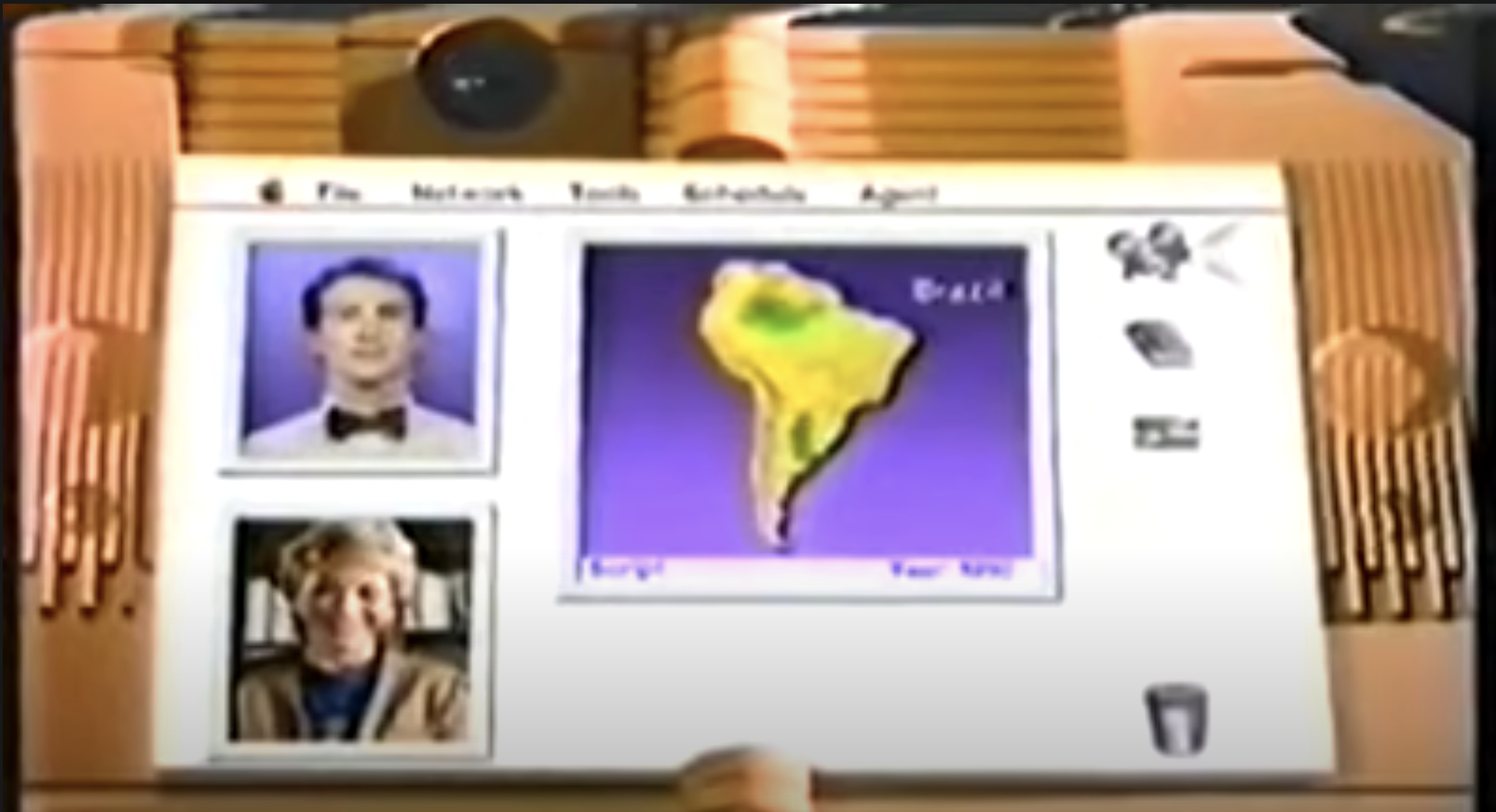
In 1986, Sculley commissioned a team to create two “high concept” videos for a new type of computing device that Apple could conceivably build in the future. These “Knowledge Navigator” promos showed a foldable, tablet-like device with a humanoid “virtual assistant” that interacted via spoken instructions. While some derided the impracticality of these sci-fi vignettes, they fired up Apple employees and got them thinking about the future of computing.

Read 34 remaining paragraphs | Comments

Bear hibernation: More than a winter’s nap

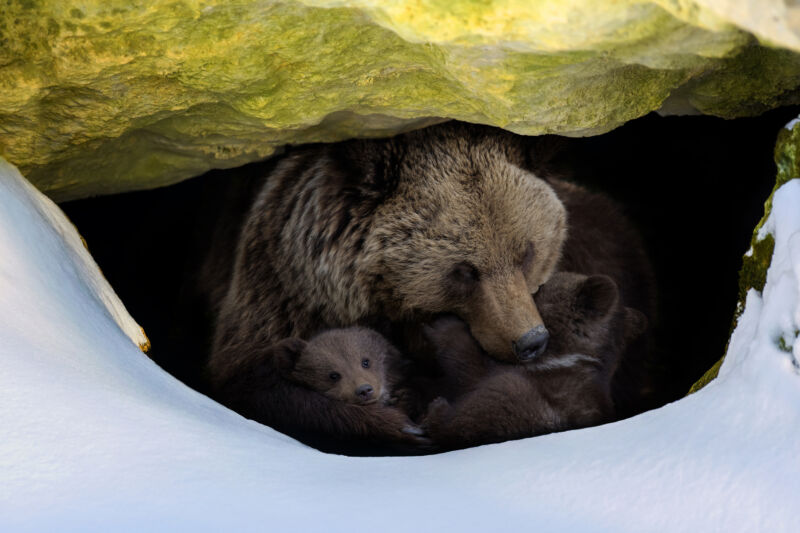
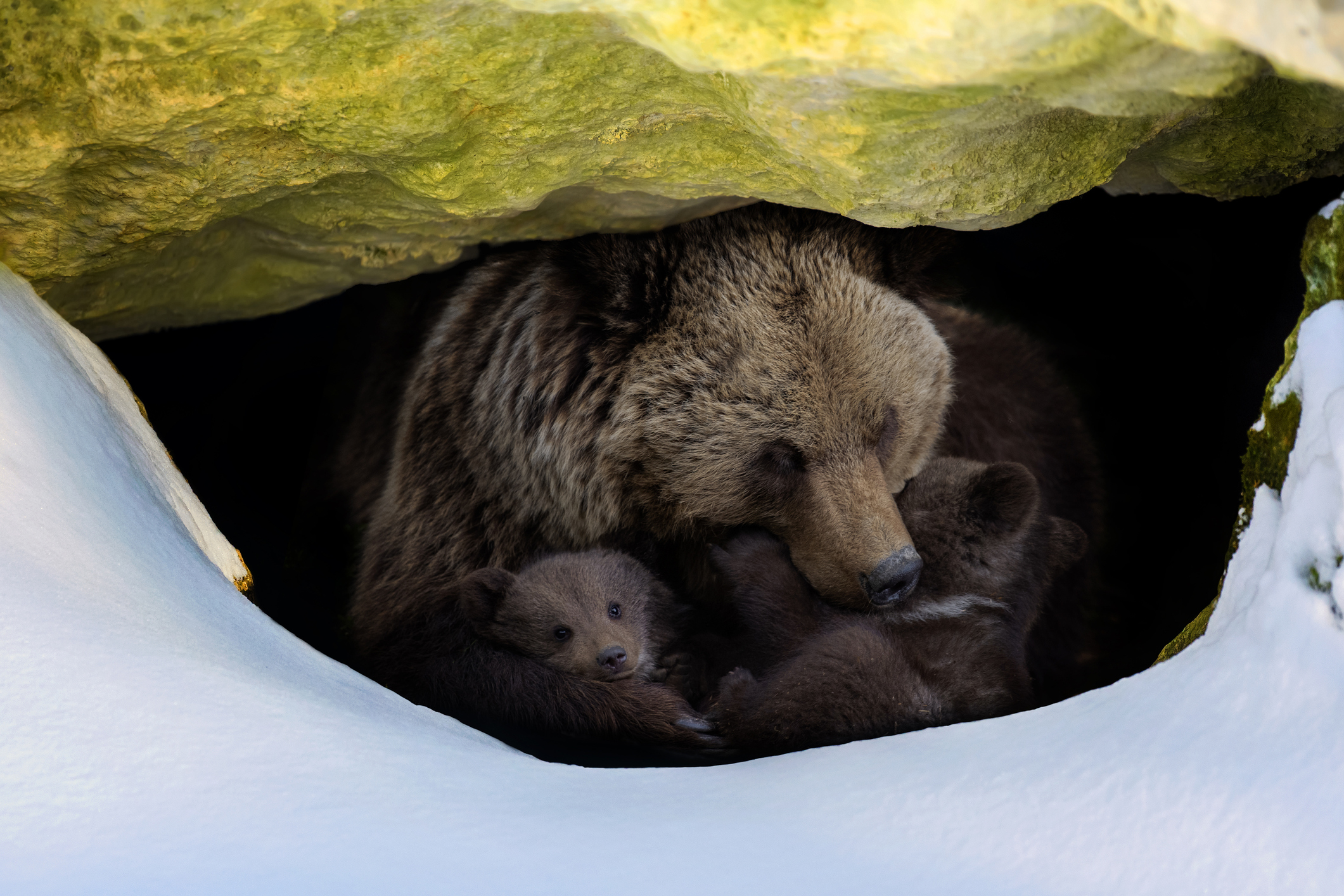
A brown bear with two cubs looks out of its den in the woods under a large rock in winter.

Enlarge / A brown bear with two cubs looks out of its den in the woods under a large rock in winter. (credit: Byrdyak | Getty)

Every spring, as days in the north stretch longer and melting snow trickles into streams, drowsy animals ranging from grizzlies to ground squirrels start to rally from hibernation. It’s tempting to say that that they are “waking up,” but hibernation is more complicated and mysterious than a simple long sleep: Any animal that can spend months underground without eating or drinking and still emerge ready to face the world has clearly mastered an amazing trick of biology.

The roster of animals that hibernate includes all manner of rodents, some amphibians and even a few primates (several species of dwarf lemurs), but bears are literally the biggest hibernators of them all. Adult grizzly and black bears weigh as much as American football players, or more, with the energy and curiosity of preschoolers, but they have no trouble hunkering down for months at time. The choreography that goes into shutting down a creature this big defies easy explanation, says Elena Gracheva, a neurophysiologist at Yale University in New Haven, Connecticut. “Hibernation is so complex it requires adaptations at multiple levels,” she says.

Bear hibernation offers important insights into the workings of large mammals, especially us, explains Gracheva, who coauthored an exploration of the physiology of hibernation in the 2020 Annual Review of Cell and Developmental Biology. A better understanding of the process could potentially change our approach to a wide range of human conditions, including stroke, osteoporosis, Parkinson’s disease and Alzheimer’s (see sidebar).

Read 29 remaining paragraphs | Comments

Sunday, May 29

Which is worse for the soil—combines or dinosaurs?

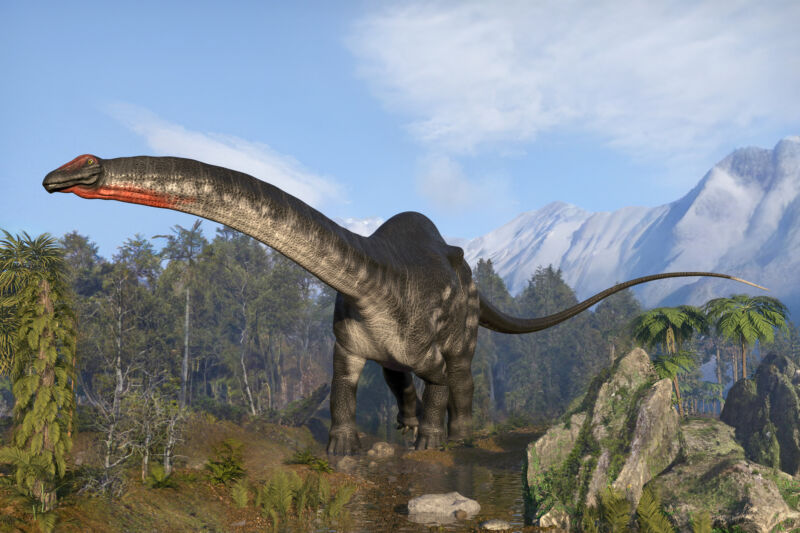
Image of a sauropod in a lush environment.

Enlarge / Having this guy stomp through might mean that things would struggle to grow there afterwards. (credit: Roger Harris)

Words I did not expect to read in a scientific paper this week: "The similarity in mass and contact area between modern farm vehicles and sauropods raises the question: What was the mechanical impact of these prehistoric animals on land productivity?" The paper, from Thomas Keller and Dani Or, raises what may be a significant worry: Farm vehicles have grown over the past few decades, to the point where they may be compacting the subsurface soil where roots of crops extend. This poses a risk to agricultural productivity.

The paper then compares that compaction risk to the one posed by the largest animals to ever roam our land: sauropods.

The big crunch

We think of the ground as being solid, but gaps and channels within soil are critical to plant life, since they allow air and water to reach roots. Soil compaction, in its extreme form, gets rid of all these spaces, making the ground much less hospitable for plants. And compaction is hard to reverse; it can take decades of plant and animal activity to break up the compacted soil again and re-establish a healthy ecosystem.

Read 8 remaining paragraphs | Comments
The mystery of China’s sudden warnings about US hackers

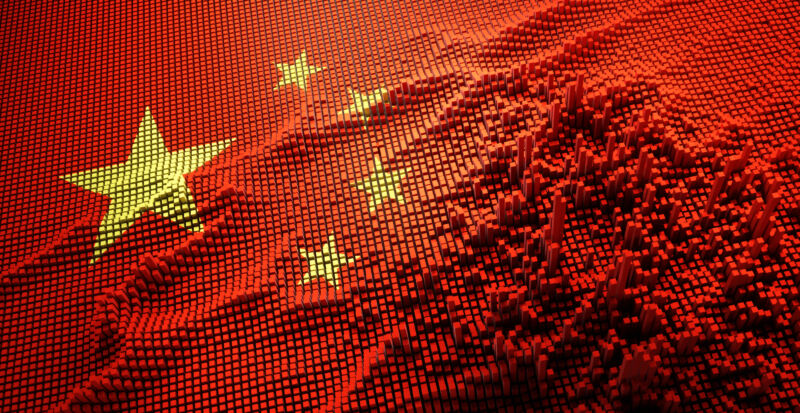
Chinese flag with digital matrix -Innovation Concept - Digital Tech Wallpaper - 3D illustration

Enlarge / Chinese flag with digital matrix -Innovation Concept - Digital Tech Wallpaper - 3D illustration (credit: peterschreiber.media | Getty Images)

For the best part of a decade, US officials and cybersecurity companies have been naming and shaming hackers they believe work for the Chinese government. These hackers have stolen terabytes of data from companies like pharmaceutical and video game firms, compromised servers, stripped security protections, and highjacked hacking tools, according to security experts. And as China’s alleged hacking has grown more brazen, individual Chinese hackers face indictments. However, things may be changing.

Since the start of 2022, China’s Foreign Ministry and the country’s cybersecurity firms have increasingly been calling out alleged US cyberespionage. Until now, these allegations have been a rarity. But the disclosures come with a catch: They appear to rely on years-old technical details, which are already publicly known and don’t contain fresh information. The move may be a strategic change for China as the nation tussles to cement its position as a tech superpower.

“These are useful materials for China’s tit-for-tat propaganda campaigns when they faced US accusation and indictment of China’s cyberespionage activities,” says Che Chang, a cyber threat analyst at the Taiwan-based cybersecurity firm TeamT5.

Read 15 remaining paragraphs | Comments