From the Age of Sail through to the Second World War, naval combat was done primarily in close quarters and with cannons. Naturally the technology improved quite a bit in those intervening centuries, but the idea was more or less the same: the ship with the most guns and most armor was usually the one that emerged victorious. Over the years warships became larger and heavier, a trend that culminated in the 1940s with the massive Bismarck, Iowa, and Yamato class battleships.
But by the close of WWII, the nature of naval combat had begun to change. Airplanes and submarines, vastly improved over their WWI counterparts, presented threats from above and below. A few years later, the advent of practical long-range guided missiles meant that adversaries no longer had to be within visual range to launch their attack. Going into the Cold War it became clear that to remain relevant, warships of the future would need to be smaller, faster, and smarter.
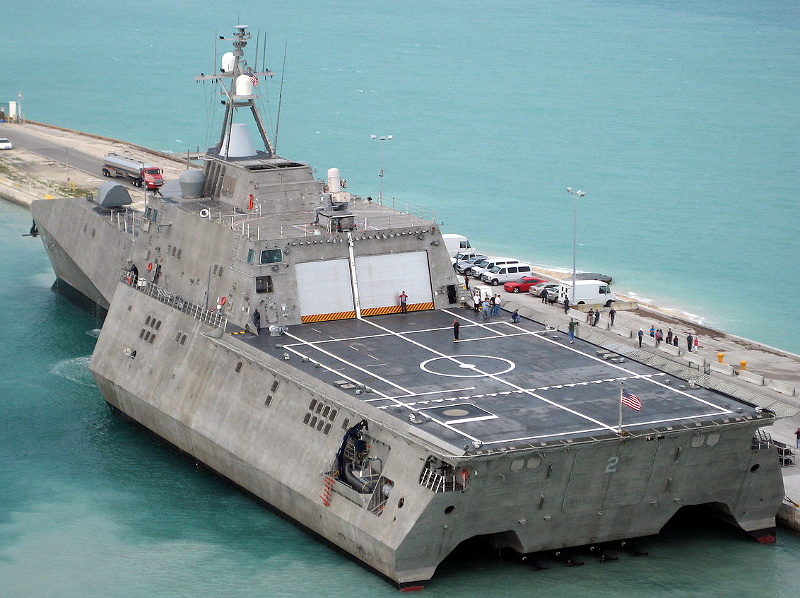
It was this line of thinking that lead the US Navy to embark on the Littoral Combat Ship (LCS) program in the early 2000s. These ships would be more nimble than older warships, able to quickly dash through shallow coastal waters where adversaries couldn’t follow. Their primary armament would consist of guided missiles, with fast firing small-caliber guns being relegated to defensive duty. But most importantly, the core goal of the LCS program was to produce a modular warship.
Rather than being built for a single task, the LCS would be able to perform multiple roles thanks to so-called “mission modules” which could be quickly swapped out as needed. Instead of having to return to home port for a lengthy refit, an LCS could be reconfigured for various tasks at a commercial port closer to the combat area in a matter of hours.
A fleet of ships that could be switched between combat roles based on demand promised to make for a more dynamic Navy. If the changing geopolitical climate meant they needed more electronic reconnaissance vessels and fewer minesweepers, the Navy wouldn’t have to wait the better part of a decade to reshuffle their assets; the changeover could happen in a matter of weeks.
Unfortunately, the Littoral Combat Ships have been plagued with technical problems. Citing the expensive refits that would be required to keep them operational, the Navy is now looking at retiring the first four ships in the fleet, the newest of which is just six years old.
Get Two For the Price of Two
One reason the refit would be so expensive is that the Navy never actually decided on which LCS they want to keep. When they opened bidding for the program, Lockheed Martin submitted a traditional steel monohull design and Australian shipbuilder Austal offered up an aluminum trimaran based on a high-speed ferry the company had already built. The two craft offered their own unique advantages, making it difficult to declare a clear winner. Since both ships ended up being cheaper than the Navy had originally anticipated, in 2010 the decision was made to buy ten ships from each of the two companies rather than selecting one design over the other.
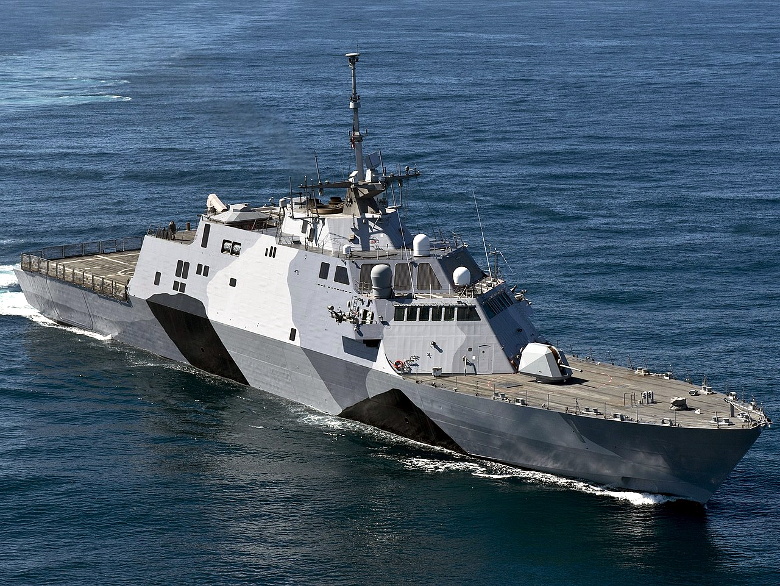
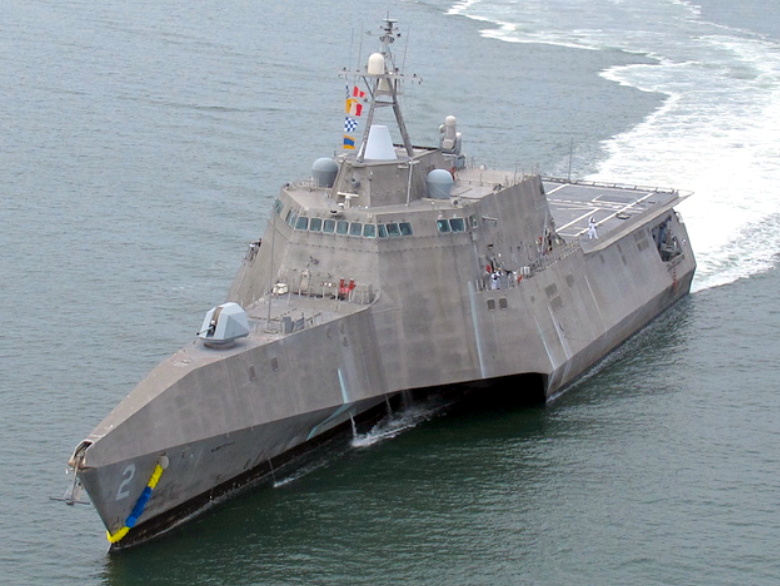
While the upfront costs might have been low enough for the decision to make sense a decade ago, the Navy is now dealing with the unpleasant realities of supporting both ships. Sailors need to be trained differently depending on which ship they’ll be assigned to, and two separate supply lines of replacement parts need to be maintained. Even the different materials used in their construction have become a problem. Repairs need to be approached differently for aluminum versus steel, as do the methods used for preventing corrosion.
The situation is even worse when talking about the first-generation ships. Over the years an untold number of issues have been resolved, and naturally those improvements were rolled into the later vessels. But those initial four ships, two of each LCS class, would need to have all those improvements retrofitted before they could be on par with their peers. As such, the Navy had previously decided to use the first four ships for training purposes only.
But even for training, they’ve become of limited use. The operational versions of the ships have enough differences that the earlier models aren’t fully representative of the vessels the crew would actually serve on. If they can’t be deployed and aren’t useful for training, it’s hard to justify why more money should be allocated for their continued operation.
Some Assembly Required
One might wonder why these ships couldn’t be utilized for the research and development of future mission modules. After all, at one time the Navy touted that the LCS program would eventually see modules for near-future weapon technologies such as lasers and rail guns; equipment which would surely require extended sea trials before it was approved for deployment. Indeed, using these ships as floating module testbeds would make perfect sense. Unfortunately, nobody is actually making any more modules.

In what’s truly the greatest failure of the LCS program, the idea of a modular warship has at this point been all but completely abandoned. In practice, the Navy found that it took far longer to switch out the modules than was originally envisioned. A well-trained crew could do it in as little as 92 hours under controlled conditions, but on average it took a week or more to perform the switch.
Arguably that’s still an impressive technical accomplishment, but operationally it left something to be desired. In the time it would take an LCS to switch over to another role, a different ship could have been called in to take is place.
In 2016, it was decided that each deployed ship would be assigned specific mission modules. What’s more, it was hinted that future versions of the LCS would likely lose the ability to swap modules altogether. In doing so, the Navy effectively negated the entire point of the program. If each hull in the LCS fleet has a permanent mission module, then the ships are are really no different than the ones they set out to replace originally.
Finding a Replacement
In reality, the early retirement of the Freedom, Fort Worth, Independence, and Coronado is the first step towards the Navy ultimately winding down the LCS program. With the modular concept of the ships not living up to expectations, there’s little reason to keep the fleet operating. Both LCS variants were built with the assumption that their modest offensive and defensive capabilities would be augmented with future mission modules. Now that those aren’t coming, the ships have limited combat usefulness.
Recognizing the hole that the under-performing LCS program puts in their capabilities, the Navy is currently holding a competition for the design and construction of a new class of multi-mission guided-missile frigates referred to as FFG(X). While they aren’t looking for a fully modular design, the Navy does request that proposals include an explanation of how easily the ship could be upgraded in the future. Specifically, they’re looking for designs that could be outfitted with new systems in the field, avoiding the need for putting the ships in dry dock or cutting into the hull.
So while the Littoral Combat Ship never reached its full potential, it would seem the Navy hasn’t completely given up on the idea. It may be that a fully-modular warship isn’t practical with current technology, but the LCS program at least demonstrated that replacing weapons and equipment without bringing the ship back to its home port was possible. The program didn’t produce the Navy’s dream ship, but it might have been a necessary step towards something better.
No comments:
Post a Comment