It’s one of the enduring images of a humanitarian aid mobilization: military transport planes lined up on runways, ready to receive pallets of every conceivable supply. The cardboard boxes on those shrink-wrapped pallets are filled with everything from baby formula to drinking water, and will join crates filled with the tools and materials needed to shelter, clothe, feed, and heal people in places where civilization has suddenly come into short supply thanks to a disaster, sometimes natural, but often man-made.
What if it didn’t need to be that way? What if, instead of flight after flight of supplies sent in to help rebuild, perhaps just one flight was needed, one stuffed with the tools of our trade: 3D-printers, Arduinos, electronic components, machine tools, and the experts to use them. It certainly wouldn’t make up for the short-term need for food and water, but importing the ability to manufacture the items needed locally would go a long way to repairing infrastructure in the disaster area.
Rethinking disaster response is the core mission of Field Ready, one of the groups we’ve partnered with for the 2020 Hackaday Prize. By way of introduction to this non-profit with a potentially world-changing mission, and to help those who are participating in the 2020 Hackaday Prize challenges, here’s a little bit about Field Ready — what they do, how they see digital manufacturing fitting into their mission, and where they’re going in the future.
Supply Threads
If the first half of 2020 has taught us anything, it’s that this world lives and dies by supply chains. The term “chain” is perhaps a bit oxymoronic, as it implies strength and stability. But as we’ve all learned, our supply chains are more like threads, easily broken and difficult to mend. The globally distributed supply chain that giveth inexpensive goods en masse can also taketh them away, especially in disaster zones.
It was with these bottlenecks in mind that Field Ready was conceived by Eric James, Dara Dotz, and Nick Haan in 2012. Their idea was to transform the logistics of disaster relief using the power of flexible manufacturing to essentially bring a “build anything” factory to the disaster. Since incorporating and receiving their non-profit status in 2014, they’ve tested their system with field responses to a wide range of humanitarian crises, starting with the 2015 earthquakes in Nepal.
After assessing the ravaged country’s needs, Field Ready helped start up a digital manufacturing lab in Kathmandu to manufacture whatever was needed by the host of aid agencies that flooded into the disaster area. The medical instruments and repair parts that the lab created could have been ordered, but with roads knocked out by the quakes and supply lines frayed, making them on-site was quicker and easier. In 2016, Field Ready made over 5,000 items. In addition, they trained over 600 people how to run the machines in the lab, leaving Nepal with the capacity to continue rebuilding, not to mention leaving them well-positioned to respond to the current COVID-19 crisis by building their own PPE.
The ongoing civil war in Syria provided another chance for Field Ready to innovate. Rescue and recovery operations from buildings collapsed by rockets and artillery are often helped by the use of lifting bags, sturdy flexible bladders that expand when inflated with high-pressure air. Lifting bags can lift the tremendous weight of concrete slabs and steel beams, but they were in short supply in the war-torn nation, so Field Ready created a means to manufacture the airbags from locally sourced materials. They’ve made over 100 bags and distributed them widely; the tools have helped save the lives of seven people so far, and what’s more, the design is freely available, so anyone can build a bag and save a life.
The Open Challenges
The Open Challenges of the 2020 Hackaday Prize invite anyone to enter with their ideas for addressing the topics outline by our four non-profit partners. The challenges are based on needs they’ve identified through their work in the field, and designs that address these needs have the potential to make a huge impact on their life-saving efforts and the disaster response efforts of other NGOs. Field Ready has a few highly focused devices in mind.
The first challenge is to produce a reliable, low-cost infusion fluid warmer. Under the best of conditions, medical treatment that involves infusion of fluids is anything but trivial. Intravenous therapy always requires sterile supplies and procedures, which can be difficult to obtain in disaster scenarios, and the venipuncture itself is invasive and prone to infection. But one of the lesser-known risks of infusion therapy is inducing hypothermia by not properly warming the infusion fluids.
To avoid the risk a patient faces when getting a large bolus of cold fluid, fluid warmers are routinely used. By warming the fluid in a controlled and reliable way to nearly body temperature, the risk of hypothermia and bursting of red blood cells, or hemolysis, can be averted. The trouble is, commercial fluid warmers are expensive and hard to come by in austere clinical conditions. The challenge seeks to rectify this with a design for a fluid warmer that can be assembled from readily available parts. Above all, the fluid warmer needs to be designed with safety in mind and with an eye to making it easy to construct by responders who likely will not have experience building medical devices.
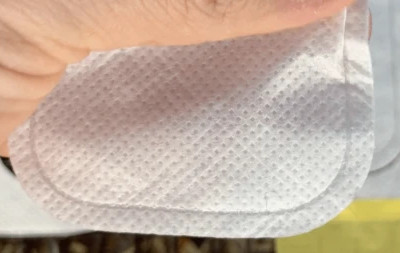
Another device in the Open Challenge is a heat sealer and plastic welder. Such a device has plenty of applications in the medical response space, from sealing sample bags to rapidly creating isolation gowns. We’ve seen hospitals the world over struggle with the latter over the last few months as stockpiles of PPE have dwindled. In a disaster situation, effective PPE could be vanishingly scarce. A heat sealer that could be used as a welder for synthetic textiles like Tyvek and spun polypropylene could allow responders to make isolation gowns, eye shields, and even face masks far faster than they can be printed or sewn.
The final device in Field Ready’s Open Challenge is for a versatile UV wand for curing adhesives. The range of UV-curable resins is vast, covering applications from semiconductor manufacturing to artificial fingernails. In disaster response, the ability to leverage these versatile adhesives is often thwarted by the expense of the UV curing stations needed to cross-link the uncured resin. Anyone accepting this challenge will need to design something that emits UV-A light at levels needed to cure resins, do it from easily sourced materials, and make it versatile enough to fit into many different manufacturing processes.
The Dream Team Challenge
When it comes to tracking products and assuring that customers are getting what they pay for, traditional manufacturers with centralized operations have extensive quality control and quality assurance programs in place. Many manufacturers keep track of products through lot numbers and serial numbers; testing of random samples of a product, designed to elicit any flaws in the manufacturing or assembly process before the product gets to a customer, is a common practice too.
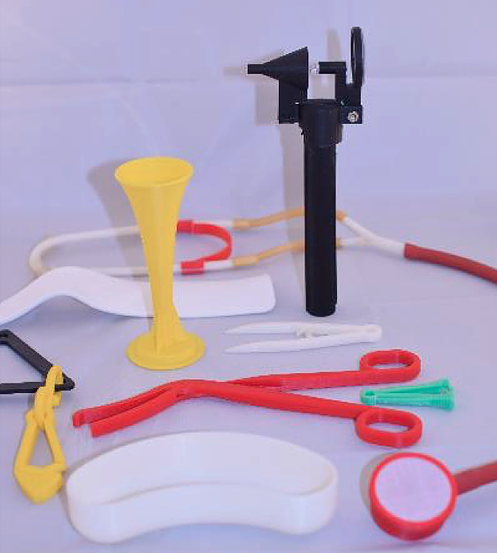
But for the decentralized manufacturing model that Field Ready applies to its disaster response efforts, traditional QA methods need not apply. Parts often go directly from the bed of a 3D-printer to an end-user, without the benefit of so much as a serial number or even a logo to let people know where the widget was made. This causes problems downstream, not least of which is getting credit for the good work they’re doing. Self-promotion aside, without a label an end-user who needs more of the widget has no idea whom to contact to get another, and someone who experiences a failure of the part has no recourse. The lack of tracing can lead to waste, as Field Ready gets no feedback on what’s working in the field and what needs fixing.
Applications closed today and the selection process is under way to choose three people who will work on Field Ready’s Dream Team over the next two months. They will each receive a monthly stipend of $3,000 to work with the organization on the Dream Team Challenge that aims to fix that lack of traceability. They’re tasked with assembling a quality control system that can be used to track every part made by Field Ready during its emergency response deployments. It will present a huge challenge, since items as small as 3D-printed umbilical clamps for obstetrical use to full-size structures like portable shelters and latrines have to be tracked. Diversity of materials presents another layer of difficulty, as Field Ready uses whatever they can to build the things they need. So any logos, serial numbers, QR codes, or labels need to work with wood, metal, glass, plastic, ceramic, or any other imaginable material, and must be robust enough to last under harsh conditions. Finally, the system needs to be remotely accessible, so that Field Ready can protect their users and continuously improve their offerings.
Let’s Do This!
Whether you made it onto the Dream Team, or prefer to work on one of the Open Challenge projects, Field Ready is positioned to put your efforts to good use. The world isn’t getting any safer, and there will always be a need for someone to step in to offer a helping hand. The less stuff they have to bring with them, the better, and with your help, Field Ready is making good on that vision.
Spend some time learning about the Field Ready challenges through this video Q&A session.
[Featured images: Red Team deployment in South Sudan field printing a water pump fitting; printing medical supplies in the US Virgin Islands with vehicle-powered 3D-printer. Courtesy Field Ready]
No comments:
Post a Comment