Friday, November 1

Raspberry Pi NAS Makes Itself at Home In Donor PC

It’s safe to say that most of us have at least one Raspberry Pi hanging from a USB cable someplace, silently hammering away at some unglamorous task that you’d rather not do on a “real” computer. With as cheap as they are, it’s not like there’s a big concern about where it sets up shop. But if you’re like [Jeremy S. Cook] and want your $35 Linux computer to be a permanent member of the family, then his tips on turning an old PC into a gloriously overkill Pi NAS may be of interest.
The main component [Jeremy] salvages from the old Lenovo desktop PC is, obviously, the case itself. Stripped of its original components, the case gives him plenty of room to mount the Pi as well as a couple of hard drives and a powered USB hub. To prevent the bottom of the Raspberry Pi from shorting out against the metal computer case, he designed and 3D printed a mount for it. Everything else is held down with hook and loop fastener, making it quick and easy to move things around and make adjustments.

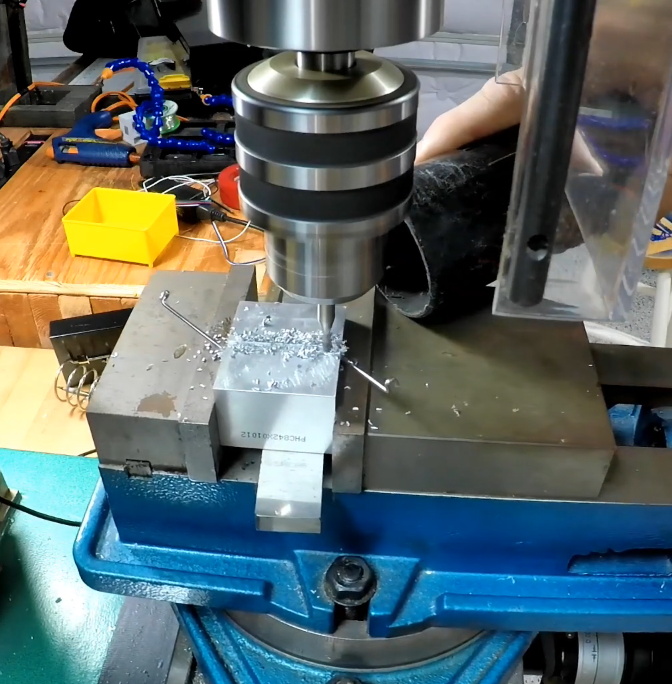
While it might not be strictly necessary, [Jeremy] also took the time to salvage the computer’s old heatsink. Being far too large to fit on the Pi as-is, he ran a line down the back of it with his mill and snapped it in half. He uses a bit of thermal tape to hold the bisected heatsink onto the Pi’s SoC, with a couple pieces of electrical tape to make sure it doesn’t short out on anything.

Raspberry Pi NAS builds are exceptionally popular, and we’ve seen more than we can count over the years. You can build one out of parts from IKEA, and if you don’t mind plastic, you can always 3D print the whole thing. If you really want to go minimal, you can even hang some files on the network with little more than a Pi Zero stuck into a USB port.

Plume takes another step toward fixing ISPs’ crappy Wi-Fi worldwide

Following in the footsteps of major ISPs in North America and Europe, Japanese ISP J:COM is offering Plume superpods directly to its customers.

Enlarge / Following in the footsteps of major ISPs in North America and Europe, Japanese ISP J:COM is offering Plume superpods directly to its customers. (credit: J:COM)

Wi-Fi mesh provider Plume announced a deal with another major ISP Thursday. J:COM—the largest cable-TV operator in Japan, with 5.5 million subscribers—is now offering Plume technology in its cable boxes and Plume pods and superpods to its customers for additional coverage where needed.

This is Plume's first deal in Asia, and it follows similar deals with large ISPs in America, Canada, and Europe such as Comcast, Bell Canada, Armstrong, TalkTalk, and more. Plume has been crystal clear since its launch that embedded distribution within ISPs was a primary goal, with direct sales to retail customers being as much for the PR as for the business itself. With large ISP partners on three continents, Plume seems to be making significant progress toward that goal.

ISP partners so far all follow a monthly "subscription" model, with little or no up-front cost and a small monthly fee per pod. This is the model Plume itself favors. To wit, the company quietly deprecated its earlier lifetime membership option earlier this year (grandfathering in the existing lifetime membership customers), and it now only offers new customers $100 per year annual memberships. ISPs most commonly charge $5 or $6 (or equivalent) per month, sometimes with additional fees for extra pods.

Read 5 remaining paragraphs | Comments

Symbiflow Open Source FPGA toolchain

Anyone who’s ever had the pleasure of programming FPGAs knows that it’s a land of proprietary tools that almost require marriage level commitment to a specific platform to be effective. Symbiflow hopes to solve this by becoming the GCC of FPGAs.

Rather than a tool built around a specific chip or architecture, Symbiflow will provide a more universal interface.  Users can program in Verilog; architecture definitions define how the code will be compiled for the right chip. They are currently targeting the popular Xilinx 7-series, the very affordable iCE40 series from lattice, and the ECP5 FPGAs also from Lattice.

If you’re headed to Hackaday Supercon this year, [Timothy Ansell] will be giving a talk on how Symbiflow is making this process much more approachable and much less proprietary.  Overall we’re very excited about a common interface, especially as the price of FPGAs keep dropping into micro controller territory while also increasing in capability.

(Speaking of Supercon, and maybe this is a spoiler, the badge would not have been possible without Symbiflow, Project Trellis, Yosys, and NextPNR.)

Death Stranding is Kojima unleashed, and it’s as weird as you’d expect

A certain sect of gamer has been waiting for this one <a href='https://arstechnica.com/gaming/2016/06/hideo-kojima-announces-death-stranding-a-first-since-leaving-konami/'>since 2016</a>.

A certain sect of gamer has been waiting for this one since 2016. (credit: Kojima Productions)

Death Stranding is Hideo Kojima unleashed.

That sentence carries a lot of weight in the video game universe, where solid personal branding and marketing across decades of Metal Gear titles means Kojima ranks as one of the rare game auteurs players actually know by name. And as much as Kojima used the Metal Gear games to defy both narrative and gameplay conventions, the series still represented a stealth-action box that Kojima found himself straining against over and over again.

Death Stranding once again stands as a bold subversion of expectations from a creator known best for leaning into action heroics. For the vast majority of the game, your protagonist is not a Solid Snake-style hard-bitten action hero. He’s just a guy carrying a comically overloaded backpack across a lot of empty space, focused on a simple but necessary job, for better or worse.

Read 41 remaining paragraphs | Comments

BEAM Dragonfly Causes A Flap

Normal people throw away stuff when it breaks. But not people like us. Or, apparently, [NanoRobotGeek]. A cheap robotic dragonfly died, and he cannibalized it for robot parts. But he kept the gearbox hoping to build a new dragonfly and, using some brass rod, he did just that.

The dragonfly’s circuitry uses a solar panel for power and a couple of flashing LEDs. This is a BEAM robot, so not a microcontroller in sight. You can see a brief video of how the dragonfly moves.

Really, though, the neat part of this is the fabrication of the wings using soldered brass rods. The head has the flashing LEDs as eyes. The secret sauce, of course, is the gearbox. If you were going to replicate this project, you’d probably have to figure out your own gearbox modifications unless you just happened to get the exact same toy.

In addition to LED eyes, the dragonfly also has a capacitor bank on its tail. This isn’t aesthetic. The wings run on a FLED-based solar engine circuit. The LEDs and the capacitors work to accumulate and discharge solar power allowing the dragonfly to flap even when there’s not enough light to directly power the motor.

It turned out that the dragonfly needed just a little more juice, so [NanoRobotGeek] hid an extra capacitor to increase the bank size.

We wonder if [Kerry] could make his dragonfly badge flap? We know it is cheating, but we prefer the BEAM robots to have a few smarts to them.

Stereolithography Goes Big

When it comes to hobby-level 3D printing, most of us use plastic filament deposited by a hot end. Nearly all the rest are using stereolithography — projecting light into a photosensitive resin. Filament printers have typical build volumes ranging from 1,000 to 10,000 cubic centimeters and even larger isn’t unusual. By contrast, SLA printers are often much smaller. A 1,200 CC SLA printer is typical and the cheaper printers are sometimes as little as 800 CCs. Perhaps that’s why [3D Printing Nerd] (otherwise known as [Joel]) was excited to get his hands on a Peopoly Phenom which has a build area of over 17,000 CCs. You can see the video review, below.

He claims that it is even bigger than a Formilab 3L, although by our math that has a build volume of around 20,000 CCs. On the other hand, the longest dimension on the Peopoly is 40 cm which is 6.5 cm longer than the 3L, so maybe that’s what he means. Either way, the printer is huge. That’s nearly 16 inches which is big even for a filament printer. Regardless of which one is bigger, the Peopoly is certainly much less expensive coming in at around $1,800 versus the 3L’s almost $10,000 price tag.

You can see on the video the machine is huge. It also wasn’t packed very well and took some cosmetic damage. It is also very loud thanks to a giant fan within. The prints did look good, though.

In particular, watching the huge djinn lamp grow out of the resin bath was pretty impressive. [Joel] found that some of his techniques used with smaller printers had to scale up when dealing with prints this large. With some finishing and painting, [Joel] wound up with an awesome lamp that wasn’t short on printed detail.

If you are wondering about the differences between printing with filament vs resin, we can help. If $1,800 is still too rich for you, you can get by with a few hundred, but with a 750 CC build volume.

Amazon: No more third-party sales of “Nintendo products” without approval

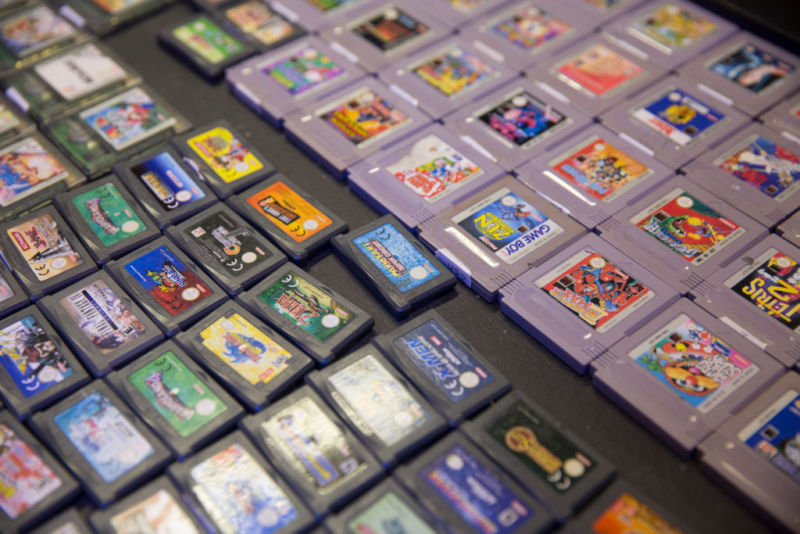
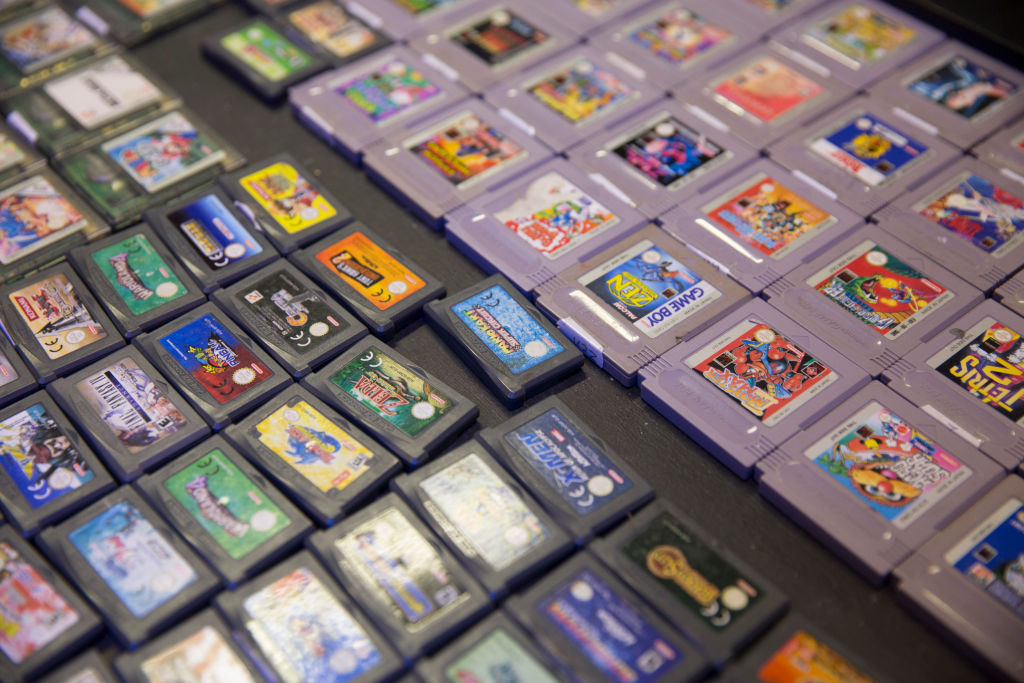
Console game cartridges at RAGE, Record Art Game Emporium, on April 4, 2017, in Dublin, Republic of Ireland. (photo by Sam Mellish / In Pictures via Getty Images Images)

Enlarge / Console game cartridges at RAGE, Record Art Game Emporium, on April 4, 2017, in Dublin, Republic of Ireland. (photo by Sam Mellish / In Pictures via Getty Images Images) (credit: Getty Images)

The war over used video game sales has been cool for the past few years, ever since PlayStation 4 and Xbox One embraced unfettered access to disc-based games. But in a Thursday attempt to control the reputation of Nintendo products being sold at Amazon, the debate may rage anew.

Today, Amazon made a stark announcement to its family of third-party product resellers: effective immediately, those sellers can no longer list "Nintendo products" for sale without receiving express approval.

The announcement did not explain whether Nintendo, Amazon, or both companies were responsible for the change. And it did not include a list of affected products or Amazon Standard Identification Numbers (ASINs).

Read 8 remaining paragraphs | Comments