Saturday, February 1

Tricking The Brain Into Seeing Boosted Contrast in Stereo Imagery

Last year a team of researchers published a paper detailing a method of boosting visual contrast and image quality in stereoscopic displays. The method is called Dichoptic Contrast Enhancement (DiCE) and works by showing each eye a slightly different version of an image, tricking the brain into fusing the two views together in a way that boosts perceived image quality. This only works on stereoscopic displays like VR headsets, but it’s computationally simple and easily implemented. This trick could be used to offset some of the limitations of displays used in headsets, for example making them appear capable of deeper contrast levels than they can physically deliver. This is good, because higher contrasts are generally perceived as being more realistic and three-dimensional; important factors in VR headsets and other stereoscopic displays.

Stereoscopic vision works by having the brain fuse together what both eyes see, and this process is called binocular fusion. The small differences between what each eye sees mostly conveys a sense of depth to us, but DiCE uses some of the quirks of binocular fusion to trick the brain into perceiving enhanced contrast in the visuals. This perceived higher contrast in turn leads to a stronger sense of depth and overall image quality.
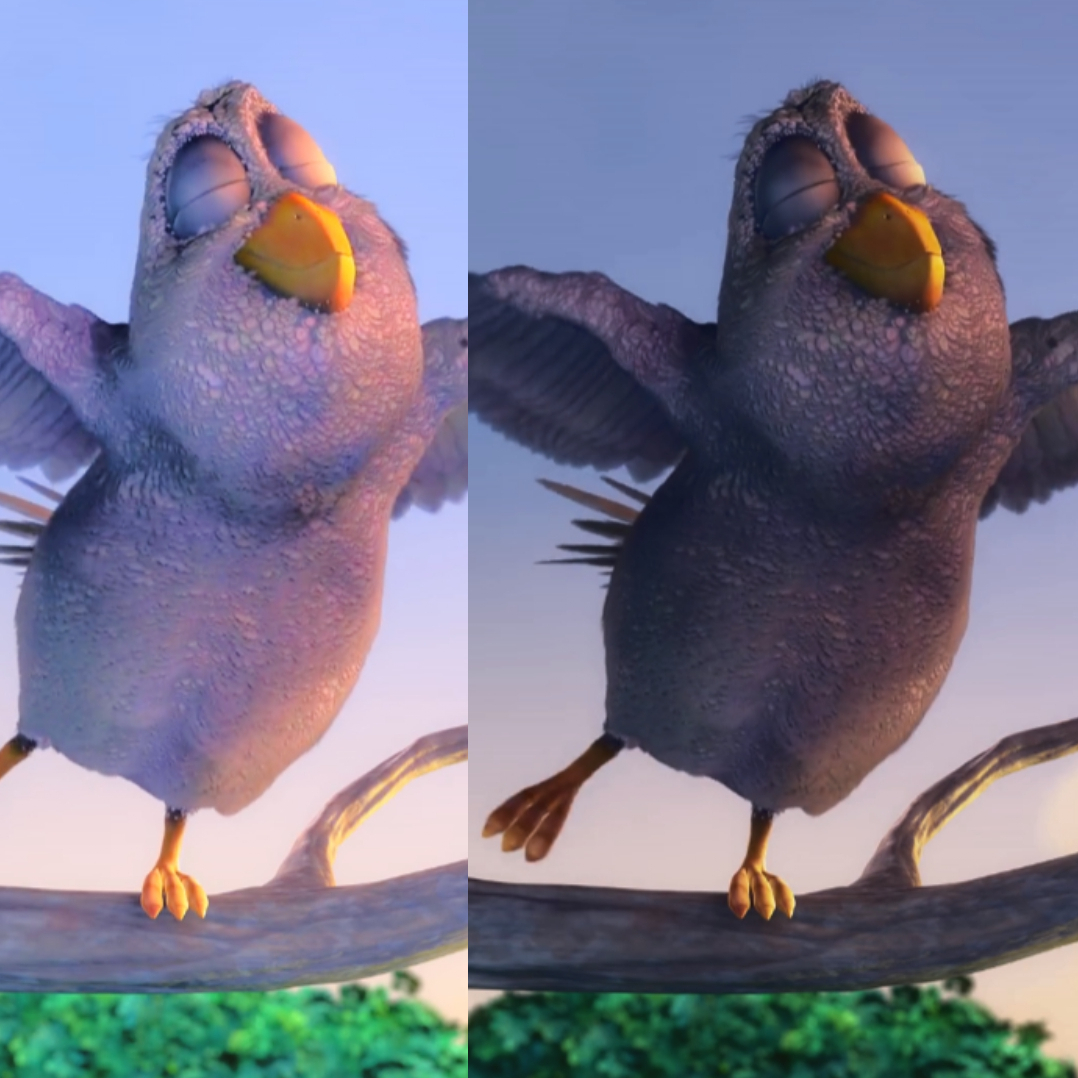
Example of DiCE-processed images, showing each eye a different dynamic contrast range. The result is greater perceived contrast and image quality when the brain fuses the two together.

To pull off this trick, DiCE displays a different contrast level to both eyes in a way designed to encourage the brain to fuse them together in a positive way. In short, using a separate and different dynamic contrast range for each eye yields an overall greater perceived contrast range in the fused image. That’s simple in theory, but in practice there were a number of problems to solve. Chief among them was the fact that if the difference between what each eyes sees is too great, the result is discomfort due to binocular rivalry. The hard scientific work behind DiCE came from experimentally determining sweet spots, and pre-computing filters independent of viewer and content so that it could be applied in real-time for a consistent result.

Things like this are reminders that we experience the world only through the filter of our senses, and our perception of reality has quirks that can be demonstrated by things like this project and other “sensory fusion” edge cases like the Thermal Grill Illusion, which we saw used as the basis for a replica of the Pain Box from Dune.

A short video overview of the method is embedded below, and a PDF of the publication can be downloaded for further reading. Want a more hands-on approach? The team even made a DiCE plugin (freely) available from the Unity asset store.

[via Road to VR]
CNC Hot-Wire Cutter Gives Form to Foam

Rapid prototyping tools are sometimes the difference between a project getting off the ground and one that stays strictly on paper. A lightweight, easy-to-form material is often all that’s needed to visualize a design and make a quick judgment on how to proceed. Polymeric foams excel in such applications, and a CNC hot-wire foam cutter is a tool that makes dealing with them quick and easy.

We’re used to seeing CNC machines where a lot of time and expense are put into making the frame as strong and rigid as possible. But [HowToMechatronics] knew that the polystyrene foam blocks he’d be using would easily yield to a hot nichrome wire, minimizing the cutting forces and the need for a stout frame. But the aluminum extrusions, 3D-printed connectors. and linear bearings he used still make for a frame stiff enough to give clean, accurate cuts. The addition of a turntable to the bed is a nice touch, turning the tool into a 2.5D machine. The video below details the construction and goes into depth on the toolchain [HowToMechatronics] used to go from design to G-code, including the tricks he used for making a continuous path, as well as integrating the turntable to make three-dimensional designs.

Plenty of hot-wire foam cutters have graced our pages before, everything from tiny hand-held cutters to a hot-wire “table saw” for foam. We like the effort put into this one, though, and the possibilities it opens up.

Thanks to [Keith O.] for the tip.

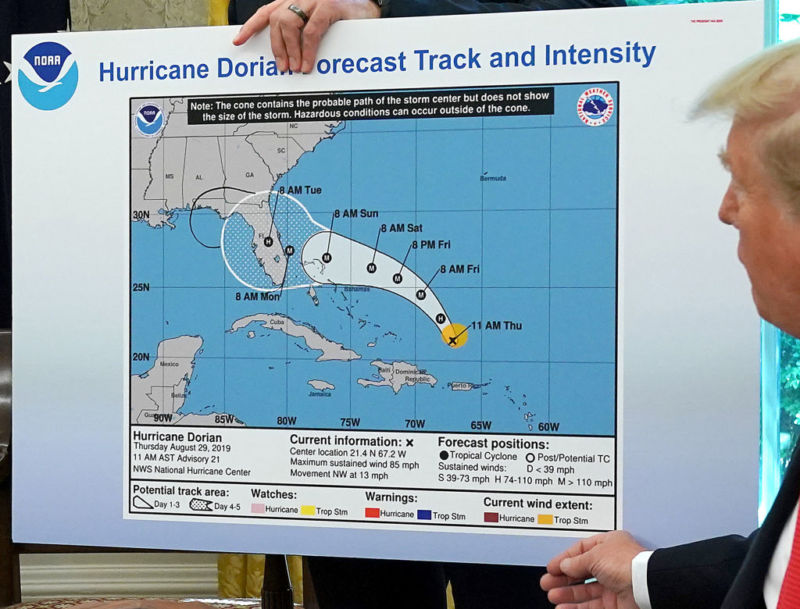
Email release reveals chaos sowed by President Trump’s hurricane tweets

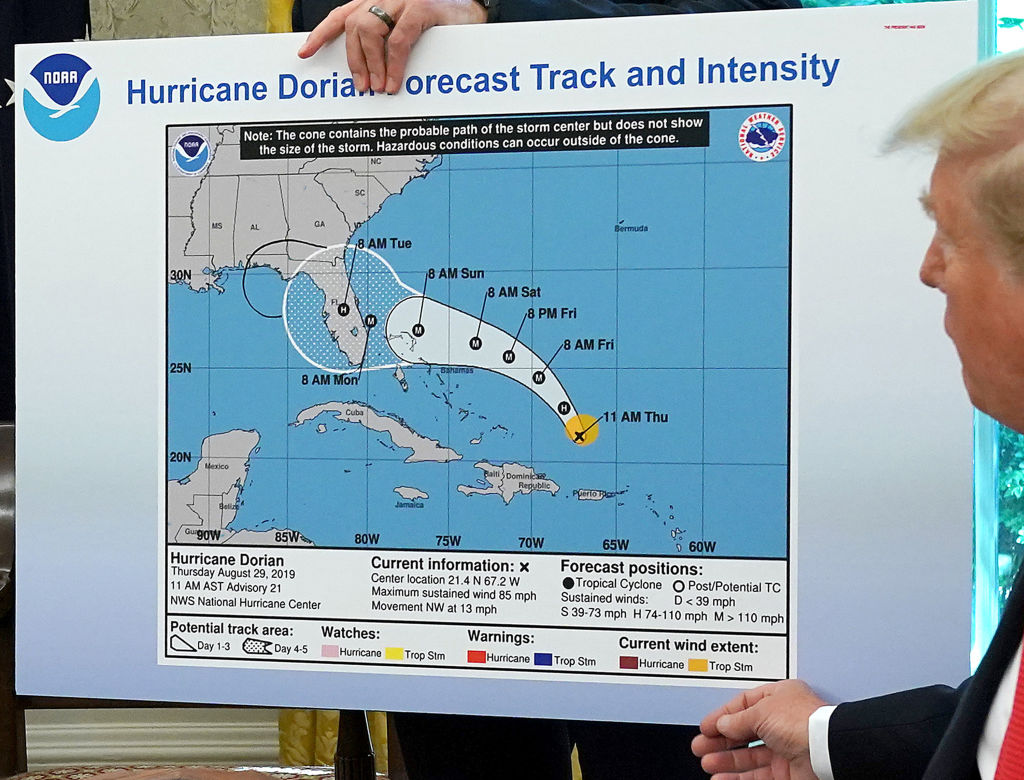
President Donald Trump displaying a doctored forecast map that incorrectly shows Hurricane Dorian hitting Alabama.

Enlarge / President Donald Trump displaying a doctored forecast map at the White House on September 4, 2019, in Washington, DC. (credit: Getty Images | Chip Somodevilla )

For meteorologists and senior leaders at NOAA, the first week of September 2019 is one they're never going to forget.

Amidst the tumult of Hurricane Dorian and its threat to the United States, President Trump injected himself into the story by warning that several states, including Alabama, would "most likely be hit (much) harder than anticipated. Looking like one of the largest hurricanes ever." Alabama faced virtually no risk from the storm at the time. After being ridiculed for this errant forecast, the president responded with a White House event where he displayed an official National Hurricane Forecast map with a Sharpie-drawn extension that included Alabama in Dorian's "cone of uncertainty."

The controversy only burned all the brighter when the Birmingham office of the National Weather Service tweeted that Alabama residents had nothing to fear from Dorian (which was accurate). This tweet occurred after the president's tweet about Alabama's risk but was apparently not directly in response to the president. Instead, it came in response to a surge of public inquiries. According to the meteorologist-in-charge of the Alabama office, Chris Darden, his office's phones "started ringing off the hook" with public inquiries and concern after the president took to Twitter.

Read 9 remaining paragraphs | Comments

What Everyone Else Did With Eight Bits, The Germans Did With Only One

In the 1980s there was an impetus for the first time for young people to be equipped with computer literacy. A variety of different educational programmes were launched, typically involving a collaboration between a computer manufacturer and a broadcaster, and featuring BASIC programming on one of the 8-bit home computers of the day. One such educational scheme was a bit different though, the German broadcaster WDR produced an educational series using a modular computer featuring an unusual 1-bit processor that was programmed in hexadecimal machine code. [Jens Christian Restemeier] has produced a replica of this machine, that it as close to the original as he can make it.

The computer is called the WDR-1, and had its origin in a kit machine before it was taken up by the broadcaster. The unusual 1-bit processor is a Motorola MC14500, which was produced from 1977 onwards for industrial control applications. He takes the viewer in the video below the break through the machine’s parts, explaining the purpose of each daughter card and the motherboard. Lacking an original to copy he instead worked from photographs to replicate the chip placements of the original, substituting pin headers for the unusual sockets used on the 1980s machines. Take a look at his video, below the break.

More information on the WDR-1 can be found online in German (Google translate link). Meanwhile we’ve featured the MC14500 before, in a small embedded computer.

MC14500 image: JPL [CC BY-SA 4.0]

White dwarf causes strange relativity effect called frame dragging

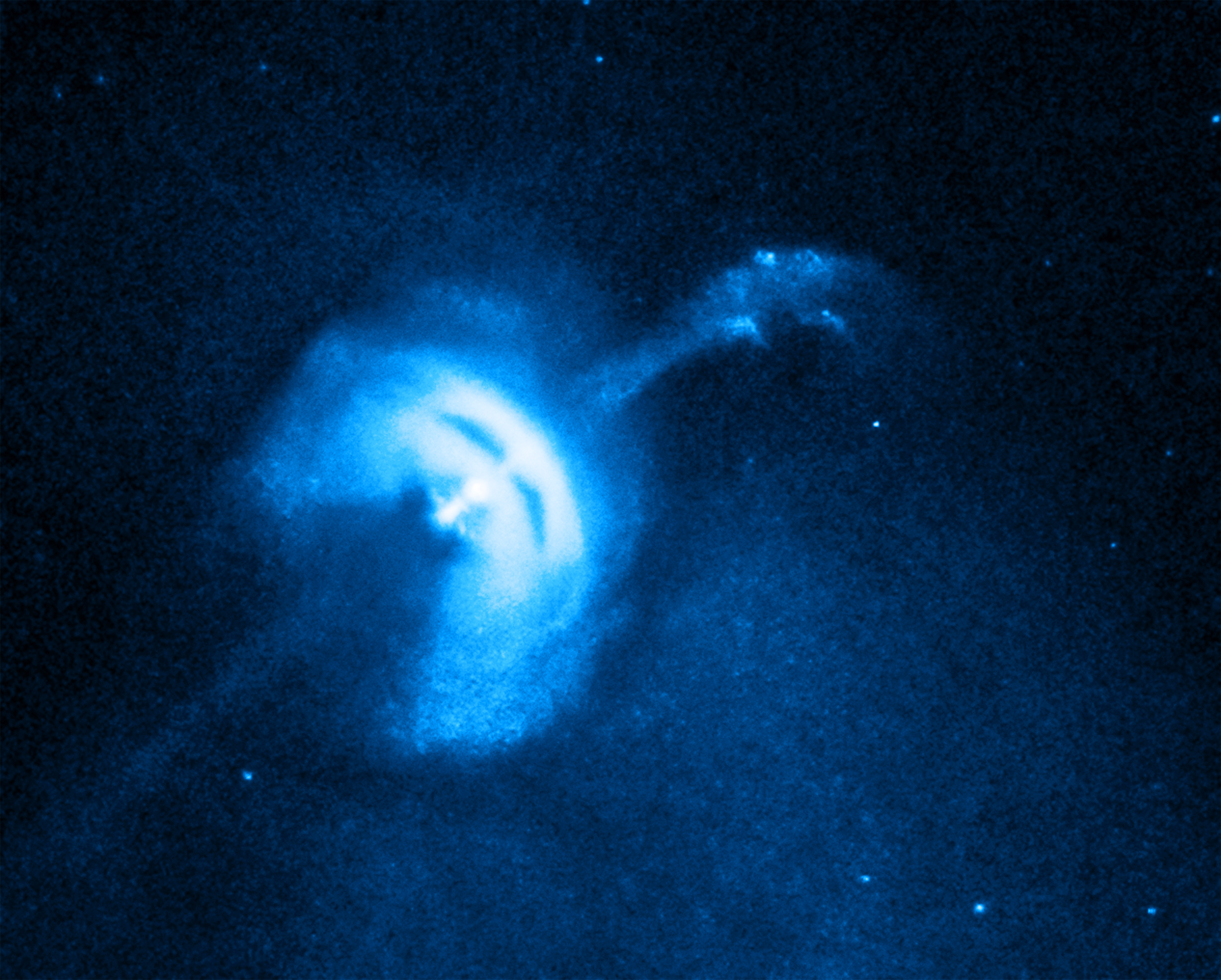
Image of diffuse blue rings surrounding a long, thin object.

Enlarge / The lit up rings in this image are caused by wobbles in a pulsar's axis of rotation. (credit: NASA)

Ask about some mind-bending physics, and people will tend to focus on the many mind-bending oddities of quantum mechanics. But there's no shortage of strangeness in another one of physics' cornerstone theories: relativity. From time being relative to things getting more massive as they accelerate, there are lots of head scratchers in relativity.

But the thing that may top the strangeness scale is an effect called "frame dragging," where a massive, rotating object distorts the space-time around it. While it was first identified as a relativistic effect shortly after relativity was proposed, we weren't in any position to test it until the satellite error. While a number of missions have produced results consistent with relativity, the experiments had rather large uncertainties.

Now, an international team of scientists have used an interstellar laboratory to test the proposal. Taking advantage of a large white dwarf with a close-by neutron star, the researchers have detected frame dragging effects in the regular pulses of emission from the neutron star.

Read 11 remaining paragraphs | Comments

We are entering the Golden Age of studying our Sun

The Sun is our closest star, and without it life on our world could not survive. So it is essential to understand its nature. And yet, even though the Sun shines brightly on every clear day on Earth, it is difficult for astronomers to observe the star closely for a number of reasons.

Most obviously, it is hot—so hot, it is difficult to get too close without getting burnt to a crisp. Additionally, due to high solar gravity, it requires a lot of energy to insert a spacecraft into an orbit near the Sun. The harsh radiation near the Sun also plays havoc with the scientific instruments on spacecraft.

For all of these reasons, while astronomers have made steady progress in understanding the Sun and its effects on Earth, our atmosphere, and other bodies in the Solar System, we still have big questions. The good news is that we are now entering the golden age of Solar research with a major new ground-based telescope and two space-based observatories that will come close to the Sun.

Read 8 remaining paragraphs | Comments

Dear Ashley Madison user. I know everything about you. Pay up or else.

Dear Ashley Madison user. I know everything about you. Pay up or else.

Enlarge (credit: ashleymadison.com)

Four years after hackers dumped the intimate details of 32 million Ashley Maddison subscribers, criminals have revived an extortion scheme that targets people who used the dating website to cheat on their partners.

In the past two weeks, researchers have detected “several hundred” emails that threaten to air those intimate details to the world unless the former subscribers’ pay a hefty fee.

“I know everything about you,” one of the emails, dated January 15, says. “I even know that you ordered some … let’s call them ‘male assistance products’ online on 12/11/2018 using your account at Bank of America N,a routing# 121000358 account# [redacted] for $75 for mailing to [redacted] CA [redacted]!” The extortionist goes on to say: “If you do not act very fast your full AMadison profile and proof of it will be shared with friends, family, and online over social media—and of course your internet orders.”

Read 9 remaining paragraphs | Comments