Wednesday, September 1

Anger, frustration at FDA over Biden’s booster plan; two top regulators resign

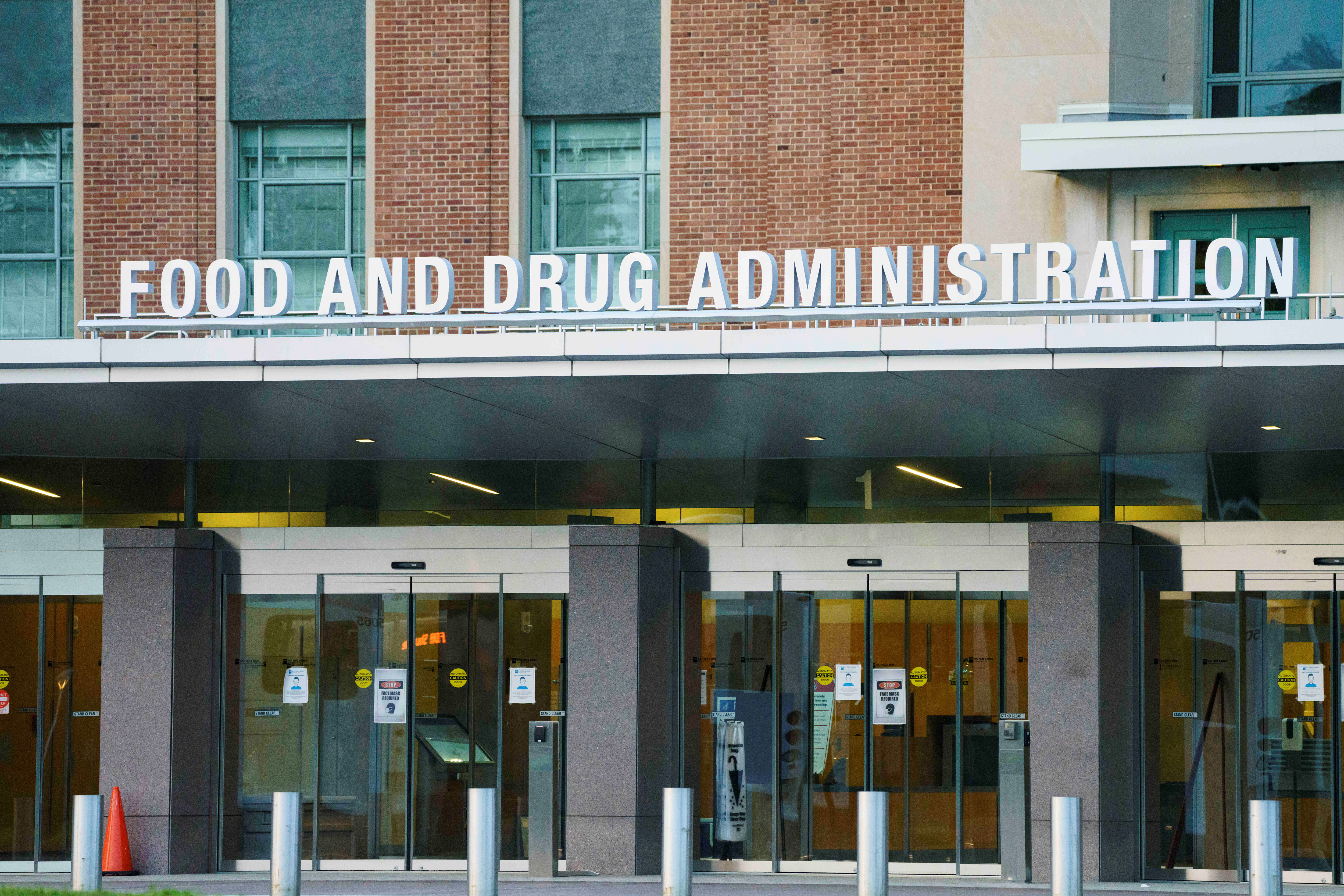
The US Food and Drug Administration in Silver Spring, Maryland.

Enlarge / The US Food and Drug Administration in Silver Spring, Maryland. (credit: Getty | Xinhua News Agency)

Two top vaccine regulators have resigned from the Food and Drug Administration, revealing anger, frustration, and turmoil at the federal agency as it faces intensifying pressure to authorize COVID-19 vaccine booster shots and doses for children under the age of 12.

The two regulators leaving are Marion Gruber, director of the FDA’s Office of Vaccines Research and Review (OVRR), and OVRR Deputy Director Phil Krause. Gruber has been with the FDA for more than 30 years, and Krause has been at the agency for more than a decade.

Their resignations, first reported by pharmaceutical trade publication BioCentury, were apparently sparked by frustration that the Biden administration had overstepped the FDA in announcing plans to offer COVID-19 booster shots beginning on September 20. The pair also clashed with higher-up Peter Marks, who reportedly went along with the administration's plans. Marks is the director of the FDA's Center for Biologics Evaluation and Research (CBER), which includes the OVRR.

Read 5 remaining paragraphs | Comments

Old PCs are getting booted out of the Windows 11 Insider Preview

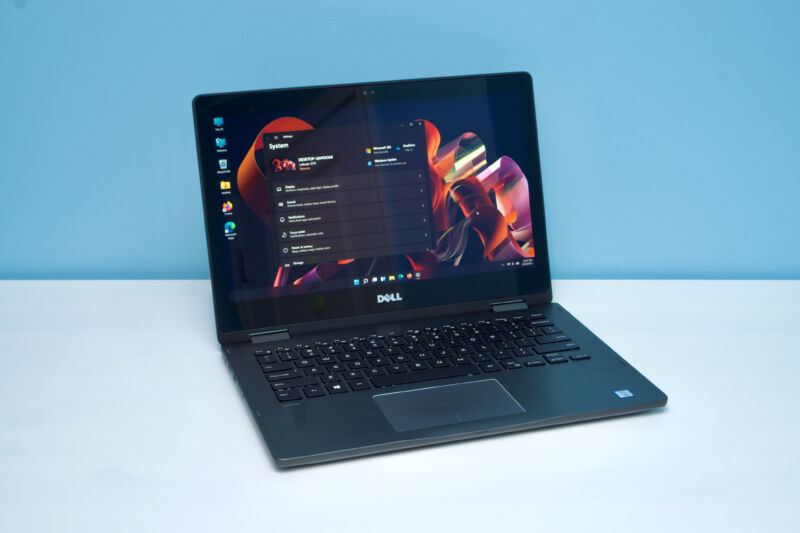
Older-but-still-functional PCs like this Dell Latitude with a 6th-generation Intel processor can currently access Windows 11 Insider Preview builds, but that may end soon.

Enlarge / Older-but-still-functional PCs like this Dell Latitude with a 6th-generation Intel processor can currently access Windows 11 Insider Preview builds, but that may end soon. (credit: Andrew Cunningham)

Many older PCs have been happily running the Windows 11 previews for months now despite Microsoft's stringent official system requirements, but that's about to change. ZDNet reports that some users of unsupported PCs are beginning to see a message telling them to reinstall Windows 10 when they attempt to enroll older PCs in the Insider program after performing a clean install of the Windows 11 preview.

Neither of the two unsupported PCs I'm running the Insider Preview on—a Dell Latitude 3379 with a Core i3-6100U and a Dell XPS 13 9333 with a Core i5-4210U—have received this message yet, and they continue to download and install new updates on the Dev and Beta channels. I was also still able to opt in to the Windows 11 preview builds after reinstalling Windows 10 on the old XPS 13, albeit with the typical "Your PC does not meet the minimum hardware requirements and there may be issues and bugs" warning message. Presumably, this will change as we get closer to Windows 11's release date.

Microsoft has made efforts to explain its reasoning for why older processors won't be officially supported by Windows 11, but it has added only a small handful of older chips to the original compatibility list it announced in June. If you've been happy with the performance of Windows 11 on your "unsupported" PC and you'd like to install Windows 11 anyway, Microsoft won't go out of its way to prevent manual upgrades on older PCs, but the company has suggested that it might withhold security updates from those PCs going forward.

Read on Ars Technica | Comments

Tesla must tell NHTSA how Autopilot sees emergency vehicles

Tesla's Autopilot system is good at keeping pace with moving traffic, but it keeps crashing into emergency responders parked by the side of the road. The NHTSA wants to know why.

Enlarge / Tesla's Autopilot system is good at keeping pace with moving traffic, but it keeps crashing into emergency responders parked by the side of the road. The NHTSA wants to know why. (credit: Tesla)

The National Highway Traffic Safety Administration investigation into Tesla's Autopilot driver assistance system continues apace. The Associated Press reports that on Tuesday, the NHTSA sent Tesla a letter requesting further information following 12 incidents of Autopilot-enabled Teslas crashing into emergency vehicles parked by the side of the road. In total, 17 people have been injured, and one has died.

The NHTSA sent Tesla the 11-page letter asking for detailed information on how Autopilot recognizes and reacts to emergency vehicles. The company must respond by October 22 unless it asks for an extension, and the AP says Tesla could be fined $114 million if it does not cooperate.

Specifically, the agency wants to know how the system detects "a crash scene, including flashing lights, road flares, reflectorized vests worn by responders, and vehicles parked on the road." Additionally, Tesla must tell NHTSA how Autopilot works in low-light conditions and what happens if the system detects an emergency.

Read 2 remaining paragraphs | Comments

Blue Origin hires advisory firm linked to messy JEDI contract process

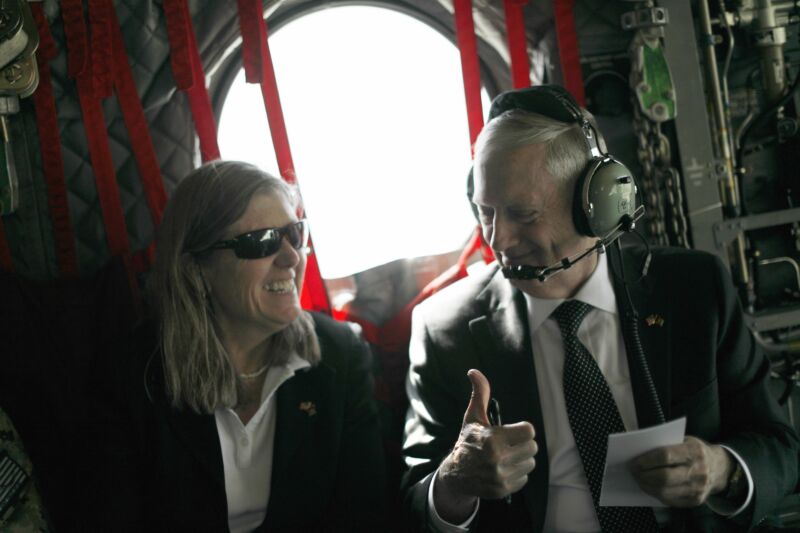
US Defense Secretary James Mattis gestures to senior advisor Sally Donnelly as they arrive by helicopter in the Afghan capital of Kabul on April 24, 2017.

Enlarge / US Defense Secretary James Mattis gestures to senior advisor Sally Donnelly as they arrive by helicopter in the Afghan capital of Kabul on April 24, 2017. (credit: JONATHAN ERNST/AFP via Getty Images)

After losing out on a multibillion dollar NASA contract for a lunar lander to SpaceX in April, Blue Origin has hired a high-profile strategic advisory firm named Pallas Advisors. These high-profile advisors have helped the company as it has gone on to protest the contract loss and eventually sue the space agency.

The founding partners of the Washington, DC-based advisory firm, Sally Donnelly and Tony DeMartino, are well-known to Jeff Bezos, the founder of both Amazon and Blue Origin. Both Donnelly and DeMartino previously worked as consultants to Amazon before taking jobs at the Department of Defense in 2017, during the Trump administration. There, they gained some unwelcome public notoriety.

At the Pentagon, Donnelly served as a senior advisor to Secretary of Defense Jim Mattis, and DeMartino worked as his deputy chief of staff. During their time in government service, both Donnelly and DeMartino became embroiled in the controversy surrounding the US Department of Defense award to Microsoft for the $10 billion Joint Enterprise Defense Infrastructure, or JEDI contract, for military cloud computing services.

Read 16 remaining paragraphs | Comments

No Man’s Sky’s 17th free content update adds bustling, task-filled settlements

Can you believe it has been five years since the gaming Internet first lost its mind about No Man's Sky? The ambitious game launched in 2016 with a seemingly infinite galaxy and clearly finite mechanical systems—a beautiful portal to interactive zen, yes, but arguably not what salivating fans had imagined in the hype-filled run-up.

But if you've booted the game in the years since, you may have noticed that it is a massively different gaming proposition than its August 2016 incarnation. With free update after free update, the game has grown to something beyond its initial pitches—and today, it grows further still with its... hold on, let me carry the one... seventeenth free content update.

18 quintillion planets, 17 updates

This 17th dump of content, dubbed No Man's Sky: Frontiers, will arrive on all versions of the game (including VR) shortly after this story goes live. Now, the game's procedurally generated planets will include a bunch of procedurally generated towns, villages, and settlements. As you take off and land on the game's estimated 18 quintillion planets, you'll now find miniature towns dotting their landscapes, each full of townspeople who hail from the game's various races, milling about a variety of endlessly remixed building types.

Read 5 remaining paragraphs | Comments

Google Pixel 5a review: “Which Android phone should I buy?” This one

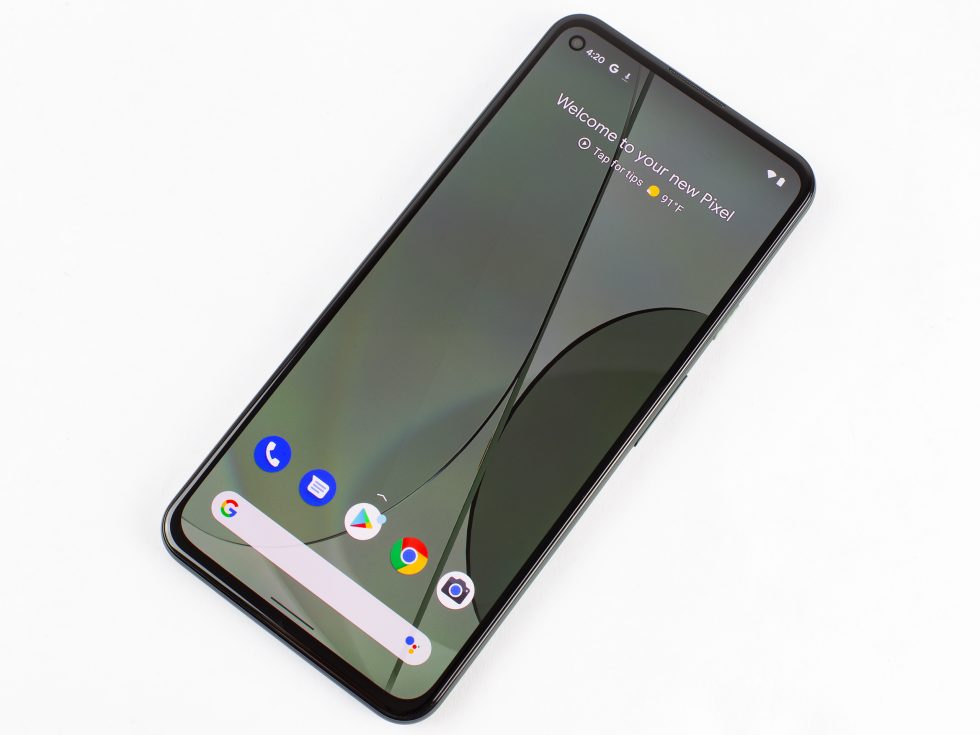
I think at this point we can call the Pixel A series a "mid-range powerhouse." Google has again turned in one of the best mid-range phones out there, thanks to its no-nonsense software with day-one OS updates, a long-lasting battery, and good-enough, modern internals. In a world full of wild gimmicks and smartphones with a thousand extras, Google is going with just the basics for $449. It's not really what you would call "new" or "exciting," but for basic usage, the Pixel 5a has everything you need in a smartphone and nothing you don't.

On the surface, the Pixel 5a looks very similar to the previous release in this line. You get a good-enough, modern design with a slim bezel and a hole punch camera on the front, plus a gloriously flat, undistorted screen. There's a wraparound plastic back that looks kind of plain, just like the Pixel 4a (it's fine, but we still prefer the two-tone stylings of the Pixel 3a back). Being mid-range means you get some throwback features you might still like, like a rear capacitive fingerprint reader (as opposed to the in-screen fingerprint readers you'd get on a flagship phone) and a headphone jack.

SPECS AT A GLANCE
Pixel 5a
SCREEN 2400×1080 6.34-inches (413 ppi)

OLED, 20:9 aspect ratio

OS Android 11
CPU Eight-core Qualcomm Snapdragon 765G

Two Cortex A76 cores and six Cortex A55 cores, up to 2.4GHz, 7nm

RAM 6GB
GPU Adreno 620
STORAGE 128GB
NETWORKING 802.11b/g/n/ac, Bluetooth 5.0, GPS, NFC, eSIM
PORTS USB Type-C, 3.5mm headphone jack
CAMERA Rear: 12.2MP main camera

Front: 8MP camera

SIZE 156.2×73.2×8.8 mm
WEIGHT 183g
BATTERY 4680mAh
STARTING PRICE $449
OTHER PERKS rear fingerprint reader, IP67 water resistance

There are some big additions this year, though. The first, which isn't noticeable from the pictures, is that the Pixel 5a is a lot bigger than the 4a. You'll see this not only in the screen size (6.34-inches versus 5.81-inches) but also in the body, with the Pixel 5a measuring 154.9 mm × 73.7 mm compared to the 144 mm × 69.4 mm of the 4a. The bigger body comes with the same primary benefit as all big phones—a bigger battery. The Pixel 5a is getting a huge upgrade to a 4680mAh battery, and that comes with a giant runtime advantage over its predecessor. I never had an issue lasting an entire day with the Pixel 4a battery, in fact you could easily go for two light-usage days.

Read 10 remaining paragraphs | Comments

RNA vaccines seem to produce very different antibody levels

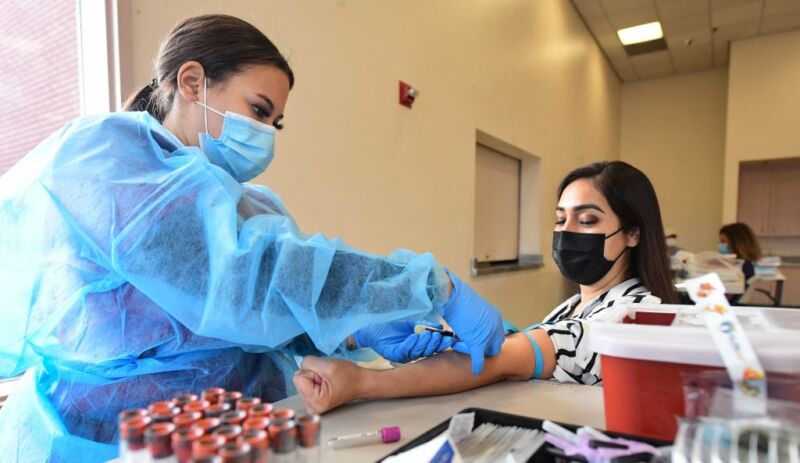
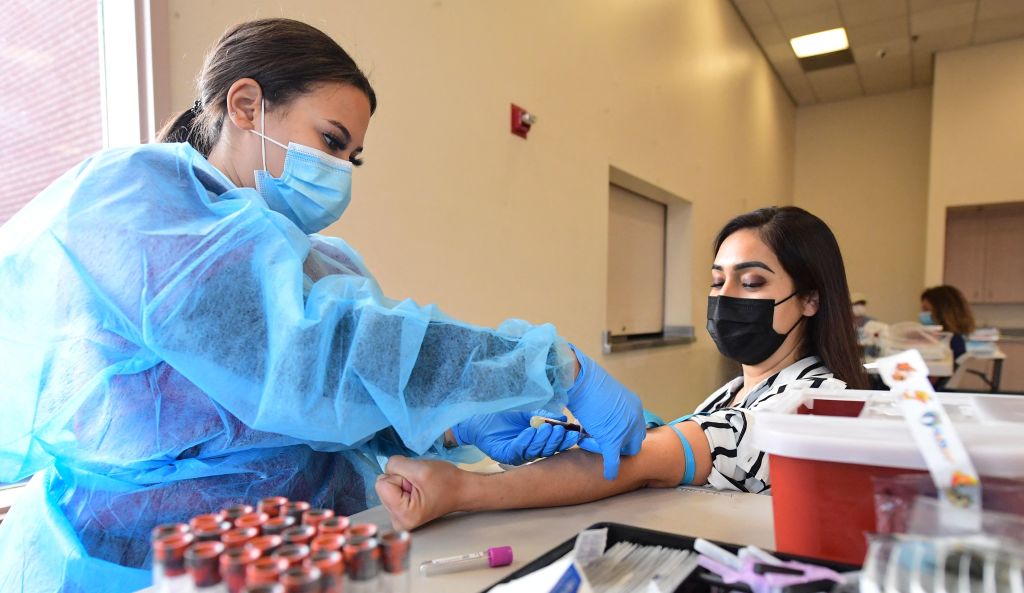
Image of a woman taking a blood sample from a seated person.

Enlarge / A phlebotomist draws blood meant for antibody testing. (credit: Frederic J. Brown / Getty Images)

We've tended to treat the RNA-based vaccines from Moderna and Pfizer/BioNTech as functionally equivalent. They take an identical approach to producing immunity and have a very similar set of ingredients. Clinical trial data suggested they had very similar efficacy—both in the area of 95 percent.

So it was a bit of a surprise to have a paper released yesterday indicating that the two produce an antibody response that's easy to distinguish, with Moderna inducing antibody levels that were more than double that seen among people who received the Pfizer/BioNTech shot. While it's important not to infer too much from a single study, this one was large enough that the results are likely to be reliable. If so, the results serve as a caution that we might not want to base too many of our expectations on relatively crude measures of antibody levels.

The new study

The work itself was remarkably simple. A Belgian medical center was vaccinating its staff and asked for volunteers willing to give blood samples. Samples were taken both prior to vaccination and six to 10 weeks after, with the levels of antibody specific to the SARS-CoV-2 spike protein tested at both points. About 700 participants received the Moderna vaccine, while roughly 950 took the one from Pfizer/BioNTech.

Read 8 remaining paragraphs | Comments