Saturday, June 4

The Super73 R Series e-bike is expensive, heavy, and extremely fun

The Super73 R Series e-bike is expensive, heavy, and extremely fun

Enlarge

Without a doubt, the Super73 R Series Brooklyn is the worst bicycle I've ever ridden. It's too small for many adults, it forces you into an awful riding position, it's unconscionably heavy, and it offers a grand total of one gear.

Riding it was also far and away the most fun I've had on an electric bike yet.

All that weight gets you a robust, dual-suspension frame and fat tires that swallow the bumps and cut confident turns on all sorts of surfaces. And it gets you a powerful motor that lets you blast away from stops despite the bike's weight. You also get a huge battery that supposedly offers a range of over 120 km when the bike is in "eco" mode—a mode nobody will ever use because it's far too much fun to rocket around with the electrical assist maxed out.

Read 22 remaining paragraphs | Comments

Friday, June 3

Americans want more electric vehicles, but 50% by 2030 looks unlikely

More EVs are good, but will the US be in line when battery supplies get scarce?

Enlarge / More EVs are good, but will the US be in line when battery supplies get scarce? (credit: Jonathan Gitlin)

The past few weeks have taken me to Europe, and it's easy to see just how many new electric vehicles are on the roads over there. For example, in Germany, nearly 14 percent of new cars sold in 2021 were battery EVs, and another 12.5 percent were plug-in hybrids. Even Brexit-beleaguered Britain is having a BEV bonanza at 11.6 percent of new car sales last year.

Here in the US, we're also buying more EVs than ever. But in 2021, BEVs still accounted for just 3 percent of the new car market, and that has me worried about the country's ambitious goals for EVs to make up half of all new car sales in less than a decade.

Transportation and climate change advocates had hoped for a comprehensive plan to decarbonize the way Americans move around the country, but as with so many ambitious (and even meager) plans, that push didn't survive contact with the US Senate. What we did get was a new Federal government policy stating that half of all new cars and light trucks should be zero-emissions vehicles—a mix of BEVs, PHEVs, and fuel cell EVs—by 2030, as well as an extra $7.5 billion for more EV chargers. Add to this the declarations from car companies promising—or aspiring—to go fully electric by 2030, and the future sounds bright.

Read 11 remaining paragraphs | Comments

What the simple mathematical abilities of animals can tell us about ourselves

What the simple mathematical abilities of animals can tell us about ourselves

Enlarge (credit: Aurich Lawson)

We often think of mathematical ability as being uniquely human, but in fact, scientists have found that many animal species—including lions, chimpanzees, birds, bees, ants, and fish—seem to possess at least a rudimentary counting ability or number sense. Crows can understand the concept of zero. And a study published in April found that both stingrays and cichlids can take this rudimentary "numerosity" to the next level, performing simple addition and subtraction for a small number of objects (in the range of 1 to 5).

The latter study's conclusion doesn't surprise cognitive psychologist Brian Butterworth, an emeritus professor at University College London and author of a new book, Can Fish Count? What Animals Reveal About our Uniquely Mathematical Minds.

"There are lots of animals that can do addition and subtraction," Butterworth told Ars. "Bees can. Bees can represent zero as well. So it's not surprising to me that stingrays and cichlids can do it." His book explores how the ability to process mathematical information and extract numerical data from their environment is critical to an animal's ability to survive and thrive. In fact, there might just be an innate understanding of math at its most basic level that was passed down the evolutionary chain from our most distant common ancestors.

Read 28 remaining paragraphs | Comments

Thursday, June 2

Have an old iPad lying around? You might be able to make it run Linux soon

Linux booting up on an old iPad Air 2.

Enlarge / Linux booting up on an old iPad Air 2. (credit: Konrad Dybcio)

If you have a 2013- or 2014-era iPad sitting around unused because it's not getting updates from Apple anymore and has stopped running the apps you need, some developers are working on an alternative software solution for you. Developer Konrad Dybcio and a Linux enthusiast going by "quaack723" have collaborated to get Linux kernel version 5.18 booting on an old iPad Air 2, a major feat for a device that was designed to never run any operating system other than Apple's.

The project appears to use an Alpine Linux-based distribution called "postmarketOS," a relatively small but actively developed distribution made primarily for Android devices. Dybcio used a "checkm8" hashtag in his initial tweet about the project, strongly implying that they used the "Checkm8" bootrom exploit published back in 2019 to access the hardware. For now, the developers only have Linux running on some older iPad hardware using A7 and A8-based chips—this includes the iPad Air, iPad Air 2, and a few generations of iPad mini. But subsequent tweets imply that it will be possible to get Linux up and running on any device with an A7 or A8 in it, including the iPhone 5S and the original HomePod.

This isn't the only project devoted to running Linux on Apple's hardware. One project, Asahi Linux, has been dedicated to reverse-engineering support for the M1 chips in Apple's Macs and sending the patches upstream so that they can be integrated into the Linux kernel. Another, Project Sandcastle, has a build of Android up and running on an iPhone 7. Apps like iSH will give you a Linux shell running on top of iOS or iPadOS—not the same as running Linux on the hardware directly, but useful in some circumstances.

Read 2 remaining paragraphs | Comments

Big grilles and more SUVs: We talk BMW design with Adrian van Hooydonk

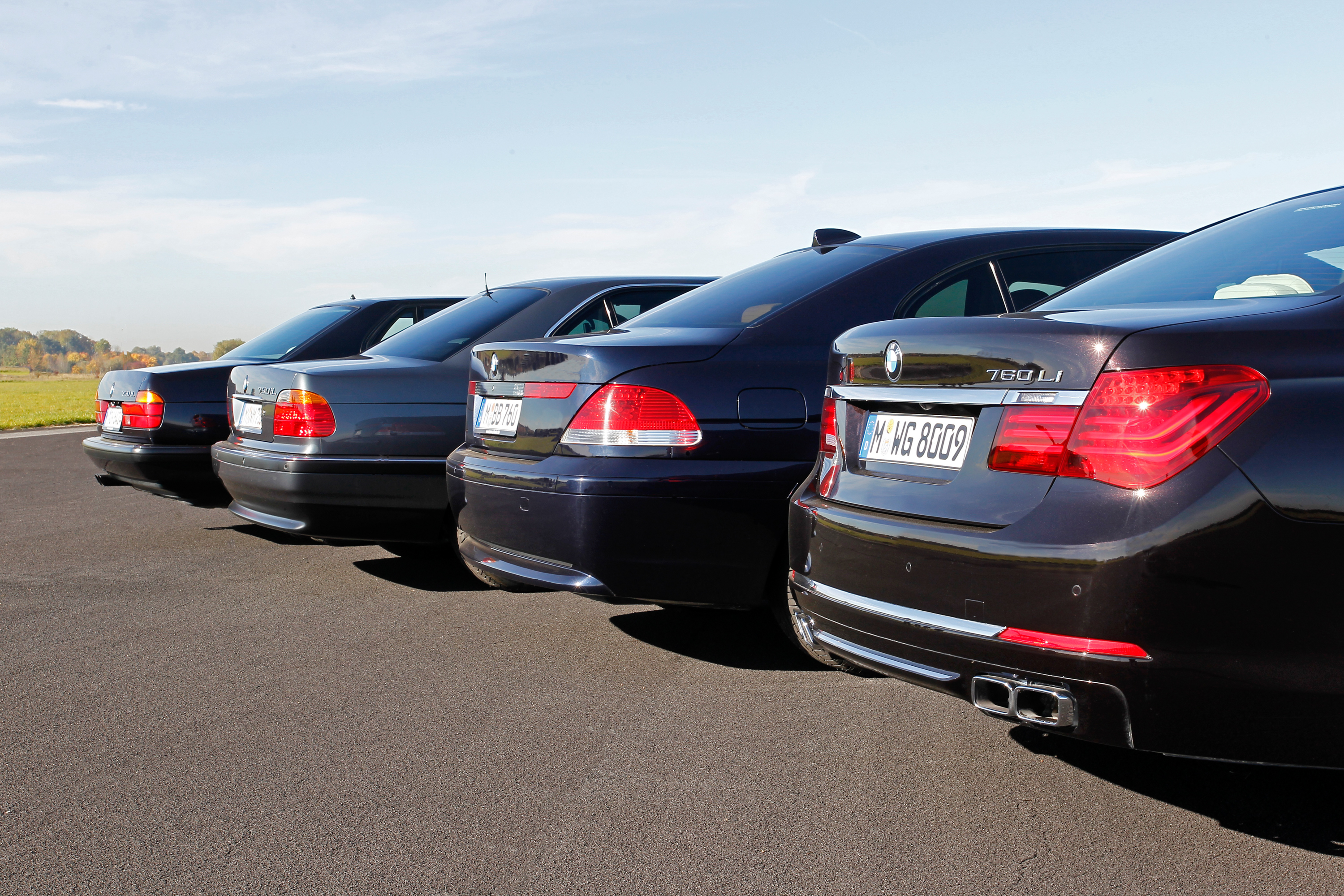
four generations of BMW 7 Series seen from the rear

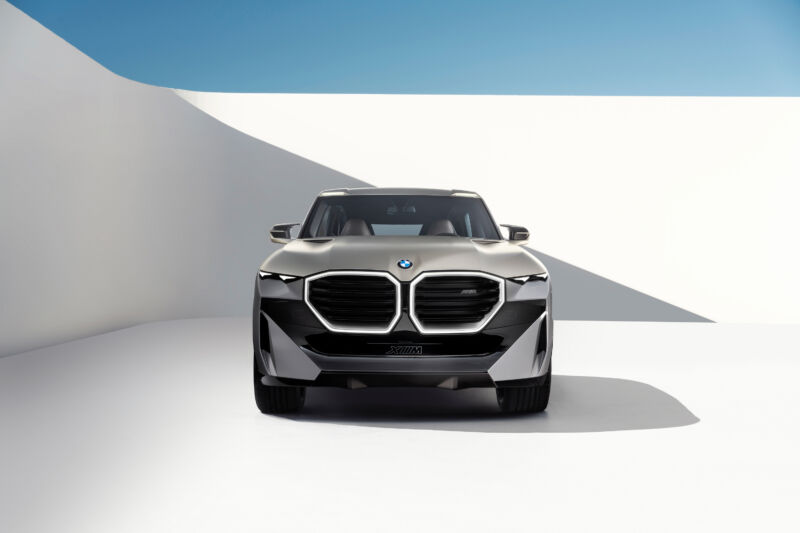
Enlarge / There's no mistaking the BMW XM concept as anything other than a BMW. The production version of the hybrid SUV goes on sale later this year. (credit: BMW)

If Oscar Wilde was right that the only thing worse than being talked about is not being talked about, you have to hand it to BMW's styling. Over the years, the company's design department in Munich has probably generated enough column inches to stretch from here to the moon, as it has challenged conventional tastes time and again with its concepts and production cars.

These days, the fuss often concerns each new interpretation of BMW's iconic kidney grilles, and we've seen a few: the self-healing polymer of the iX, the wide chrome bling of the X7, and the gaping void of the M3. Before that, it was the so-called "Bangle butt"—the stepped tail at the back of the 4th-generation 7 Series named for then-head designer Chris Bangle. When the model was launched in 2001 (and for years afterward), BMW fans would recoil just at its mention; today, it has become normalized and acceptable.

But the brand's willingness to embrace left-field ideas predates this century—how else to explain the 1989 Z1 roadster, with its removable plastic body panels and doors that dropped down into their sills?

Read 12 remaining paragraphs | Comments

Tim Hortons coffee app broke law by constantly recording users’ movements

Outside view of a Tim Hortons restaurant in Toronto shows the Tim Hortons logo and a maple leaf.

Enlarge / A Tim Hortons in Toronto in May 2022. (credit: Getty Images | Roberto Machado Noa )

Canadian investigators determined that users of the Tim Hortons coffee chain's mobile app "had their movements tracked and recorded every few minutes of every day," even when the app wasn't open, in violation of the country's privacy laws.

"The Tim Hortons app asked for permission to access the mobile device's geolocation functions but misled many users to believe information would only be accessed when the app was in use. In reality, the app tracked users as long as the device was on, continually collecting their location data," according to an announcement Wednesday by Canada's Office of the Privacy Commissioner. The federal office collaborated with provincial authorities in Quebec, British Columbia, and Alberta in the investigation of Tim Hortons.

"The app also used location data to infer where users lived, where they worked, and whether they were traveling," the Office of the Privacy Commissioner said. "It generated an 'event' every time users entered or left a Tim Hortons competitor, a major sports venue, or their home or workplace."

Read 9 remaining paragraphs | Comments

Google wants a single video messaging app, will merge Google Meet and Duo

Someday, Google's messaging lineup will look like this (assuming Google can stop launching competing products).

Enlarge / Someday, Google's messaging lineup will look like this (assuming Google can stop launching competing products). (credit: Ron Amadeo)

The long-rumored Google Duo and Google Meet merger is actually happening. Google officially confirmed the move on Wednesday, explaining in a blog post that the goal is to create a "single video communications service" and that the Duo brand will go away in favor of Google Meet.

While the Google Duo brand is dying, it sounds like the Duo codebase will live on as the basis for the new Google Meet. Google says that "existing video calling features from Duo are here to stay" and that "in the coming weeks, we’re adding all the Google Meet features to the Duo app, so users can easily schedule a video meeting at a time that works for everyone, or continue using video calling to instantly connect with a person or group. Later this year, we’ll rename the Duo app to Google Meet, our single video communications service across Google that is available to everyone at no cost."

The move comes after Google unified its communication teams under Google Workspace VP and GM Javier Soltero (the author of Google's blog post) in 2020. Google has not clarified which products are being unified, but it should mean that Google Hangouts, Google Meet, Google Chat, Google Messages, Google Duo, and Google Voice will all live under one roof.

Read 9 remaining paragraphs | Comments