Friday, July 31

Patent Law And The Legality Of Making Something Similar

When [Erich Styger] recently got featured on Hackaday with his meta-clock project, he probably was not expecting to get featured again so soon, this time regarding a copyright claim on the ‘meta-clock’ design. This particular case ended with [Erich] removing the original blog article and associated PCB design files, leaving just the summaries, such as the original Hackaday article on the project.

Obviously, this raises the question of whether any of this is correct; if one sees a clock design, or other mechanisms that appeals and tries to replicate its looks and functioning in some fashion, is this automatically a breach of copyright? In the case of [Erich]’s project, one could argue that at first glance both devices look remarkably similar. One might also argue that this is rather unavoidable, considering the uncomplicated design of the original.

Not copyright, but patent law

An inherent property of copyright law in most jurisdictions is that the act of creating a work automatically grants one the copyright to that work. In most jurisdictions (e.g. the EU), signing away one’s copyright is even forbidden by law. Not so with patent law. Here we have two distinct forms, one being patents as we all know and love them, for the patenting of ideas and inventions. The other form concerns itself with what a product looks like: its design.

In the US this is referred to as a ‘design patent‘, while elsewhere it is referred to as a ‘registered design’, which effectively comes down to the same thing. It means that one can patent for example the shape of a Coca-Cola bottle, or in the case of the folk at Humans Since 1982 (‘HS1982’) the look of their meta-clocks, in not one, but two EU registered designs.

Comparative analysis

We can compare the two designs side by side to see how similar they are.

The top design is [Erich]’s, while the lower design is HS1982’s clock (black version). Both have the same 8×3 hole pattern, similar color scheme, and so on. That the HS1982’s version is in a mineral composite housing and [Erich]’s in a wooden enclosure is hereby not relevant as it does not change the design. To the casual observer it might indeed appear as if both follow the same design.

Since design registrations are meant to deter companies from for example selling their own soft drink in a bottle that looks exactly like a Coca-Cola one, down to the label design, it makes sense that HS1982 came down on [Erich] and others with similar clock designs like the proverbial sack of bricks.

Naturally, the next question which one should ask here is whether it makes any difference that this was a freely available, open project. Meaning that there was no intention to sell such clocks, or even provide all of the necessary information to assemble a clock from scratch, including the software.

Consistency is key

Although with patents and design registrations there is no need to actively pursue infringement cases to keep the patent as is the case with trademarks, it’s likely that to HS1982 there was no question of tolerating any form of infringement. Their audience appears to be those interested in exclusive art pieces, with the device described by them as ‘both a kinetic sculpture and a functioning clock’.

The manufacturing costs of a single ClockClock24 device is unlikely to be even half the asking price of $6,000 to $10,700, even taking into the account that each version is a limited edition. Yet this asking price remains only ‘legitimate’ if the product remains as exclusive as possible. This provides HS1982 with enough incentive to actively seek out and destroy any similar products. In the end we are talking about sculptures, i.e. art, here.

This isn’t just like one smartphone manufacturer accusing the other manufacturer of also making their smartphone into a black, rounded rectangular slab with glass covering. The ironic thing is probably that any number of small changes to [Erich]’s project could likely have made the registered design not apply, such as through the addition of a colon between the hours and minutes, adding seconds, making the box into an oval, or changing the number of rotating elements.

Not all is lost

As [Erich] also notes in his blog post, there are still certain ‘fair use’ provisions with registered designs. Nobody is going to bust down the doors of a kindergarten when one of the preschoolers clumsily draws a Coca-Cola bottle without explicit permission from Coca-Cola’s lawyers. Similarly, anyone can in theory make their own copy of HS1982’s ClockClock24 clock so long as they do not sell it or otherwise make it publicly available.

This knowledge should give anyone who sets out to copy a design which they saw somewhere and liked at least some idea of how far they can take it. Publishing the project on a blog and making the design files available is the part where things can get dicey. Even making small alterations to the original design are not guaranteed to keep one from getting harassed by a company’s irate lawyers.

While there is a small chance of victory if [Erich] or someone else were to take a case like this to court, to argue that small-fry open-hardware projects are unlikely to harm the profits or sales of a company like HS1982, it would essentially be asking the law makers to add a major exception to patent law that would no doubt come with its own set of headaches.

In the meantime it seems that we can do little but get a chuckle out of the ClockClock24 clones available on Chinese stores for peanuts.


Rocket Report: SpaceX seeks 20km hop license, Why Rocket Lab funder left

Rocket leaves a trail a of flame as it pierces the sky.

Enlarge / The mighty "Dominator" Atlas V 541 goes supersonic with our newest Mars rover. (credit: Trevor Mahlmann)

Welcome to Edition 3.10 of the Rocket Report! Now that Mars Perseverance is safely on its way to the red planet, we're happy to congratulate space agencies in the UAE, China, and the United States on successful launches to Mars this summer. It's great to go three-for-three in the 2020 launch window. In February, we'll see how many safely reach their final destination.

As always, we welcome reader submissions, and if you don't want to miss an issue, please subscribe using the box below. Each report will include information on small-, medium-, and heavy-lift rockets, perhaps a little snark, as well as a quick look ahead at the next three launches on the calendar.

Virgin Galactic unveils look of interior cabin. Virgin Galactic has released the first images of what the interior of its VSS Unity spacecraft will look like. The design shows a seating capacity for up to six passengers who will fly on board the rocket-powered space plane, crest at an altitude above 80km, and experience a few minutes of weightlessness. The company says it plans for one or two more powered tests, followed by final test flights from New Mexico, before commencing a full commercial service for passengers.

Read 24 remaining paragraphs | Comments

IBM completes successful field trials on Fully Homomorphic Encryption

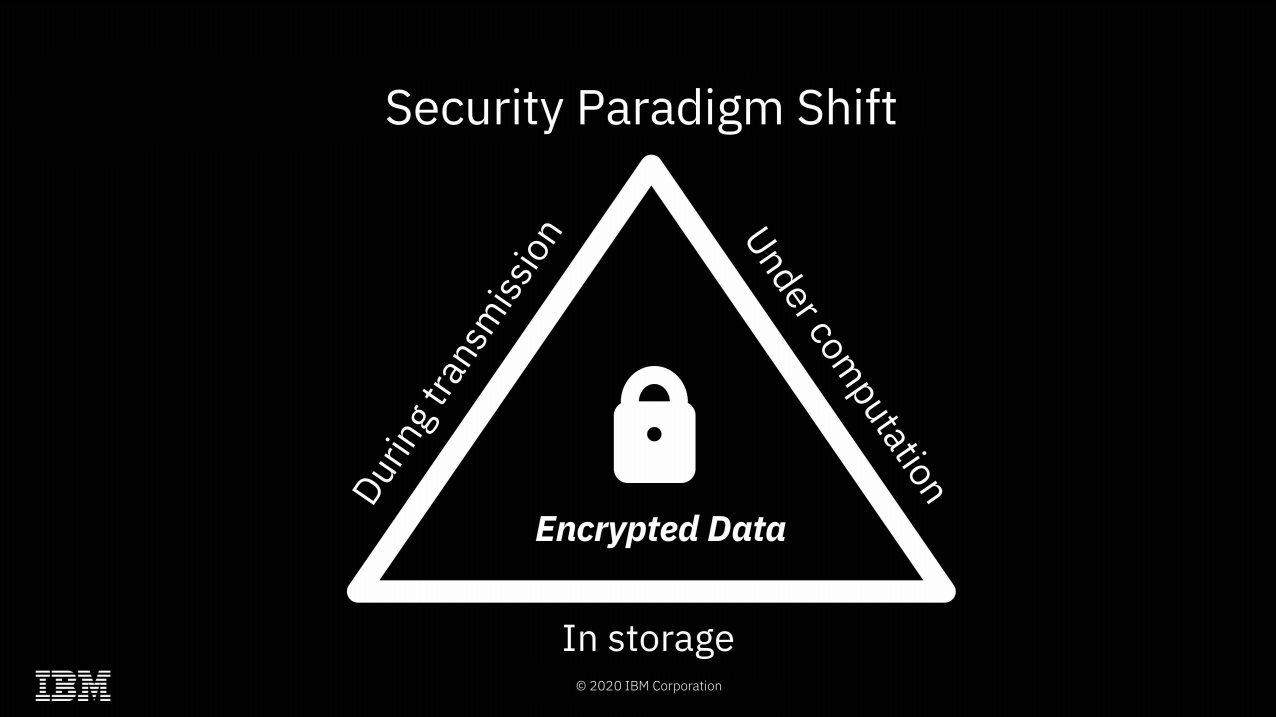
Promotional image provided by IBM.

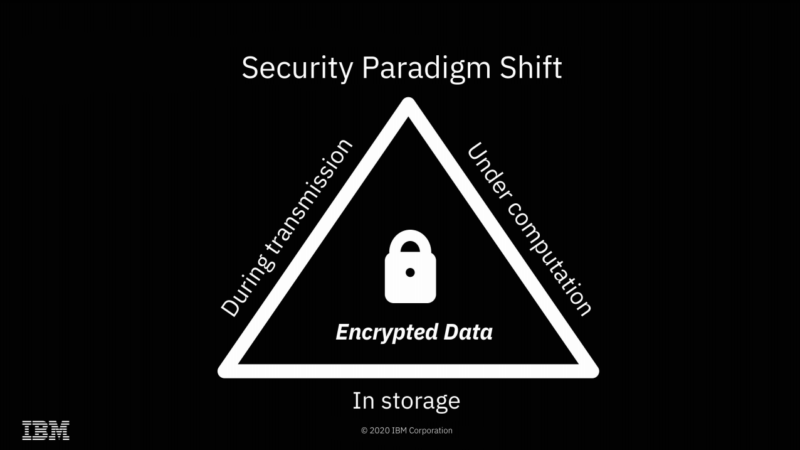
Enlarge / We're already accustomed to data being encrypted while at-rest or in-flight—FHE offers the possibility of doing computations on it as well, without ever actually decrypting it. (credit: IBM)

Yesterday, Ars spoke with IBM Senior Research Scientist Flavio Bergamaschi about the company's recent successful field trials of Fully Homomorphic Encryption. We suspect many of you will have the same questions that we did—beginning with "what is Fully Homomorphic Encryption?"

FHE is a type of encryption that allows direct mathematical operations on the encrypted data. Upon decryption, the results will be correct. For example, you might encrypt 2, 3, and 7 and send the three encrypted values to a third party. If you then ask the third party to add the first and second values, then multiply the result by the third value and return the result to you, you can then decrypt that result—and get 35.

You don't ever have to share a key with the third party doing the computation; the data remains encrypted with a key the third party never received. So, while the third party performed the operations you asked it to, it never knew the values of either the inputs or the output. You can also ask the third party to perform mathematical or logical operations of the encrypted data with non-encrypted data—for example, in pseudocode, FHE_decrypt(FHE_encrypt(2) * 5) equals 10.

Read 15 remaining paragraphs | Comments

Fewer Millimeters Make a Useful ESP32 Devboard

Sometimes the most useful hacks aren’t the flashiest, they’re the ones that improve an already great tool and make something better. Through hole components are still the fastest and perhaps most satisfying way to prototype a new electronics project so it’s extra frustrating when the happy hacker discovers their new devboard is too wide to fit in a standard breadboard. [Tobias] had the same thought and redesigned the standard ESP32 “NodeMCU” style devboard to be almost exactly the same, but narrower.

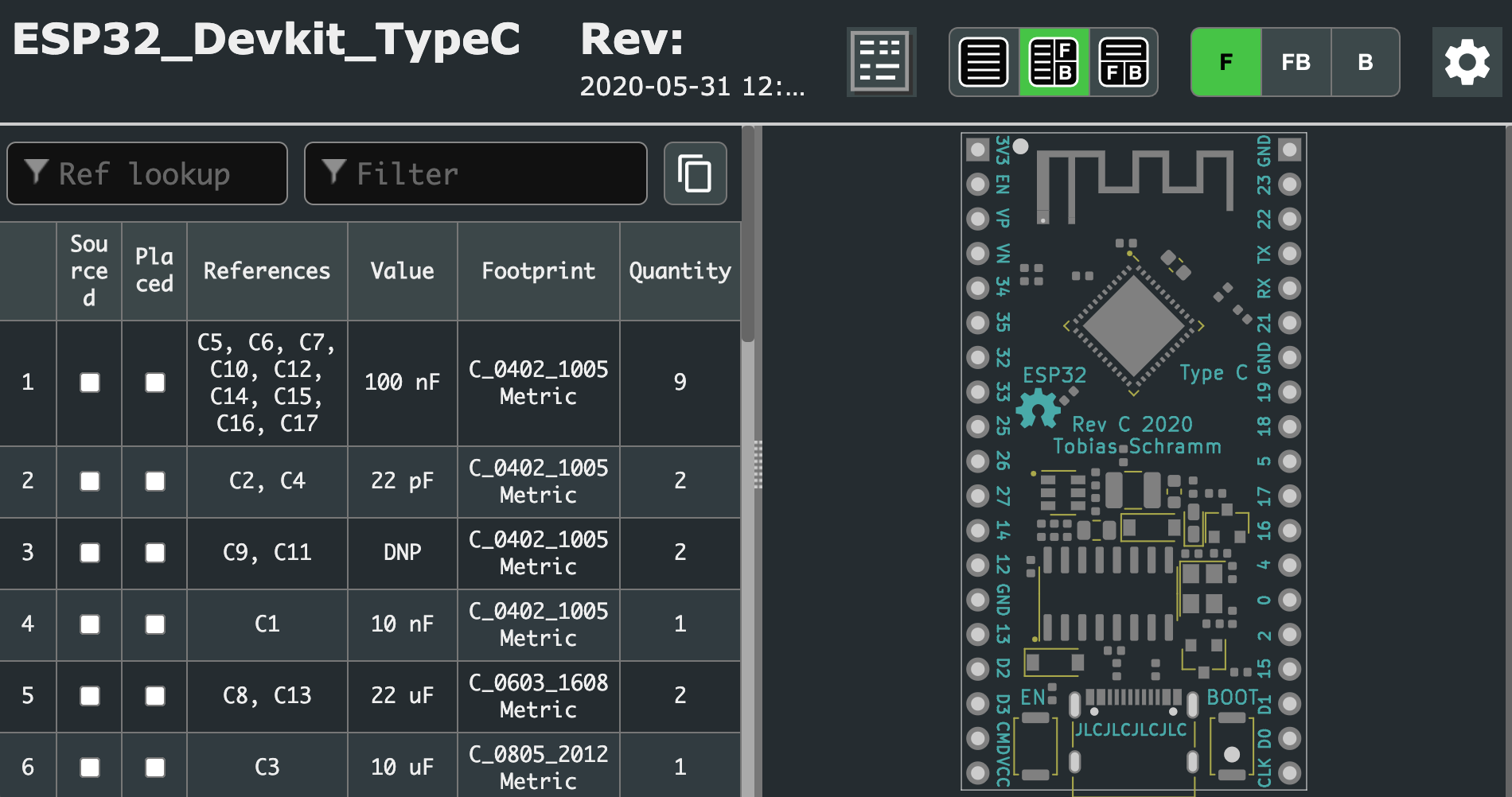
Interactive BOMs make assembly a snap

Not to trivialize, but that’s pretty much it. And we love it! The new design retains the great support of the original devboard but adds a few nice tweaks. Obviously there’s the small size change that allows it to fit on a standard 5×5 breadboard leaving sockets available on either side for interfacing. Even in this smaller size [Tobias] managed to retain the boot mode and reset buttons though the overall pinout has changed slightly. And for easier connections ye olde micro USB socket has been swapped for sleek modern USB-C. You have cables for that common standard now, right?

How do you get one? As far as we know [Tobias] isn’t selling these but the design is completely open source and the design, fab, and BOM files are all in the github repository. [Tobias] even went so far as to include the extremely handy interactive BOM to speed up hand assembly. The real trick here is that the board is designed to facilitate the extremely inexpensive turnkey assembly now available from our favorite fab houses, with an example cost of $8/piece for a run of five. The repo includes a properly formatted BOM and fab files to make ordering them a snap. See the bottom of the README for details about what to order.

Myst ‘Demake’ For The Apple II

Making certain games run on systems which were never designed to run such games (or any games at all) is a favorite hobby of some, with [deater] being no exception. His latest creation involves porting Myst to the Apple II, or ‘demake’ in his own words. This means taking a game that was released in 1993 for MacOS and later for Windows 3.1 and the original PlayStation, and creating a version that works on an 8-bit system from 1977.

Obviously the graphical fidelity has been turned down some compared to the 1990s version, but at this stage much of the game’s levels have been implemented. For anyone who has ever played the game before, much of the visuals will be instantly recognizable. According to [deater], the game should run on any Apple II/II+/IIe, with at least 48 kB of RAM, but 64 kB needed for sound effects. If a Mockingboard sound card is installed, it will even play the intro theme.

On the project page the (currently) three floppy disks can be downloaded, with the source available on Github. While one is there, one can also check out [deater]’s ‘Another World’ port to the Apple II which we covered last year.

Twitter hackers used “phone spear phishing” in mass account takeover

Twitter hackers used “phone spear phishing” in mass account takeover

Enlarge (credit: Tom Raftery)

The hackers behind this month’s epic Twitter breach targeted a small number of employees through a “phone spear phishing attack,” the social media site said on Thursday night. When the pilfered employee credentials failed to give access to account support tools, the hackers targeted additional workers who had the permissions needed to access the tools.

“This attack relied on a significant and concerted attempt to mislead certain employees and exploit human vulnerabilities to gain access to our internal systems,” Twitter officials wrote in a post. “This was a striking reminder of how important each person on our team is in protecting our service. We take that responsibility seriously and everyone at Twitter is committed to keeping your information safe.

Thursday's update also disclosed that the hackers downloaded personal data from seven of the accounts, but didn't say which ones.

Read 8 remaining paragraphs | Comments

Art Generated From the Dubious Comments Section

[8BitsAndAByte] are back, and this time they’re taking on the comments section with art. They wondered whether or not they can take something as dubious as the comments section and redeem it into something more appealing like art.

They started by using remo.tv, a tool they’ve used in other projects, to read comments from their video live feeds and extract random phrases. The phrases are then analyzed by text to speech, and a publicly available artificial intelligence algorithm that generates an image from a text description. They can then specify art styles like modern, abstract, cubism, etc to give their image a unique appeal. They then send the image back to the original commenter, crediting them for their comment, ensuring some level of transparency.

We were a bit surprised that the phrase dog with a funny hat generated an image of a cat, so I think it’s fair to say that their AI engine could use a bit of work. But really, we could probably say that about AI as a whole.