At ARS Electronica this past weekend, Anouk Wipprecht’s latest creation was announced. Project Pangolin is a creative approach to a brain computer interface or BCI. It uses this very interesting scale loooking sensor array to read 1,024 points of data -brain waves – and convert them to lights and motion […]
Enlarge/ Joe Biden in Delaware in August 2020. (credit: SAUL LOEB/AFP via Getty Images)
Steve Scalise, a leading Republican in the House of Representatives, has deleted a tweeted video that contained an edited exchange between Democratic presidential nominee Joe Biden and activist Ady Barkan. The altered video appeared to show Biden clearly endorsing reduced funding for police, while the genuine clip was more ambiguous.
The segment was part of a longer video that portrayed Democrats as advocates of police abolition and "mob rule." Twitter slapped the tweet with a "manipulated media" label over the weekend.
"These are not my words," wrote Barkan, who suffers from ALS and as a result speaks with a synthesized computer voice. "I have lost my ability to speak, but not my agency or my thoughts." He called on Scalise, the House Republican whip from Louisiana, to remove the video. "You owe the entire disability community an apology," he said.
E-waste is a gigantic problem, and it can seem impossible as a lone individual to make any kind of dent in it. But [akshar1101] is trying to do their part by looking past the defective aspects of broken, discarded electronics to draw out the possibilities of what’s left.
This friendly night light is made from the PCBs of four broken Nokia 5110 LCD modules. The screens were all toast, but the nice white LEDs that used to light them from the sides work just fine. [akshar1101] cleverly tied all the LED and GND lines together with single right-angle header pins. To power the LEDs, they wired up a JST receptacle to one of the PCBs and connected a 3.7 V lithium battery pack that sits underneath. [akshar1101] diffused the piercing white lights into a soft glow with two pieces of acrylic.
We love to see electronic components get saved from landfills, especially when they can be turned into something useful and beautiful. Something about the traces on these boards makes them visually interesting to us — it’s that little hiccup that interrupts otherwise parallel lines.
It looks like Google Maps is getting a new road feature: traffic lights. Google has been experimenting with marking intersections with traffic lights for a few months now, but today, as first spotted by Android Police, the feature is getting a wide rollout.
Google Maps traffic light support is just a small, static marker in the middle of an intersection indicating that there is a traffic light there. You have to zoom in really close to see the traffic lights, but if we zoom in far enough, we're seeing them on Android, iOS, and the Web. As always the map features are going to depend on Google's data set, and right now we're only seeing those in the US. They show up when browsing the map or navigating.
For now, it does not seem like Google has a use for the traffic lights other than displaying them on a map. It would be great if navigation could shout out "turn left at the next light" for verbal directions, but that's not happening yet. The state-of-the-art for traffic light navigation can be found in some Audis that, through a subscription service, can pull in live traffic light countdown data and can tell you how fast to go to make the next light.
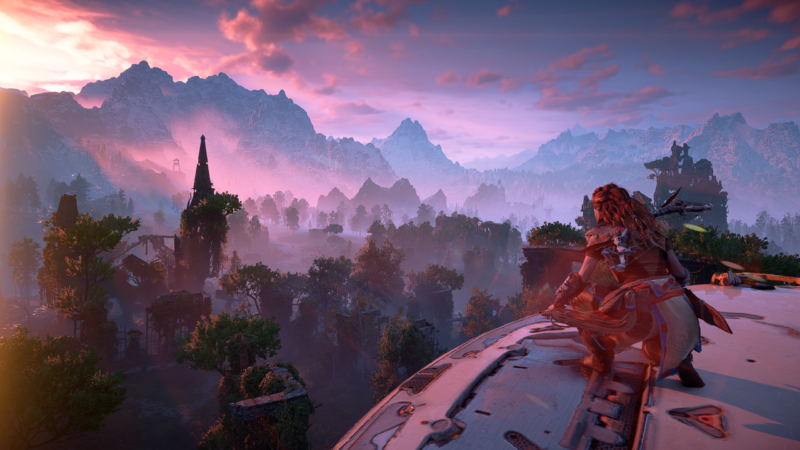
Enlarge/Horizon: Zero Dawn probably won't be the last game Sony ports from a PlayStation platform to PC.
Horizon: Zero Dawn probably won't be the last former PlayStation exclusive to make the jump to PC. In its 2020 corporate report published late last week, Sony says that it "will explore expanding our 1st party titles to the PC platform, in order to promote further growth in our profitability."
The "explore" wording there is a little bit couched, suggesting that Sony still hasn't completely made up its mind on the specifics of further PC game publishing. And the report doesn't go into detail on which games, if any, Sony considers ripe for porting.
And even if Sony does continue publishing on PC, we shouldn't necessarily expect major PlayStation titles to hit Steam on the same day as the coming PS5. In Horizon's case, Sony waited a full 1,256 days between the game's February, 2017 launch on PS4 and its PC launch earlier this month.
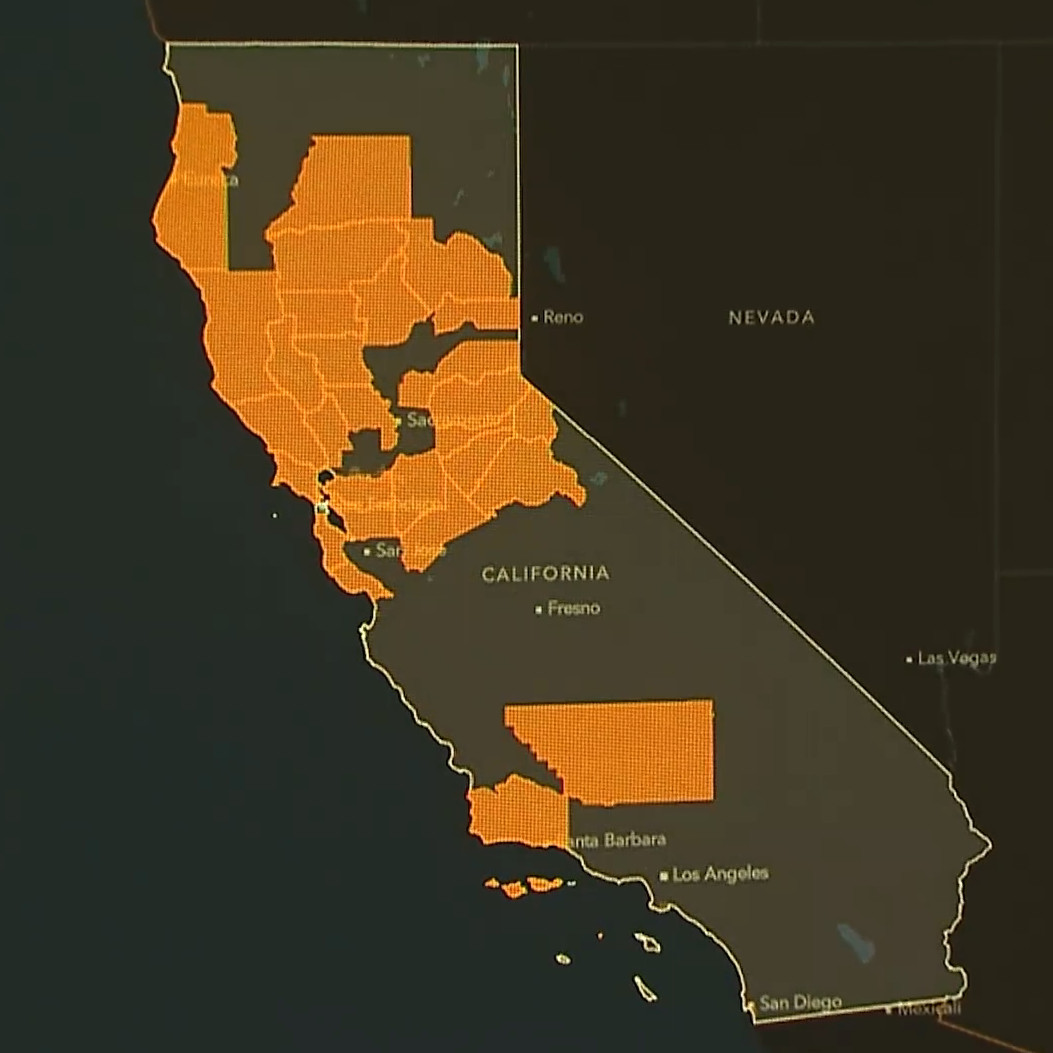
A heat wave spreading across a large portion of the west coast of the United States is not surprising for this time of year, but the frequency and severity of these heat waves have been getting worse in recent years as the side effects from climate change become more obvious. In response to this, the grid operators in California have instituted limited rolling blackouts as electricity demand ramps up.
This isn’t California’s first run-in with elective blackouts, either. The electrical grid in California is particularly prone to issues like this, both from engineering issues and from other less obvious problems as well.
Infrastructure: An Old Problem
The physical problems with the electric grid are straightforward and covered often as part of the background noise of almost-forgotten issues with aging infrastructure systems as a whole. In a majority of North America, the electrical grid as well as roads, bridges, water and wastewater systems, airports, and virtually any other piece of infrastructure was largely built in the post-war boom following World War II and then essentially left to rot over the following decades. It takes a lot of maintenance to keep all of that infrastructure running, but it also takes political capital and a will to make sure that easily-forgotten things aren’t forgotten. As a result, maintenance budgets for virtually all infrastructure have been slashed resulting in several major catastrophes in recent years, as well as an uncountable number of smaller inconveniences that only signal an impending, slow collapse.
The electrical grid on the west coast of the United States is no exception. California experienced a population boom after World War II which continues to the present day. Most infrastructure problems, like elsewhere in the country, are only patched over while the entire system is barely upgraded to match demand. Anyone who has ever driven on a road in a major California city in the oppressive traffic will confirm this current state of affairs. When infrastructure is already taxed to its limits it only takes one straw to break the camel’s back. This straw was the Camp fire of 2018 which, while not the first or last wildfire caused by an issue with a power line, was one of the most devastating. In addition to causing the deaths of at least 85 people and burning down 153,336 acres, this fire also caused the bankruptcy of California’s (and the United States’) largest energy company, PG&E, which is still struggling to recover.
In fact, these blackouts aren’t the first (or likely, last) blackouts that California has seen even since the Camp fire. Last year a wave of rolling blackouts was instituted in northern California over the course of about a month as a result of increased fire risk. These more recent blackouts aren’t new, and unless a major overhaul of the grid is performed they will likely continue.
Sagging power lines may be a fire risk you haven’t considered before, but it’s one of threats at the front of grid operators’ minds right now. This year, California’s much hotter, drier summer has put additional strain on the electric grid as people ramp up use of air conditioning. However, more electricity on the stressed grid means more current in the wires, which means more resistive losses, which means that the wires expand more from that heat (not to mention the increased ambient heat from the heat wave itself) and they can sag into trees and other obstacles especially if the rights-of-way haven’t been maintained diligently. It’s a vicious feedback loop that puts a strained grid into a situation that can easily start fires, but is also the recipe for massive cascade failures like the Northeast Blackout of 2003. Despite this, efforts to upgrade the electric infrastructure are slow or non-existent. This is where we can start to see other non-engineering problems arise which are arguably worse.
Grid Operators Understand History
Most reports of the recent rolling blackouts (pay wall warning) indicate that the power grid was not operating at a capacity that would have necessarily required them, however perhaps out of an abundance of caution due to the heat wave and California’s history of power-line-induced fires the system operator decided to curtail power temporarily. There are other reports of a sudden loss of generation due to a lack of wind at the time, as California pushes to move more of their energy portfolio to renewables, however the system operator would typically have backup generation ready to bring online at any given moment, such as combustion turbines, hydroelectric plants, or other power plants, rather than resorting to rolling blackouts. While it is feasible that a sudden loss of wind may have contributed to the problem it shouldn’t have necessitated blackouts to solve, and with the amount of wind that California relies on this shouldn’t have been the first time they would have seen a problem like this either.
It’s important to note here that the operator of California’s electric grid is the California Independent System Operator (CAISO) which is a nonprofit that controls the bulk electric transmission system and is not actually an electric utility or in charge of any energy generation. The reason California has a system like this is convoluted but goes back to the passage of various legislation in the ’90s, the creation of the Federal Energy Regulatory Commission (FERC), and several other political moves over the course of about 15 years. Not every state or area has an independent operator like California, but due to these FERC requirements, and compounded by the Enron scandal, most utilities that operate their own bulk transmission system must at least behave independently. Although not directly a part of the larger accounting scandal that Enron is known for, they played a major role in causing another set of rolling blackouts in California in the early ’00s.
It’s easy to see the latest blackouts in two lights, both one of a straightforward engineering problem that needs to be solved, but also as part of a broader historical and legal issue that has gone back decades in California and will continue indefinitely, especially as the effects of climate change appear more and more. In fact, California has already started on its wildfire season this year and it is only the beginning, both for fires and for issues for the electric utilities in the state.
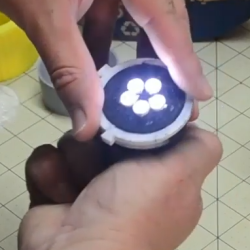
Conductive filament isn’t an ideal electrical conductor, but it’s a 3D-printable one and that’s what makes [Hercemer]’s 3D-printed flashlight using conductive filament work. Every part of the flashlight is printed except for the 9 volt battery and LEDs. Electrically speaking, the flashlight is a small number of LEDs connected in parallel to the terminals of the battery, and turning it on or off is done by twisting or loosening a cap to make or break the connection.
The main part of the build is a 3D-printed conductive cylinder surrounded by a printed conductive ring with an insulator between them. This disk- or pad-shaped assembly forms not only the electrical connection between the LEDs and battery terminals, but also physically holds the LEDs. To attach them, [Hercemer] simply melts them right in. He uses a soldering iron to heat up the leads, and presses them into the 3D-printed conductive block while hot. The 9 V battery’s terminals contact the bottom when the end cap is twisted, and when they touch the conductive assembly the flashlight turns on.
Anticipating everyone’s curiosity, [Hercemer] measured the resistance of his conductive block and measured roughly 350 ohms when printed at 90% infill; lower infills result in more resistance. You can see a video of the assembly and watch the flashlight in action in the video, embedded below.
 At ARS Electronica this past weekend, Anouk Wipprecht’s latest creation was announced. Project Pangolin is a creative approach to a brain computer interface or BCI. It uses this very interesting scale loooking sensor array to read 1,024 points of data -brain waves – and convert them to lights and motion […]