Wednesday, March 31

Godzilla vs. Kong review: Kaiju greatness that lives up to its absurd title

Recently, I've heard the phrase "pandemic fatigue" come up in terms of people getting antsy about returning to "normal." I don't know how long we have left to go (though Ars has plenty of articles on the topic), but I can say that even through my vigilance about safety and health, my own patience sometimes gets seriously tested—especially whenever a hint of normalcy flashes before my eyes.

One example is watching a bombastic movie that gets me so amped up, it makes me finally dream of going to a movie theater again. And I'm absolutely shocked to admit that the film to test my patience the most in the past 12 months might very well be Godzilla vs. Kong, out today in theaters and on HBO Max. (Seriously, I am stunned to say this, after what I said about the last official Godzilla film.)

As much as I enjoyed this film from the comfort of my living room, displayed on a nice television with a subwoofer cranked to near-max, its two hours had me craving a more collective, crowd-filled experience—perhaps more so than any film or TV series I've seen since the last time I was in theaters. This film is a lot like its titular beasts: big, splashy, and sometimes quite dumb on the surface, yet full of animal-like cunning and able to land massive blows at crucial moments.

Read 16 remaining paragraphs | Comments

Containerize all the things! Arm v9 takes security seriously

There are two types of reactions to this marketing image: "ooh, shiny!" and "oh god no, all that particulate will get in the socket..."

Enlarge / There are two types of reactions to this marketing image: "ooh, shiny!" and "oh god no, all that particulate will get in the socket..." (credit: Arm)

On Tuesday afternoon, Arm held a Vision Day event at which it teased details about its upcoming Arm v9 architecture.

The short version: expect a massively altered security landscape, along with improvements to vector math (which in turn means improvements in AI/ML and Digital Signal Processing, among other applications).

Confidential Compute Architecture

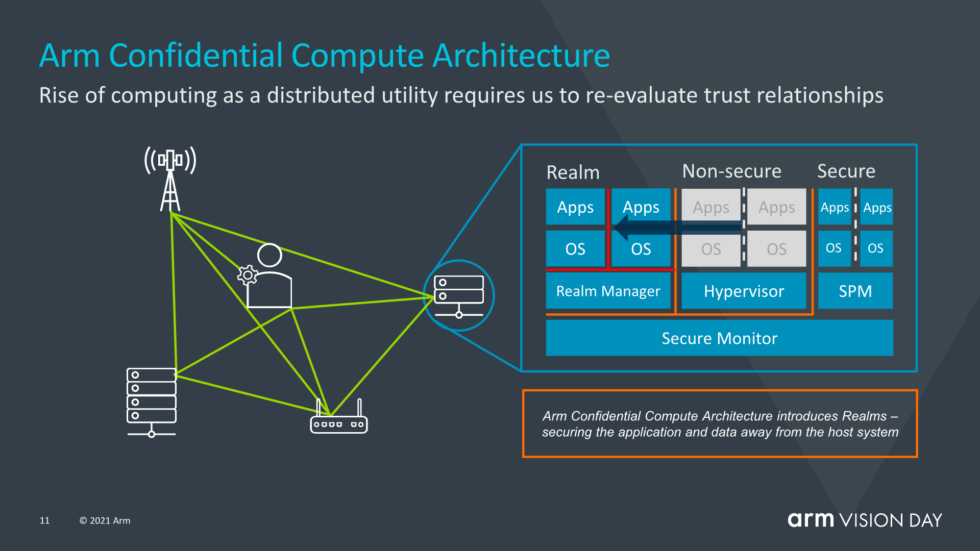
The key concept introduced in Arm v9's new Confidential Compute Architecture is the realm. Realms are containerized, isolated execution environments, completely opaque to both operating system and hypervisor. The hypervisor itself will only be responsible for scheduling and resource allocation. Realms themselves are to be managed by the realm manager—a new concept that can apparently be implemented in 1/10th the code required for a hypervisor.

Read 12 remaining paragraphs | Comments

How to achieve Smart Home nirvana (or, home automation without subscription)

What comes to mind when you think of a Smart Home? Wi-Fi enabled light bulbs, video doorbells, cloud-connected robot vacuums, or smart fridges perhaps? Brands like Google/Nest or everything enabled with Amazon’s Alexa? While often providing some genuine convenience, these devices are also usually designed to invite and lock users into manufacturers' ecosystems. Create a cool piece of hardware, you’ll make one sale. Create a cool piece of hardware that extracts recurring monthly service fees for cloud storage or to unlock extra functionality, and you’ll have sales for life.

Compounding our collective frustration, these ecosystems are often incompatible with each other and require multiple different apps for control. Not only are subscriptions and upselling part of the game, the underlying business models for these products are built around planned obsolescence and mining user data.

Luckily, aspirational smart home folks in 2021 have at least one viable alternative: Home Assistant. This piece of open-source software is the proverbial ring “that in the darkness binds them.” It is the glue for smart home gear spanning all sorts of manufacturers from behemoths like Google to minnows like Shelly. It’s a project that has set out to change all of the smart home pitfalls listed above by putting local control, privacy, and interoperability first.

Read 74 remaining paragraphs | Comments

Rick and Morty fans won’t have long to wait for S5 as Adult Swim drops trailer

Rick and Morty S5 premieres on Adult Swim on June 20, 2021.

Rick and Morty fans won't have to wait much longer for a fifth season of the irreverent, Emmy-winning animated comedy. Adult Swim just dropped the official S5 trailer, showcasing a new round of wacky interdimensional adventures for our favorite belching mad scientist and his wide-eyed, long-suffering grandson.

(Some spoilers for prior seasons below.)

For the uninitiated, Rick and Morty centers on the adventures of Rick Sanchez, an eccentric, alcoholic scientist who lives with his horse-surgeon daughter, Beth, her husband, Jerry, and grandkids, Summer and Morty. When not ensconced on the family couch or cooking up mad scientist schemes in his lab, Rick frequently takes Morty on zany adventures throughout the multiverse. The series grew out of short parody film of Back to the Future by Rick and Morty co-creator Justin Roiland, who also voices the titular characters.

Read 5 remaining paragraphs | Comments

Tuesday, March 30

Android sends 20x more data to Google than iOS sends to Apple, study says

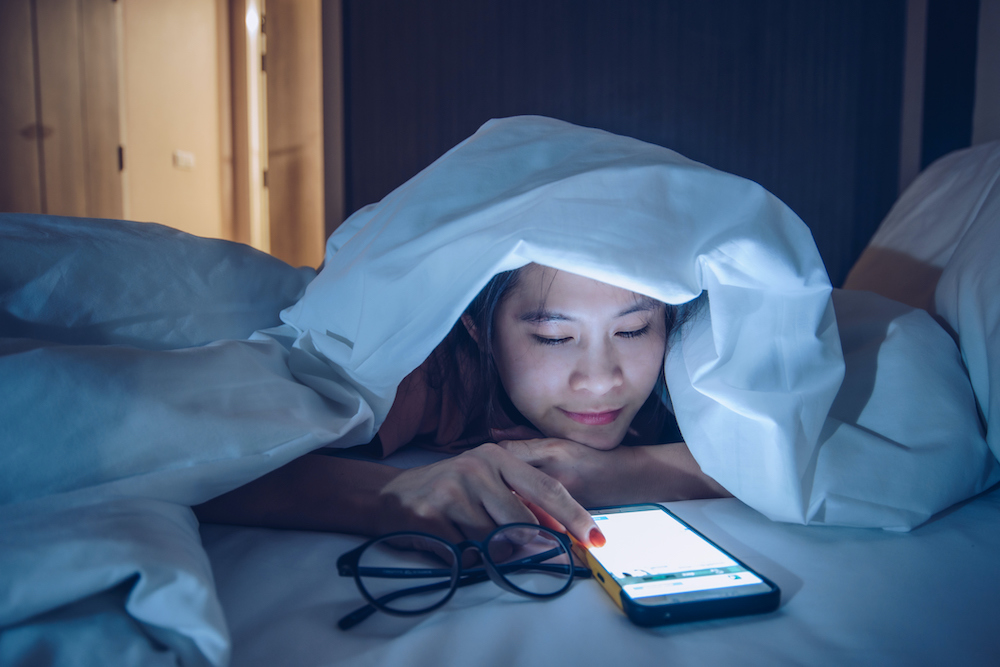
A woman under a thick blanket looks at her smartphone.

Enlarge / Insomnia people and mobile-addiction concepts. (credit: Getty Images)

Whether you have an iPhone or an Android device, it’s continuously sending data including your location, phone number, and local network details to Apple or Google. Now, a researcher has provided a side-by-side comparison that suggests that, while both iOS and Android collect handset data around the clock—even when devices are idle, just out of the box, or after users have opted out—the Google mobile OS collects about 20 times as much data than its Apple competitor.

Both iOS and Android, researcher Douglas Leith from Trinity College in Ireland said, transmit telemetry data to their motherships even when a user hasn’t logged in or has explicitly configured privacy settings to opt out of such collection. Both OSes also send data to Apple and Google when a user does simple things such as inserting a SIM card or browsing the handset settings screen. Even when idle, each device connects to its back-end server on average every 4.5 minutes.

Apps and more

It wasn’t just the OSes that sent data to Apple or Google. Preinstalled apps or services also made network connections, even when they hadn’t been opened or used. Whereas iOS automatically sent Apple data from Siri, Safari, and iCloud, Android collected data from Chrome, YouTube, Google Docs, Safetyhub, Google Messenger, the device clock, and the Google search bar.

Read 11 remaining paragraphs | Comments

Biden administration launches big push for offshore wind

Moderate seas surround an offshore wind farm.

Enlarge / Sights like these may be more common in the US before long. (credit: Nathan Stirk / Getty Images)

On Monday, the Biden administration announced a major effort to kickstart the offshore wind industry in the US. While offshore installations have been booming in Europe, the US is still limited to a single, small offshore farm, with new projects seeing repeated delays during the previous administration. Now, the US is laying the groundwork to see 30 GW of offshore capacity installed over the decade, with extensive growth possible in the decades beyond.

THe effort involves the coordinated activities of multiple agencies, including everything from accelerated permitting of planned projects to research funding intended to lower future costs.

And end to delays

While the US is one of the global leaders in wind power, almost all of its turbines are land. Here, the logistics of installation and needed support hardware are substantially simpler and less expensive. That's allowed wind power prices to eclipse nearly every other option for generating electricity. But offshore wind is far more challenging, and it's only recently that costs have dropped to the point where it's competitive with nuclear and coal.

Read 13 remaining paragraphs | Comments

PSA: You have one day until Nintendo delists Super Mario 3D All-Stars

A collage of electronic consumer goods on a white background.

Enlarge (credit: Ars Technica)

Today's Dealmaster is headlined by more of a PSA than an outright deal: if you're a Nintendo Switch owner who has been on the fence about buying Super Mario 3D All-Stars, you have about a day left until Nintendo removes the game from digital stores and stops shipping physical copies to retailers.

Nintendo has positioned the retro-game collection as a "limited production" to celebrate its mascot's 35th anniversary since the game's launch last September. Earlier this month, the company reiterated that March 31 would be the title's official cutoff date. The game will still be playable after that point, and those who've previously purchased a digital copy will still be able to re-download it from the Nintendo eShop if they've deleted it from their Switch. Those who've bought an unredeemed digital copy will still be able to download the title after March 31 as well. But officially, Nintendo says it will no longer sell the game in the eShop after that date and that any remaining physical copies will only be available until stock runs out.

As of this writing, the game is still widely available. It's possible that third-party retailers will still have copies in stock for a few days after March 31, but if you don't want to risk having to go through the reseller market, here's a list of stores where the game is still up for purchase:

Read 6 remaining paragraphs | Comments