Tuesday, August 31

65 mpg without hypermiling in the Lincoln Aviator hybrid

Temptation comes in different forms, especially behind the wheel. With a plug-in hybrid SUV, there are two competing urges. Sometimes, the move is to put it in sport mode and scream down the highway to take full advantage of the hybrid powertrain. In the case of the Lincoln Aviator, the urge was to ignore the engine altogether, instead relying on electrons rather than hydrocarbons for propulsion. To Lincoln's credit, the Aviator made that an easy choice.

In revamping its SUV lineup, Lincoln has gone hard for big grilles and classic styling, both of which the Aviator has. It sports classic SUV contours, but the slope of the windshield and the tapering top, paired with the Aviator nameplate on the front quarter panels, give it a light art deco vibe. The mid-size, three-row Aviator plugs into Lincoln's lineup between the full-size Navigator and the compact Nautilus.

Unfortunately the Aviator's comfortable interior doesn't show the same level of design elegance. The materials all feel high-quality—there are scads of leather and wood trim—but it's busy. A massive center console makes what should be a spacious front row feel slightly cramped. But the seats are excellent, and both front row occupants can sink into the Aviator's 30-way (!) adjustable seats. The second-row captain’s chairs are roomy and comfortable, but the third row is difficult to get into and is best suited for kids.

Read 7 remaining paragraphs | Comments

Coinbase erroneously reported 2FA changes to 125,000 customers

On Friday afternoon, Coinbase sent email and SMS text messages to 125,000 customers, erroneously telling them that their 2FA settings had been changed.

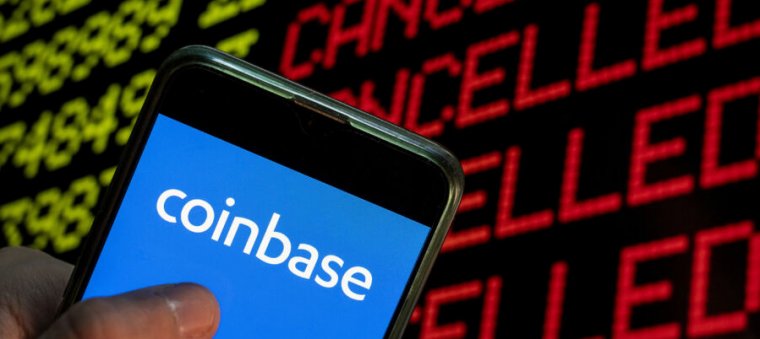
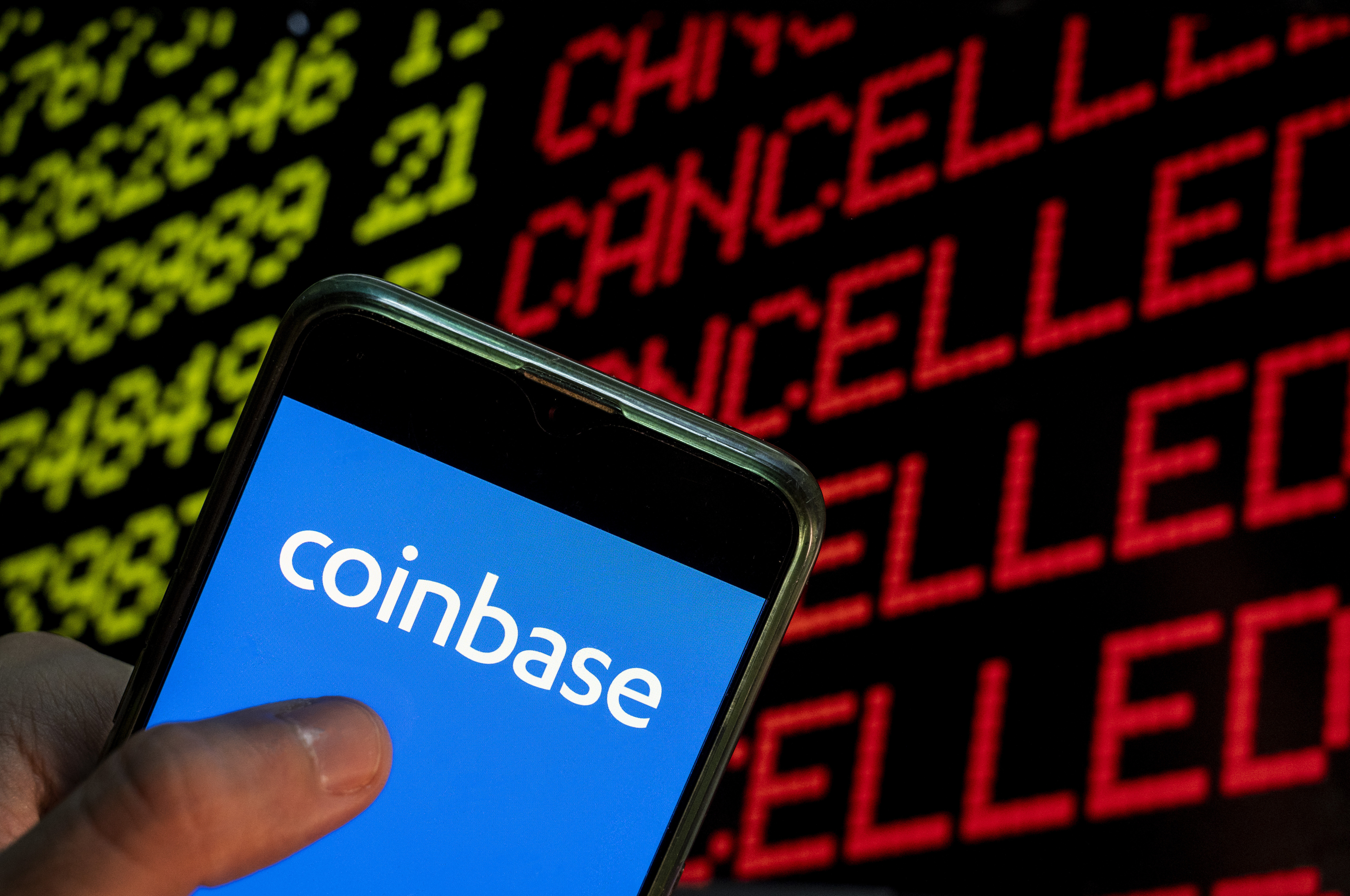
Enlarge / On Friday afternoon, Coinbase sent email and SMS text messages to 125,000 customers, erroneously telling them that their 2FA settings had been changed. (credit: SOPA Images)

Cryptocurrency exchange Coinbase sent an automated message to a large number of its customers on Friday, saying "your 2-step verification settings have been changed." Unfortunately, the message was sent in error—by Coinbase's count, 125,000 of those messages were sent (via email and SMS text) to customers whose 2FA settings had not changed.

According to Coinbase's own acknowledgment Saturday, its system began sending the erroneous messages at 1:45PM Pacific time on Friday, and kept sending them until the error was mitigated at 3:07PM.

In that Twitter thread, Coinbase acknowledges the mistaken 2FA messages' potential for confusion—confusion which retiree Don Pirtle told CNBC led him to panic-sell more than $60,000 of cryptocurrency. Pirtle was holding this large wallet as an investment for his grandson, so the panicked sale may have been as much blessing as curse—he now questions whether cryptocurrency was a safe investment in the first place.

Read 5 remaining paragraphs | Comments
Monday, August 30

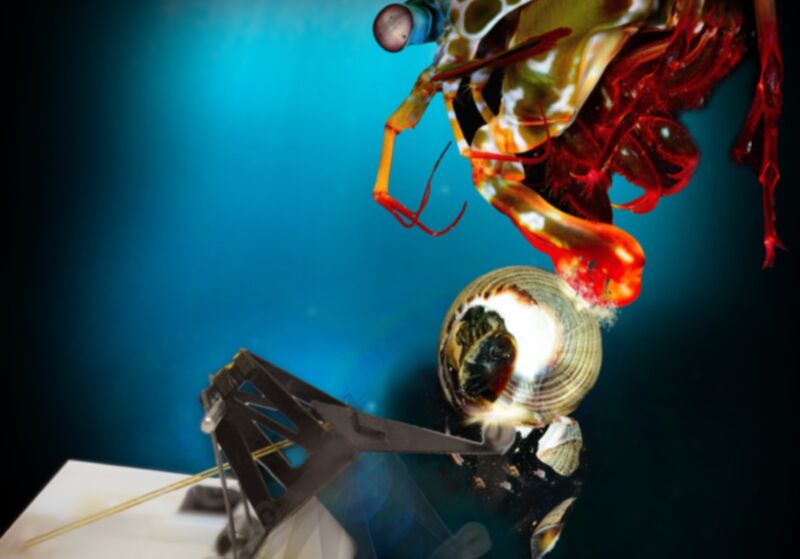
Scientists built a tiny robot to mimic the mantis shrimp’s knock-out punch

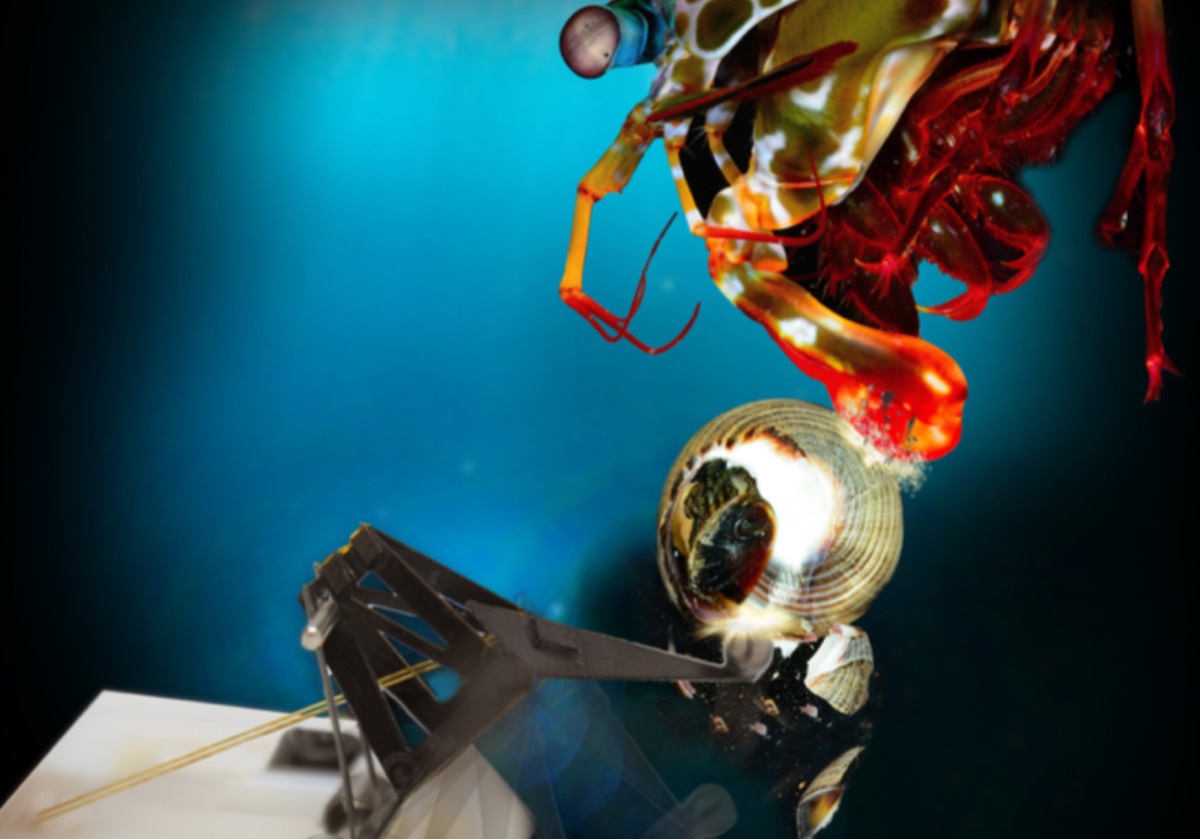
An interdisciplinary team of roboticists, engineers and biologists modeled the mechanics of the mantis shrimp’s punch and built a robot that mimics the movement.

Enlarge / An interdisciplinary team of roboticists, engineers and biologists modeled the mechanics of the mantis shrimp’s punch and built a robot that mimics the movement. (credit: Second Bay Studios and Roy Caldwell/Harvard SEAS)

The mantis shrimp boasts one of the most powerful, ultrafast punches in nature—it's on par with the force generated by a .22 caliber bullet. This makes the creature an attractive object of study for scientists eager to learn more about the relevant biomechanics. Among other uses, it could lead to small robots capable of equally fast, powerful movements. Now a team of Harvard University researchers have come up with a new biomechanical model for the mantis shrimp's mighty appendage, and they built a tiny robot to mimic that movement, according to a recent paper published in the Proceedings of the National Academy of Sciences (PNAS).

“We are fascinated by so many remarkable behaviors we see in nature, in particular when these behaviors meet or exceed what can be achieved by human-made devices,” said senior author Robert Wood, a roboticist at Harvard University's John A. Paulson School of Engineering and Applied Sciences (SEAS). “The speed and force of mantis shrimp strikes, for example, are a consequence of a complex underlying mechanism. By constructing a robotic model of a mantis shrimp striking appendage, we are able to study these mechanisms in unprecedented detail.”

Wood's research group made headlines several years ago when they constructed RoboBee, a tiny robot capable of partially untethered flight. The ultimate goal of that initiative is to build a swarm of tiny interconnected robots capable of sustained untethered flight—a significant technological challenge, given the insect-sized scale, which changes the various forces at play. In 2019, Wood's group announced their achievement of the lightest insect-scale robot so far to have achieved sustained, untethered flight—an improved version called the RoboBee X-Wing. (Kenny Breuer, writing in Nature, described it as a "a tour de force of system design and engineering.")

Read 11 remaining paragraphs | Comments

Judge’s order requiring hospital to give COVID patient ivermectin called “unethical”

Judge’s order requiring hospital to give COVID patient ivermectin called “unethical”

Enlarge (credit: Aurich Lawson | Getty Images)

A county judge in Ohio has ordered a hospital in Cincinnati to administer ivermectin to an intensive care patient, a move raises questions about the role of the courts in the medical system.

“It is absurd that this order was issued,” Arthur Caplan, professor of bioethics at New York University’s Langone Medical Center, told Ars. “If I were these doctors, I simply wouldn’t do it.”

The order was spurred by a lawsuit filed by Julie Smith, whose 51-year-old husband, Jeffrey, is being treated in West Chester Hospital for COVID-19. The lawsuit was first reported by the Ohio Capital Journal. Jeffrey has been in the hospital since July 15, and as his condition declined, his wife Julie began investigating alternative treatments.

Read 10 remaining paragraphs | Comments

Not enough backup power: AT&T and T-Mobile suffer big outages in Louisiana

An elderly woman in a wheelchair and her daughter waiting for transportation in a flooded neighborhood.

Enlarge / LaPlace, Louisiana: Jacqueline Smith waits with her mother Lucille Matthew for transportation after they were rescued from their flooded neighborhood in the aftermath of Hurricane Ida on August 30, 2021. (credit: Getty Images | Scott Olson)

AT&T today said that only 60 percent of its network in Louisiana is working as Hurricane Ida pummels the state. T-Mobile is reporting similarly extensive outages, while Verizon says it has minimized outages with backup generators. AT&T and T-Mobile both said they have deployed additional generators but the carriers apparently didn't deploy enough to handle the widespread power outages.

"Our Louisiana wireless network is operating at 60 percent of normal and we have significant outages in New Orleans and Baton Rouge due to power outages, flooding and storm damage," AT&T said in a network-status update. "We had key network facilities go offline overnight, and while some have already been restored, some facilities remain down and are inaccessible due to flooding and storm damage."

AT&T said it has "mobilized additional disaster recovery equipment in the region to assist in the recovery and will work around the clock until service is restored." AT&T said its wireless network in Alabama is operating normally and that it's "seen only a very small wireless impact in Mississippi."

Read 9 remaining paragraphs | Comments

Teacher with COVID symptoms went maskless, making her class an experiment

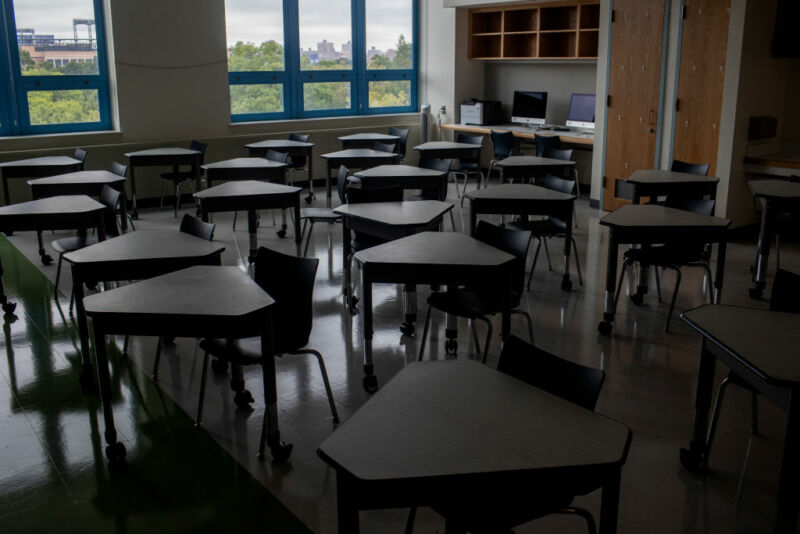
Image of a darkened, empty classroom.

Enlarge / Two classrooms had to be shut down due to a series of problems with maintaining policies meant to limit the spread of the pandemic. (credit: Andrew Lichtenstein / Getty Images)

On Friday, the CDC released a report that traced the spread of the Delta variant through a California elementary school. It's tempting to make this into a story of gross irresponsibility—a teacher was unvaccinated and read to the class while unmasked. But beyond that, it provides a number of warnings about how our public health system remains under stress as we close in on two years since the start of the pandemic. It also reemphasizes how the Delta variant ensures that small errors can easily explode into big problems.

One bad apple

The school in question was a small one, with only a bit over 200 students and 24 staff. It is an elementary school, meaning that its student population is also younger than the cutoff for approved vaccine use. The school did a number of things right, though. Class sizes were kept small, and individual classes were kept in separate rooms, with doors and windows kept open and air filtration equipment installed. There was also a standing policy requiring mask use in place.

But not everything was ideal. The CDC notes that two of the 24 staff members were unvaccinated. While the vaccinated can clearly transmit the Delta variant, they are likely to be less infectious, and in a worst case they'd be infectious for a shorter period of time.

Read 8 remaining paragraphs | Comments

Pompeii tomb reveals formerly enslaved man’s rise to wealth and power

Pompeii tomb reveals formerly enslaved man’s rise to wealth and power

Enlarge (credit: Pompeii Archaeological Park)

Archaeologists working in Pompeii recently unearthed the tomb and partially mummified remains of a man who died a few decades before the eruption. The man, Marcus Venerius Secundio, according to his epitaph, had once been enslaved, but by the end of his life he’d obtained enough wealth and status to sponsor four days of theater performances in Pompeii.

Rags to riches in Imperial Rome

Archaeologists rediscovered Marcus Venerius Secundio’s tomb in the ancient cemetery, or necropolis, of Porta Sarno in the eastern part of Pompeii, where tourists aren’t allowed. His tomb was large and imposing, with a colorfully painted facade depicting green plants on a blue background; traces of the paint still cling to the stone even after 2,000 years. It was also sealed so well that its occupant’s remains had partially mummified, preserving some soft tissue and a few tufts of white hair, along with some scraps of fabric.

Because Pompeii is both amazingly well-preserved and extensively studied, archaeologists were able to match the name inscribed over the tomb’s entrance to a name on wax tablets in the house of a banker named Lucius Caecilius Jucundus, across the city from the necropolis. The banker’s tablets recorded Marcus as a “public slave” who worked as a custodian in the Temple of Venus, which once stood at the western end of town (that’s almost certainly where the second part of his name, Venerius, comes from). But at some point he became a libertus, or freedman, and began to build a new life for himself.

Read 10 remaining paragraphs | Comments