Sunday, May 29

Who owns 4chan?

Who owns 4chan?

Enlarge (credit: Jacqui VanLiew | Getty Images)

Over the past 19 years, the imageboard 4chan has been tied to Gamergate, the inception of QAnon, the incubation of a particular brand of online racism, and a raft of domestic terror attacks that have killed scores of people.

Tragically, references and tributes to 4chan are littered throughout a 180-page screed believed to be written by the 18-year-old who is alleged to have shot 13 people in a predominately Black neighborhood in Buffalo, New York, on May 14. All 10 victims killed in the massacre were Black. Just this week, 4chan’s users spread transphobic misinformation about the identity of the school shooter who killed 19 children and two adults in an elementary school in Uvdale, Texas, that quickly reached the feeds of a right-wing member of Congress.

Even as the imageboard continues to rise in infamy, a question lingers: Who actually owns 4chan?

Read 62 remaining paragraphs | Comments

Saturday, May 28

Sony accelerates push into car sector in diversification drive

Sony accelerates push into car sector in diversification drive

Enlarge (credit: Kazuhiro Nogi | Getty )

Sony expects to supply imaging sensors to 15 of the world’s top 20 global automakers by 2025, underscoring the company’s ambitions for electric vehicles and autonomous driving as it tries to diversify beyond mobile phones.

The Japanese conglomerate flagged its intention to accelerate a push into the auto industry in 2020 when it unveiled a prototype EV called the Vision-S. This year, it has launched an EV division and announced a joint venture with Honda to make cars.

Sony has now said it aims to provide the sensors crucial to EVs and autonomous vehicles, as it diversifies beyond making smartphone camera parts for Apple, Google, and Samsung.

Read 13 remaining paragraphs | Comments
Mining museums’ genomic treasures

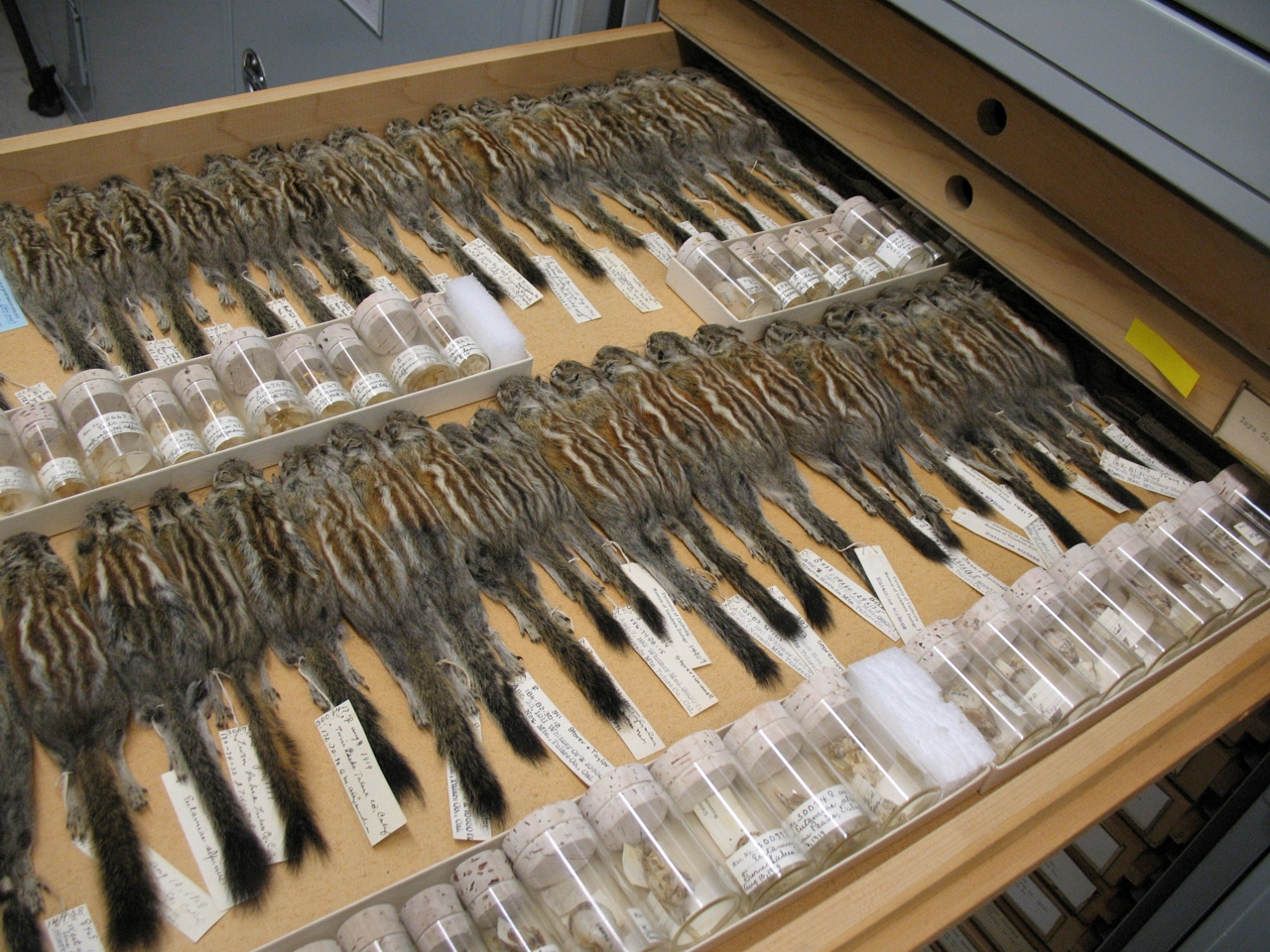
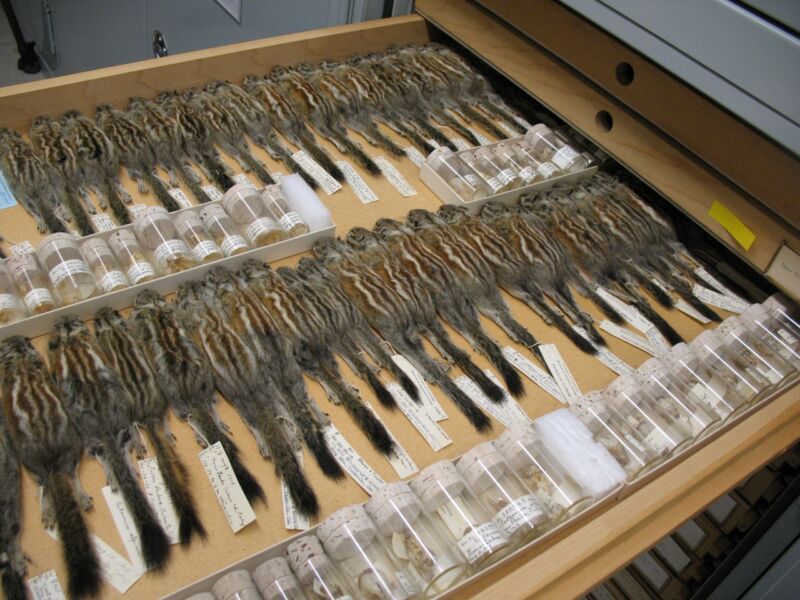
Alpine chipmunks collected by pioneering naturalist Joseph Grinnell in the early 20th century are still preserved at the Museum of Vertebrate Zoology at the University of California, Berkeley. Recently, geneticists used DNA extracted from them to trace how the chipmunks have evolved. Museum collections like this can give researchers at time machine to the past. (<a href="https://creativecommons.org/licenses/by-nc/2.0/">CC BY-NC 2.0</a>)

Enlarge / Alpine chipmunks collected by pioneering naturalist Joseph Grinnell in the early 20th century are still preserved at the Museum of Vertebrate Zoology at the University of California, Berkeley. Recently, geneticists used DNA extracted from them to trace how the chipmunks have evolved. Museum collections like this can give researchers at time machine to the past. (CC BY-NC 2.0) (credit: KQED Quest)

Natural history’s golden age, when Charles Darwin and like-minded scientists pondered connections between creatures and their environments, largely revolved around collecting stuff. Explorers fanned out across the world and picked up as many plants and animals as they could, drying them or stuffing them or storing them in alcohol in small glass jars. They carried them home to grand museums where the public might get a peek at them and be amazed.

These venerable collections can seem like relics today—musty storehouses, shrines to imperial plunder. But with billions of samples catalogued among them, museum collections are a treasure for modern evolutionary biologists studying DNA, RNA, proteins and other biomolecules. Sampling decades- or even centuries-old tissues allows scientists to capture snippets of genetic code from plants and animals—including extinct ones—and track molecular changes that took place long before biologists even understood what DNA was. Younger specimens are valuable too, providing a large sampling to help scientists compare traits within a species or between related ones.

All of this makes working with museum samples a tantalizing prospect for researchers, says Harvard evolutionary geneticist Daren Card, who has sequenced specimens from Australian museums for his own work on limb development in reptiles. Museum genomics is delivering crucial insights into evolutionary history, the effects of climate change and more, Card and colleagues write in the 2021 Annual Review of Genetics. Knowable spoke with Card about some of these projects—and some challenges the field faces.

Read 30 remaining paragraphs | Comments

Rethinking air conditioning amid climate change

Rethinking air conditioning amid climate change

Enlarge (credit: Jupiter Images | Getty)

It was a monumental day for the environmental movement more than 30 years ago when all 198 countries in the world agreed on something for the first and only time ever. They signed on to the Montreal Protocol, making a pact to phase out a roster of chemicals that damage the Earth’s ozone layer. Chief among these were the chlorofluorocarbons (CFCs) and hydrochlorofluorocarbons used by the cooling and refrigeration industry. Alternatives, such as hydrofluorocarbons (HFCs), were quickly found.

But in recent years, scientists have come to realize that the Montreal Protocol of 1987 might have traded an immediate problem for a long-term one. Though HFCs don’t cause the same damage to the ozone layer as CFCs do, the chemicals have warming potentials hundreds to thousands of times higher than that of CO2—making their growing global use a cause for concern.

The 20th-century industrial revolution saw a major boom in the air-conditioning and refrigeration industry in Europe and North America. Now, as developing nations boost their economies, countries such as China, India, and Nigeria are seeing skyrocketing demand for these appliances.

Read 50 remaining paragraphs | Comments

Are TikTok algorithms changing how people talk about suicide?

Are TikTok algorithms changing how people talk about suicide?

Enlarge (credit: Rafael Elias | Getty Images)

Kayla Williams has never said the word “suicide” on TikTok, even though she uses the platform to discuss mental health issues with her 80,000 followers. Since the beginning of the pandemic, the 26-year-old student from Berkshire, England, has posted multiple videos about suicidal ideation and her stay in a psychiatric ward. Some of these clips are lighthearted, others far more serious. Yet Williams does not utter the word “suicide” to her front-facing camera, or type it in her captions, for fear the TikTok algorithm will censor or remove her content. Instead, she uses the word “unalive.”

The hashtag #unalivemeplease has 9.2 million views on TikTok; #unaliving has 6.6 million; #unaliveawareness has an additional 2.2 million. Though #suicideprevention is a frequently used tag on the app, the hashtags #suicide and #suicideawareness do not exist—if you search for them, TikTok pulls up the number for a local crisis helpline. It’s a well-intentioned policy, initiated in September 2021, a year after a graphic video of a suicide spread across the app. But users have also come to fear elusive content moderation filters that seemingly suppress or remove videos discussing death, suicide, or self-harm.

While the word “unalive” first became popular in 2013 (when it was used in an episode of Ultimate Spider-Man), Google searches for the term have spiked dramatically in 2022. From TikTok, “unalive” has spread to Twitter and Reddit; YouTubers also use it so their content isn’t demonetized. Depending on the context, the word can refer to suicide, murder, or death. Though “unalive” is often used comedically on TikTok, people like Williams also use it to talk candidly, forge a community, and signpost resources on the app. The rapid rise of “unalive” therefore raises a worrying question: What happens when we don’t openly say “suicide”?

Read 14 remaining paragraphs | Comments

Friday, May 27

Humming birds suffer if they move uphill to escape the warming climate

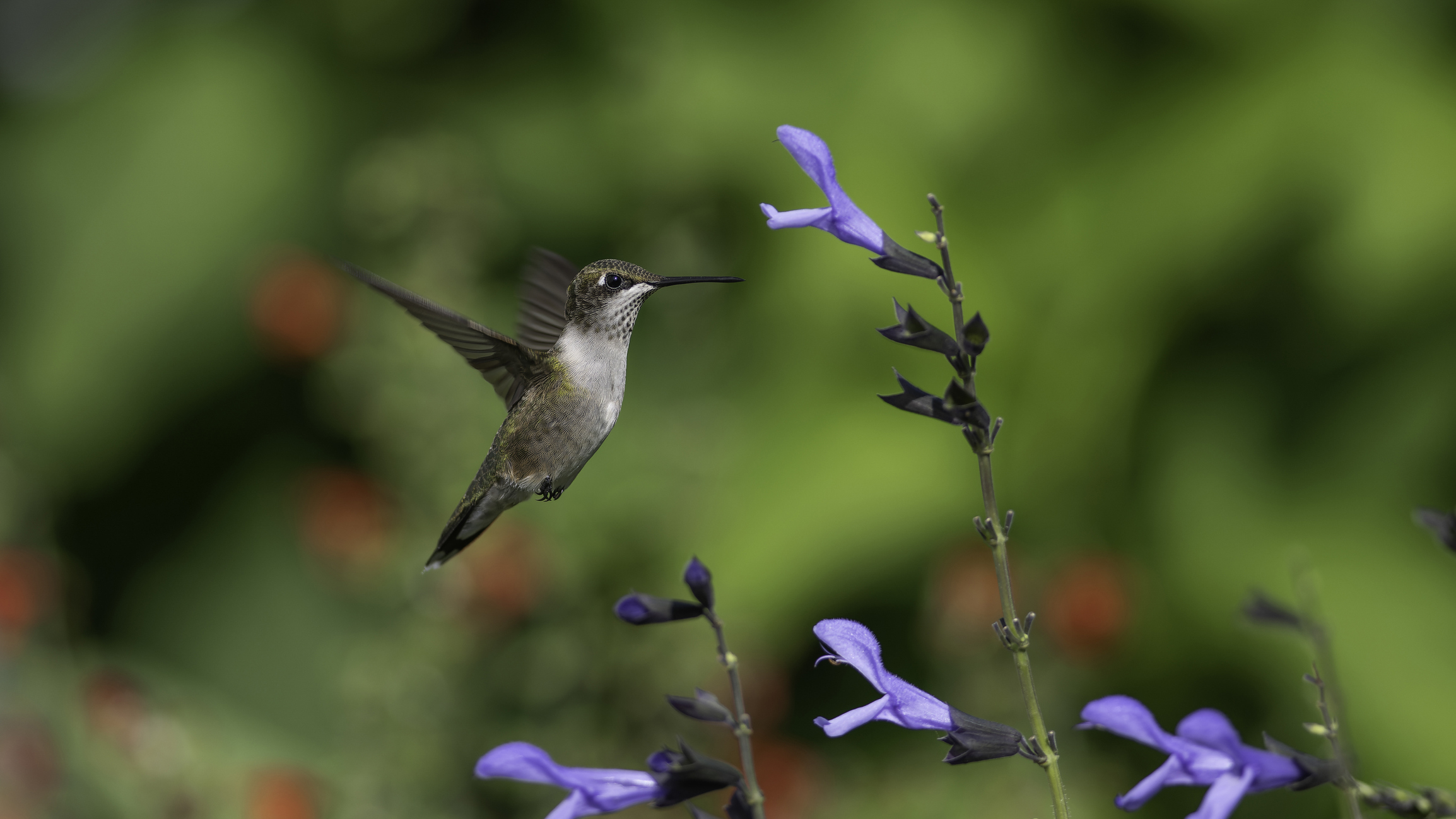
Image of a hummingbird in flight near a flower.

Enlarge (credit: Dan Ripplinger / 500px)

As the Earth’s climate warms, some animals may seek a reprieve from the heat in colder, northern climates or higher altitudes. For some species, these cooler locales may provide greener—so to speak—pastures than their current homes as annual average temperatures continue to increase.

For the diminutive Anna’s hummingbird—which calls North America’s West Coast from California to Vancouver, British Columbia, home—this might not be an option. According to research published Thursday in the Journal of Experimental Biology, a move to chillier and higher altitudes would achieve only two things: cause them to struggle to hover as their metabolic rate drops and sleep most of the day.

“As you get upslope, it’s colder, and also there’s less oxygen available. You can think of this like Everest; people have to go up to basecamp and bring extra oxygen and get used to it up there,” Austin Spence, one of the paper’s authors and a post-doctoral researcher at the University of California Davis’ Department of Wildlife, Fish, and Conservation Biology, told Ars.

Read 8 remaining paragraphs | Comments

Rocket Report: Meet the Gravity-1 rocket; will Starship really cut launch costs?

A rendering of Orienspace's "Gravity11" launch vehicle.

Enlarge / A rendering of Orienspace's "Gravity11" launch vehicle. (credit: Orienspace)

Welcome to Edition 4.44 of the Rocket Report! This week saw the successful completion of Boeing's Starliner test flight to the International Space Station, which is a promising step forward for assured US astronaut access to space. And wherever you find yourself this Memorial Day Weekend, I hope it is a happy and safe one.

As always, we welcome reader submissions, and if you don't want to miss an issue, please subscribe using the box below (the form will not appear on AMP-enabled versions of the site). Each report will include information on small-, medium-, and heavy-lift rockets, as well as a quick look ahead at the next three launches on the calendar.

Virgin Orbit targets August UK launch. The California small launch company expects to perform its first mission from England in late August, pending receipt of a launch license, Space News reports. In a speech at Space Tech Expo in Southern California, Jim Simpson, chief strategy officer of Virgin Orbit, said the UK mission will come after a launch from Mojave Air and Space Port in California called "Straight Up," scheduled for no earlier than June 29. It will carry seven US government payloads.

Read 22 remaining paragraphs | Comments